Friday, March 9, 2018

Jesus Faces the Sanhedrin

As soon as it was day, the elders of the people, both chief priests and scribes, came together and led Him into their council, saying, “If You are the Christ, tell us.” But He said to them, “If I tell you, you will by no means believe. And if I also ask you, you will by no means answer Me or let Me go. Hereafter the Son of Man will sit on the right hand of the power of God.” Then they all said, “Are You then the Son of God?” So He said to them, “You rightly say that I am.” And they said, “What further testimony do we need? For we have heard it ourselves from His own mouth” (Luke 22:66-71).

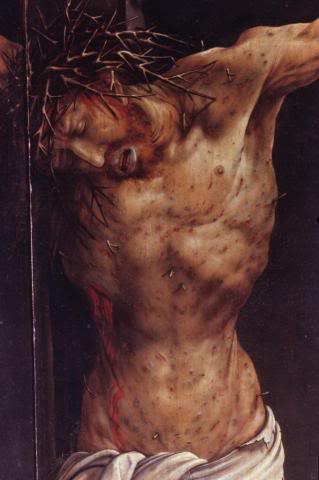
Christ begins His journey to the cross in earnest. Jesus is troubled; He prays that the Father would remove the bitter cup from Him if possible. He knows what is coming: gruesome torture and agonizing physical death. He also knows that He is to become sin.[1] He will be forsaken on the cross by the Father for the sake of His enemies. He will be separated from God the Father. Being in agony, He prayed all the more earnestly; His sweat became as great drops of blood. Then comes the mob. This group of people is not coming for healing, or bread, or sermons. They come to seize Jesus. Betrayal, arrest, and interrogation. Mockery and beatings. At daybreak, a trial.

The High Priest asks Jesus if He is the Christ. Jesus doesn’t answer this question. He says, “Hereafter the Son of Man will sit on the right hand of the power of God.” When the High Priest asks Jesus if Jesus is the Son of God, He says yes. There is now no mistake or misunderstanding. Jesus is not a political Christ. He is not here to establish an earthly kingdom; His kingdom is not of this world.[2] His work is spiritual. He has come to save the world from sin, death, and the devil. To do that, he must go to the cross.

By His use of the phrase “Son of Man” Jesus communicates this to the High Priest. Jesus’ words call to mind the words of the prophet Daniel, and his vision of the Ancient of Days. The scene recounted by Daniel[3] is the Day of Judgment. The Ancient of Days is God the Father. Ten thousand times ten thousand attend to Him; they stand before Him awaiting the destruction of the beast and the establishment of the kingdom. Daniel writes: “And behold, One like the Son of Man, coming with the clouds of heaven! He came to the Ancient of Days and they brought Him near before Him. Then to Him was given dominion and glory and a kingdom, that all peoples, nations, and languages should serve Him. His dominion is an everlasting dominion, which shall not pass away, and His kingdom the one which shall not be destroyed.[4]” Hearing Jesus’ claim of divinity, the High Priest ended the trial. They wouldn’t need to proceed any further. They would not investigate the evidence that Jesus was the Christ. Jesus, assumed the High Priest, had committed blasphemy by making Himself equal to God.

Scripture teaches us that Jesus is indeed the Son of Man, God in human flesh. He was appointed heir of all things by God the Father. He is the brightness of the Father’s glory and the express image of His person. He upholds all things by the word of His power; when He had by Himself purged our sins, He sat down at the right hand of the Majesty on high.[5] Jesus is our real and perfect High Priest, seated at the right hand of God.[6] The earthly temple, the sacrifices, the priesthood and the High Priest were shadows of Jesus, intended to point us all to Him. He is the High Priest who does not need to offer daily sacrifice to cover sin. Jesus offered the perfect sacrifice one time for the sin of all people on the cross.


[1] 2 Corinthians 5:21
[2] John 18:36
[3] Daniel 7:9-14
[4] Daniel 7:13-14
[5] Hebrews 1:1-4
[6] Hebrews 7:25 - 8:6

Monday, March 5, 2018

With God All Things Are Possible

Holbein - An Allegory of the Old and New Testaments
And when Jesus saw that he became very sorrowful, He said, “How hard it is for those who have riches to enter the kingdom of God! For it is easier for a camel to go through the eye of a needle than for a rich man to enter the kingdom of God.” And those who heard it said, “Who then can be saved?” But He said, “The things which are impossible with men are possible with God” (Luke 18:24-27).

When the rich young ruler came to Jesus and asked Him what he must do to gain eternal life, he probably did not expect the answer he got. He was probably respected in the synagogue and prominent in the community at large. He probably expected an answer from Jesus more like one he would have gotten from the Pharisees: one that validated him. He was, after all, rich and powerful. We all know that if you are rich it means God loves you, and if you aren’t, He doesn’t. The Pharisees certainly thought they knew this, along with most of the pagan secular world. Jesus destroys this misconception.

The rich young ruler probably really thought, as we do, that he wasn’t guilty of breaking the Commandments. Look at the commandments Jesus names. Can’t you hear the rich young ruler’s thoughts? He thinks like we do. I’ve never cheated on my wife. I’ve never unjustifiably killed anyone. I’ve never taken anything that didn’t belong to me. Maybe we’ve never physically had sex with someone who wasn’t our spouse, strangled the life out of a man, or committed armed robbery. Jesus points out that the law still condemns us. Out of the heart comes all manner of evil and uncleanness.[1] If you have fantasized about a woman you are an adulterer; if you hate your brother, you are a murderer.[2]  If you have failed to keep one command, you’ve broken them all.[3] Jesus shows the rich young ruler, in three sentences, that his god was his wealth. He broke the First Commandment: Thou shalt have no other gods. He did not fear, love, and trust in God above all things, particularly his wealth. He was just as filthy a sinner as all the rest of the filthy sinners, including us.

If a rich guy can’t get into heaven, what hope does anyone else have? None. That’s Jesus’ point. It’s impossible. All of it. We can’t keep from sinning;[4] we are conceived and born in sin.[5] It is our natural state.[6] We can’t pay for our sin.[7] The things which are impossible with men, however, are possible with God. God puts down the mighty from their seats, and exalts those of low degree.[8] He uses the foolish things of this world to shame the wise.[9] The rich young ruler, and others like him, put their confidence for their eternal salvation into wealth, status, and power. We put ours in Christ crucified. This is ridiculous to the unbelieving world.[10] How could weak and lowly Jesus save anyone from anything? What they fail to see is that this lowly, filthy man was God in human flesh. His brutal, humiliating execution was the payment for our sin, and the sin of all mankind. He gives us this forgiveness by his grace, through faith in Him. This faith comes to us through the working of the Holy Spirit in the Word of God.[11] Adulterer, murderer, thief, we are all those things, and more. We are utterly without hope left on our own. If we cling to our sins, we go away from Christ empty-handed and sorrowful. But, if we confess our sins, God who is faithful and just, will forgive our sins and cleanse us from all unrighteousness for the sake of Christ.[12] It is impossible any other way.


[1] Matthew 15:16-20
[2] Matthew 5:21-22; 27-28
[3] James 2:8-13
[4] Genesis 8:21; Romans 8:7
[5] Psalm 51:5
[6] John 3:6; Ephesians 2:3
[7] Acts 4:12; Galatians 5:4-5; Ephesians 2:8-9
[8] Luke 1:45-55
[9] 1 Corinthians 1:27
[10] 1 Corinthians 1:18
[11] Romans 10:17
[12] 1 John 1:5-10

Friday, March 2, 2018

Jesus Warns of Offenses

Then He said to the disciples, “It is impossible that no offenses should come, but woe to him through whom they do come! It would be better for him if a millstone were hung around his neck, and he were thrown into the sea, than that he should offend one of these little ones. Take heed to yourselves. If your brother sins against you, rebuke him; and if he repents, forgive him. And if he sins against you seven times in a day, and seven times in a day returns to you, saying, ‘I repent,’ you shall forgive him.” And the apostles said to the Lord, “Increase our faith.” (Luke 10:1-5).

It is inevitable that we will sin; we are, by nature, children of wrath.[1] It is just as inevitable that we will offend our neighbor. Jesus says something that sounds harsh. Would it really be better for the one who causes offense to one of these little ones, to have a millstone tied around his neck and be drowned? If the comparison is between physical death, and eternal spiritual death, then yes. What Jesus describes here is what the Pharisees are doing. They are unrepentant sinners; they blaspheme the Holy Spirit and teach the commandments of men as doctrines of God.[2] They travel land and sea to make one convert and, when they win him, make him twice as fit for hell as they are themselves, by teaching him to believe their false teachings. They will have to stand before Christ on the Last Day and give an account for their actions, just as all others who have done similarly will be required to do. Their unregenerate hearts will not have been washed by the washing of regeneration.[3] They will be required to justify themselves, apart from Christ, as they tried to do during their earthly life. They will be cast into outer darkness where there shall be weeping and gnashing of teeth, into the eternal fire prepared for the devil and his angels.[4] Yes, physical death, in comparison to eternal separation from God, would be much preferable.

Christ teaches His disciples to forgive those who repent of their sins against them, in the same way God forgives us penitent sinners: Finally, freely, and continually. He has taught us to pray, “Forgive us our trespasses as we forgive those who trespass against us.” Do we really believe God has graciously forgiven us for all our sins for the sake of Christ? That forgiveness and love will overflow out of our heart and onto our neighbor, even if he sins against us seven times a day, and repents. There is no talk here of “forgiving, but not forgetting.” God said, “For I will be merciful to their unrighteousness, and their sins and lawless deeds I will remember no more.”[5] This is how we are called to forgive our neighbor who sins against us.

The disciples are stunned, as their response indicates: Increase our faith. Amen! They know that, by their own effort, such an attitude is impossible. But with Christ, the author and finisher of our faith, all things are possible, even our eternal salvation. Our entire life is one spent uttering the prayers: Lord, have mercy! Lord, I believe; help my unbelief! Increase my faith![6] We cannot do it; Christ must do it.[7] He has promised to hear us, and grant our requests.[8]


[1] Ephesians 2:3
[2] Matthew 15:7-9
[3] Titus 3:5
[4] Luke 13:22-30; Matthew 25:41
[5] Romans 11:27; Hebrews 8:12
[6] Luke 18:13; Mark 9:23-25; Luke 10:5
[7] 1 Corinthians 2:14; 12:3; Romans 8:7
[8] John 14:13; 1 John 5:14

Tuesday, February 27, 2018

Leaving All to Follow Christ

Now great multitudes went with Him. And He turned and said to them, “If anyone comes to Me and does not hate his father and mother, wife and children, brothers and sisters, yes, and his own life also, he cannot be My disciple.  And whoever does not bear his cross and come after Me cannot be My disciple. For which of you, intending to build a tower, does not sit down first and count the cost, whether he has enough to finish it— lest, after he has laid the foundation, and is not able to finish, all who see it begin to mock him, saying, ‘This man began to build and was not able to finish’? Or what king, going to make war against another king, does not sit down first and consider whether he is able with ten thousand to meet him who comes against him with twenty thousand? Or else, while the other is still a great way off, he sends a delegation and asks conditions of peace. So likewise, whoever of you does not forsake all that he has cannot be My disciple (Luke 14:25-33).

As Jesus continues on His way, great multitudes follow. These are not Jesus’ disciples. They are following Jesus out of curiosity. They want to see Jesus the miracle worker. They want to see him heal, and cast out demons, and multiply loaves and fishes. He tried to teach His disciples privately but, as soon as word spread, the multitudes sought out Jesus.[1] Every time the multitudes came to Jesus, he had compassion on them. He did heal the sick and feed the hungry. More importantly, he taught them about the kingdom of God. The people were more concerned with meeting their physical needs. Jesus will demonstrate that this is not what we should worry about. We should worry about eternal life. Multitudes would continue to follow Jesus throughout his ministry. So little do they understand Jesus and His purpose, that they will meet Him as he enters Jerusalem on Palm Sunday, hailing Him the Son of David; by the end of the week they will stand before Pilate and call for Him to be crucified, asking for a murderer in exchange.

Jesus clarifies what is really important. He says to them that anyone who would come to Him must hate his father and mother. What does this mean? Are we not taught by Holy Scripture that he who does not love does not know God, for God is love?[2] How can Jesus tell us we must hate our families? Jesus is the same God who gave Moses the Ten Commandments on Mt. Sinai. Is Jesus now contradicting The Fourth Commandment, which says thou shalt honor thy father and thy mother? If He is, He is not the God of Abraham, Isaac, and Jacob, as he claims.[3] God does not change, and He does not lie.[4] No, Jesus is admonishing the multitudes to examine themselves. Following Jesus would demand, from an earthly perspective, great sacrifice. Christ Himself said that he came to bring division;[5] in other words, some people would believe in Him, and some would not. Even families would be divided over faith in Christ. If anyone would follow Jesus, his love for Christ must precede all other love, even the love of family and friends.[6] He can have no other gods. Jesus shows this to the rich young ruler. The man asks Jesus what he must do to inherit eternal life. Jesus tells him to keep the commandments, something which cannot be done perfectly. The young man answers that he has kept them, but Jesus exposes his idolatry. He calls the man to sell all that he has and distribute to the poor. The man loved his wealth more than God. He went away sorrowful.

We, too, belong to the multitudes. We would treat Jesus as our own personal bread king. We want Him to grant us health, money, love, success, and all manner of other earthly blessings. We think these things are the most important things. Jesus would show us otherwise. We are working for food which perishes, and for treasure which will rot away.[7] Jesus would have us seek first the kingdom of God, and His righteousness.[8] He teaches us to pray, not for piles of wealth so that we can live our best life now, but for our daily bread.[9] It was our sin which put Jesus on the cross. We, along with the multitudes, delivered Jesus up to death; we killed the author of life.[10] We justly deserve His temporal and eternal punishment. But it was to save mankind from such punishment that Christ came into the world. While we were still his enemies, Christ came to earth in human flesh, kept God’s law perfectly, lived a sinless life, and went to the cross to die for us, the ungodly.[11] He who knew no sin became sin for us, that we might become the righteousness of God, in Christ.[12] And though He died on the cross, on the third day Jesus rose again. Repent, and believe the Gospel. Jesus did not come into the world so that we could be rich and successful; Christ came into the world to save sinners, of whom we are the worst.[13]


[1] Luke 9:10-11
[2] 1 John 4:8
[3] John 8:48-59
[4] Malachi 3:6; Hebrews 13:8; Number 23:19; John 17:17
[5] Luke 12:49-53
[6] Kretzmann, Paul E. Popular Commentary of the Bible. Vol. 1. 2 vols. St. Louis, Mo.: Concordia Publishing House, 1921.
[7] Matthew 6:19-21
[8] Matthew 6:33
[9] Luke 11:1-4
[10] Acts 3:14-15
[11] Romans 5:8
[12] 2 Corinthians 5:21
[13] 1 Timothy 1:15

Friday, February 23, 2018

Woe to the Pharisees and Lawyers

And as He spoke, a certain Pharisee asked Him to dine with him. So He went in and sat down to eat. When the Pharisee saw it, he marveled that He had not first washed before dinner. Then the Lord said to him, “Now you Pharisees make the outside of the cup and dish clean, but your inward part is full of greed and wickedness. Foolish ones! Did not He who made the outside make the inside also? But rather give alms of such things as you have; then indeed all things are clean to you. “But woe to you Pharisees! For you tithe mint and rue and all manner of herbs, and pass by justice and the love of God. These you ought to have done, without leaving the others undone. Woe to you Pharisees! For you love the best seats in the synagogues and greetings in the marketplaces. Woe to you, scribes and Pharisees, hypocrites! For you are like graves which are not seen, and the men who walk over them are not aware of them.” Then one of the lawyers answered and said to Him, “Teacher, by saying these things You reproach us also.” And He said, “Woe to you also, lawyers! For you load men with burdens hard to bear, and you yourselves do not touch the burdens with one of your fingers. Woe to you! For you build the tombs of the prophets, and your fathers killed them. In fact, you bear witness that you approve the deeds of your fathers; for they indeed killed them, and you build their tombs. Therefore the wisdom of God also said, ‘I will send them prophets and apostles, and some of them they will kill and persecute,’ that the blood of all the prophets which was shed from the foundation of the world may be required of this generation, from the blood of Abel to the blood of Zechariah who perished between the altar and the temple. Yes, I say to you, it shall be required of this generation. “Woe to you lawyers! For you have taken away the key of knowledge. You did not enter in yourselves, and those who were entering in you hindered.” And as He said these things to them, the scribes and the Pharisees began to assail Him vehemently, and to cross-examine Him about many things, lying in wait for Him, and seeking to catch Him in something He might say, that they might accuse Him (Luke 11:37-54).
 
Jesus and His disciples go to dinner with unwashed hands. The Pharisees marveled, but not because they were disgusted at Jesus’ dirty fingernails; they marveled because Jesus and His disciples did not observe the Traditions of the Elders. The washing in question was a ceremonial one. It wasn’t meant to scrub the grime from their hands; it was meant to cleanse the gentile filth with which they may have been contaminated. These traditions, it was taught, were commands given by God, through Moses, to the Elders on Mt. Sinai, orally. They were not written down by Moses. The scribes, Pharisees, and teachers of the law taught that these traditions were God’s word, just like the written Scriptures (Torah[1]). By disregarding these traditions, Jesus shows His disciples, and us, that they are not.
 
Jesus calls the Pharisees hypocrites. They take great care to observe the Traditions of the Elders, but ignore God’s actual Law. Jesus says that they honor God with their lips, but their hearts were far from Him.[2] They were teaching as doctrines the commandments of men. They didn’t believe they were sinful. They were keeping all the rules. They did not repent. They did not believe the Gospel. They did not have faith in God; they had faith in their own good works. Jesus calls them unmarked graves and whitewashed tombs because of this. An unmarked grave looks like normal, healthy ground, vibrant with life in the form of thick, green grass. Beneath the surface, however, lies a rotting corpse. The painted tomb looks pretty and neat but inside there are dead men’s bones. According to the Law, to touch a dead body would make a man ceremonially unclean. He would have to be excluded for a time from the community, and the temple, where forgiveness of sins was to be found.[3] Jesus is telling the Pharisees that, because of their rejection of God’s commands in favor of man-made laws they thought they could keep, they are unclean. They are cut off from God, like the ceremonially unclean person who cannot offer his sacrifice for sin in the temple. Though they may look holy by their outward acts of piety, they are actually dead inside.
 
The temple and the sacrifices prescribed by God to be offered there were type and shadow of what was to come: Jesus. The temple was where God dwelt with His people Israel. Jesus, true God and true man, is Immanuel - God, with us. In the person of Jesus of Nazareth, God came into the world, though the world did not know Him, and His people did not receive Him.[4] Even now He is with us, according to both His divine and human natures, through Word and Sacrament, and the working of the Spirit, even until the end of the age.[5] The sacrifices showed the true cost of sin; only the shedding of blood could atone for it.[6] Animal sacrifice was insufficient. They had to be performed over and over again. Jesus is the one perfect sacrifice for sin.[7] He became sin for us so that the guilt of our sin would no longer be counted against us.[8] Jesus is our salvation. He is the one greater than the temple.[9] He is the payment for our sin - all of our sin - and the sin of the whole world.[10]
 
Since the temple was a shadow of the reality that was fulfilled in Christ, we need to participate in the real thing. The washing that counts is not the removal of the filth of the flesh, but the washing of regeneration and renewing of the Holy Spirit, whom God poured out abundantly through Jesus Christ our Savior, that having been justified by His grace, we should become heirs according to the hope of eternal life.[11] This is baptism, which saves us.[12] It is how we take part in Christ’s death and resurrection.[13] It is not a work done by men as a mere ceremony; it is a means by which God delivers to us His Word and promise, the forgiveness of sins won by Christ on the cross, and works repentance and faith in our hearts by His Holy Spirit.
 
______
 
[1] The Torah is the law of God as revealed to Moses and recorded in the first five books of the Hebrew Scriptures.
[2] Matthew 15:7-9
[3] Number 19:11-13
[4] John 1:1-13
[5] Matthew 28:19-20; FC SD VIII 78.
[6] Hebrews 9:22
[7] Hebrews 9:22-28
[8] 2 Corinthians 5:21
[9] Matthew 12:6
[10] 1 John 2:2
[11] Titus 3:5-7
[12] 1 Peter 2:18-22
[13] Romans 6:4-5; Galatians 2:20

Thursday, February 15, 2018

A Sinful Woman Forgiven

The Crucifixion - Lucas Cranach the Elder
Then one of the Pharisees asked Him to eat with him. And He went to the Pharisee’s house, and sat down to eat. And behold, a woman in the city who was a sinner, when she knew that Jesus sat at the table in the Pharisee’s house, brought an alabaster flask of fragrant oil, and stood at His feet behind Him weeping; and she began to wash His feet with her tears, and wiped them with the hair of her head; and she kissed His feet and anointed them with the fragrant oil. Now when the Pharisee who had invited Him saw this, he spoke to himself, saying, “This Man, if He were a prophet, would know who and what manner of woman this is who is touching Him, for she is a sinner.” And Jesus answered and said to him, “Simon, I have something to say to you.” So he said, “Teacher, say it.” “There was a certain creditor who had two debtors. One owed five hundred denarii, and the other fifty. And when they had nothing with which to repay, he freely forgave them both. Tell Me, therefore, which of them will love him more?” Simon answered and said, “I suppose the one whom he forgave more.” And He said to him, “You have rightly judged.” Then He turned to the woman and said to Simon, “Do you see this woman? I entered your house; you gave Me no water for My feet, but she has washed My feet with her tears and wiped them with the hair of her head. You gave Me no kiss, but this woman has not ceased to kiss My feet since the time I came in. You did not anoint My head with oil, but this woman has anointed My feet with fragrant oil. Therefore I say to you, her sins, which are many, are forgiven, for she loved much. But to whom little is forgiven, the same loves little.” Then He said to her, “Your sins are forgiven.” And those who sat at the table with Him began to say to themselves, “Who is this who even forgives sins?” Then He said to the woman, “Your faith has saved you. Go in peace” (Luke 7:36-50).

Was the sinful woman forgiven her many sins because she did all the things described in the Gospel passage? No. Jesus explains, quite simply, that the woman’s faith saved her. So, what does that mean? Perhaps it means that this woman’s actions are evidence of the genuine repentance and faith which the Holy Spirit worked in her heart. She certainly did not merit the forgiveness Jesus proclaimed to her; Scripture tells us this is not possible. Scripture says we are saved by God’s undeserved favor, through our faith in Christ, which also comes to us as a gift from outside ourselves.[1] Repentance is also God’s gift.[2]

When Jesus says the woman is saved by her faith we get a wrong impression of what He is saying. That is because we naturally have a wrong understanding of what repentance and faith are. It is not surprising. We sinful men are so inwardly focused because of sin that we cannot, apart from the Holy Sprit’s working, understand spiritual things.[3] It is our natural inclination to earn heaven. We are naturally inclined to think that, even though we may be sinners, we are not really as bad as a lot of other men. That is supposed to make our sin somehow better, and more acceptable in our minds. I might sin and make mistakes sometimes, but I’m not as bad as Hitler. I’m basically good; I just need a little help. We trick ourselves into believing we can make up for our “mistakes” by doing something good. This is what we think the sinful woman was doing when she comes before Jesus with tears; except, that wasn’t what was happening with the sinful woman. Jesus shows us that with one sentence. He says to her, “Your faith has saved you.”

Christ has saved us from beginning to end. No part of our salvation depends on our work. He created us.[4] He died on the cross as the payment for our sin.[5] He uses His means of word, water, bread and wine to repent us of our sin and create faith in us.[6] Any work of righteousness we would do to merit Christ’s gifts are as filthy rags.[7] When Jesus declares that this woman’s faith has saved her, He is saying that He saved her. Far from encouraging us to try to manufacture enough faith to be counted worthy by Christ, He is actually showing us that such a thing is impossible for us to do. Faith is not an act of our will; it is not something we decide to do after being convinced through reasoned argument or emotional manipulation. It is Christ’s gift. Hear the Word. Repent. Believe the Gospel. Be forgiven. Rejoice. Love much; we have been forgiven much.


[1] John 1:12-13; Ephesians 2:8-10
[2] 2 Timothy 2:25
[3] Romans 8:6-8; 1 Corinthians 2:14
[4] Colossians 1:15-16
[5] 1 John 2:2
[6] Matthew 26:26-30; 1 Corinthians 11:23-26; Titus 3:5-7
[7] Isaiah 64:6

Wednesday, February 14, 2018

Ash Wednesday

“Moreover, when you fast, do not be like the hypocrites, with a sad countenance. For they disfigure their faces that they may appear to men to be fasting. Assuredly, I say to you, they have their reward. But you, when you fast, anoint your head and wash your face, so that you do not appear to men to be fasting, but to your Father who is in the secret place; and your Father who sees in secret will reward you openly. (Matthew 6:16-18). 

I grew up in a congregation of the Lutheran Church – Missouri Synod that practiced the imposition of ashes on Ash Wednesday. The people would approach the pastor, who was standing in the front of church. He held a silver vessel containing an unappealing black substance. It was the burned remnants of the palm fronds from the previous year’s Palm Sunday mixed with oil. As the people would come to the pastor, he would blacken his thumb with the ashes and make the sign of the cross on the person’s forehead. He would tell each person, “Remember that you are dust, and to dust you shall return.” I never realized, however, that this was fasting. Growing up when and where I did, I also didn’t realize that what was to me a natural part of the Ash Wednesday worship service was, in other places, quite a contentious issue. 

Later, attending college in what is referred to by some as the “Bible Belt,” I met many people, Christians and non-Christians, who were shocked by this worship practice. Lutherans were few in number in Murray, Ky. Most of my friends were some flavor of evangelical protestant. Knowing that I professed to be a Christian, when the inevitable discussion would arise, many would quote this passage of scripture to me, and tell me the imposition of ashes was unbiblical. I had to admit that I had not thought about it in that way before. It certainly seemed logical. 

It has always been the Confessional Lutheran view that the Church should not do away with good traditions and practices, but only those things that take away from the Gospel. The Imposition of Ashes is one of those good traditions. Fasting was an important part of the Jewish religion. The problem Jesus had with fasting was not the practice, but that the hypocrites turned it into a work of self-glorification. Jesus does not forbid fasting, either here or elsewhere. He expects his disciples to fast. Jesus says, “When you fast…” The issue with fasting is not should it be practiced, but rather, are we doing it so other people with think we are holy? Do our hearts feel true sorrow and humility? Fasting can be good training for our will, but God does not command particular times, places, or forms of fasting.[1] There is nothing we have to offer, no work we can do, no ceremony we can perform, in order to merit God’s forgiveness. 

After leaving church on Ash Wednesday, sometimes people forgot that they had a smear of ashes on their forehead. Sometimes they would inadvertently scratch their foreheads. The residue on their finger would serve as a subtle reminder that they were dust, and to dust they must one day return. Before going to bed, looking in the mirror, one is once again reminded they are marked with the black stain of sin. 

Those ashes, however, are drawn on the forehead in the sign of a cross. Not as if the cross is some kind of magic sign to ward off evil. It is also as a reminder. The cross reminds us that the guilt of mankind’s sin has been paid for by Christ’s death. The blood of Christ shed on the cross has justified us. We did not participate in Christ’s saving work at all. It happened while we were still powerless.[2] God has given us forgiveness as a gift, through Christ Jesus. He sends His Holy Spirit to us to create faith in our hearts through the means of his Word and Sacraments. He enables us to do works that please him – not in order to earn his favor – but to glorify his most holy name. Fasting, and other traditions like the Imposition of Ashes, can help us to look at our sin, confess it, and acknowledge our need for a savior. These traditions, used properly, and not imposed as a law, focus us on Christ and Him crucified.

___________

[1] Luther, Martin. Luther's Small Catechism. Translated by Concordia Publishing House. Saint Louis, Missouri: Concordia Publishing House, 1991.
[2] Romans 5:8-9