Showing posts with label sacrifice. Show all posts

Friday, November 16, 2018

Faithful Abraham

By faith Abraham obeyed when he was called to go out to the place which he would receive as an inheritance. And he went out, not knowing where he was going. By faith he dwelt in the land of promise as in a foreign country, dwelling in tents with Isaac and Jacob, the heirs with him of the same promise; for he waited for the city which has foundations, whose builder and maker is God. By faith Sarah herself also received strength to conceive seed, and she bore a child when she was past the age, because she judged Him faithful who had promised. Therefore from one man, and him as good as dead, were born as many as the stars of the sky in multitude—innumerable as the sand which is by the seashore. These all died in faith, not having received the promises, but having seen them afar off were assured of them, embraced them and confessed that they were strangers and pilgrims on the earth (Hebrews 11:8-13).

The author of the letter to the Hebrews is trying to convince his readers not to abandon the faith. The Jews who left Judaism to follow Christ were being persecuted. Rather than turn back, the author urges them to go on to perfection.[1] He makes the case that what they have as Christians is better than what they would have if they returned to Judaism. The sacrifice Christ made outside the camp was better than the now empty sacrifice being offered in the temple. The only things that waited for them there were the imperfect sacrifices, which were types and shadows of the one perfect atoning sacrifice for sin – that of Christ on the cross. The Mosaic covenant was made obsolete by Christ. Jesus is better than what He replaced. I’m sure that, in the face of persecution and death, having faith in Jesus didn’t feel better. That’s why the recipients of this letter were considering abandoning it, and returning to Judaism, going back “inside the camp”, so to speak. But the author makes the case that “Christ is better than the angels, for they worship Him. He is better than Moses, for He created him. He is better than the Aaronic priesthood for His sacrifice was once for all time. He is better than the law, for He mediates a better covenant. In short, there is more to be gained in Christ than to be lost in Judaism.”[2]

The author of the letter to the Hebrews uses many Old Testament figures as examples for his readers of what it means to be in the faith. He writes, “Now faith is the substance of things hoped for, the evidence of things not seen.”[3] But he doesn’t mean hope, as we might normally think of the word. He is not talking simply about a strong desire for a thing to happen, as we may hope the Chicago Cubs will (or, perhaps, will not, depending on your geographic location) win another World Series next year. Here the word hope means something more like a feeling of trust, or an expectation that isn’t in doubt. Though the Cub’s prospects for a World Series next year may be bright, they are anything but assured. One of the examples the author gives is Abraham. Abraham lived the life of a wandering nomad. He did not live to see his descendants become as numerous as sand on the seashore, in the Promised Land flowing with milk and honey. But, in spite of this, and all the hardships that made Abraham’s life difficult, he had faith in God’s Word of promise. When Sarah died, he bought a piece of property on which to bury her in the land of Canaan, because he believed God’s word that it would one day belong to his seed. Through faith, it was his already, though Abraham acknowledged, at the present, he was a sojourner: I am a foreigner and a visitor among you.[4]

We, and the people to whom the author of this letter wrote, have seen the fulfillment of God’s promise. Christ, the promised Seed of Abraham, was born in the flesh; He died for our sins according to the Scriptures. He was buried, and He rose again on the third day according to the Scriptures. And, though we who are living today are not eyewitnesses of Jesus’ death and resurrection, we have the reliable testimony of those who saw the risen Jesus with their own eyes, in the pages of Holy Scripture. Jesus told the Pharisees, “Your father Abraham rejoiced to see My day, and he saw it, and was glad.”[5] Abraham saw Jesus’ day through the eyes of faith, just as we do. And, just as Abraham was glad, we also can be glad. It may not feel like it to us at the moment, but we have all of what God the Father promises us in Christ Jesus. His gifts of forgiveness and eternal life belong to us right now. They are our present possession, through faith in Jesus. As we live out our lives, serving others according to our vocation, waiting for Christ to return on the Last Day to make all things new, we acknowledge the same reality that Abraham acknowledged when he bought that piece of land in Canaan: We are, until Christ returns, foreigners here. Therefore let us go forth to Jesus, outside the camp, bearing His reproach. For here we have no continuing city, but we seek the one to come.[6]



[1] Hebrews 6:1
[2] The Holy Bible, New King James Version, Reference Edition. Nashville, TN: Thomas Nelson, 2010. Text taken from the introduction of the Epistle to the Hebrews.
[3] Hebrews 11:1
[4] Genesis 23:4
[5] John 8:56
[6] Hebrews 13:13-14

Wednesday, March 21, 2018

Jesus Dies on the Cross

And Jesus cried out with a loud voice, and breathed His last. Then the veil of the temple was torn in two from top to bottom. So when the centurion, who stood opposite Him, saw that He cried out like this and breathed His last, he said, “Truly this Man was the Son of God!” (Mark 15:37-39).

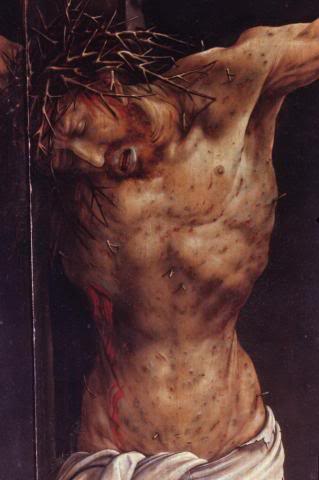
O sorrow dread! God’s Son is dead! The Lord Jesus drinks the cup which His Father has given Him to the dregs. After enduring injustice, torture, and ridicule at the hands of both Pilate and the Jews, Jesus is crucified. Mark records that even those robbers executed with Him reviled Him, along with the crowd of on-lookers. Come down from the cross, King of Israel! Descend from the cross that we may see and believe! But Jesus would not come down before His job was finished. Indeed, neither would the chief priests and scribes have believed in Him if He did. They saw Jesus perform many miracles. They saw Him perform signs as a witness to His teachings which identified Him as the Christ. These men were the teachers of Israel. They searched the scriptures diligently, but did not realize, or would not admit, that they testified of Jesus.[1] They did not believe the words of Moses; they could not then believe in Jesus, even if he performed a miracle. Now, though they do not know it, they witness what is perhaps the greatest miracle of all. The sinless Son of God becomes sin, forsaken of His Father on the cross, to save sinful man, His enemy.[2] At three o’clock in the afternoon, Jesus cries out, and breathes His last.

Oh sorrow dread!
God’s Son is dead!
But by His expiation
Of our guilt upon the cross
Gained for us salvation.[3]

Mark does not record all the signs which accompanied Jesus’ death. Mark tells us about darkness, and the tearing of the veil of the temple. Three hours of supernatural darkness came over the whole land as Jesus hangs dying on the cross. Darkness is often related to judgment in scripture; here it is a sign of God’s judgment against sin.[4]

Oh sinful man!
It was the ban
Of death on thee that brought Him
Down to suffer for thy sins
And such woe hath wrought Him.[5]

The darkness covering the land was God’s judgment against sin; the tearing of the veil of the temple was God ending the old covenant. The veil of the temple was no mere curtain, like the ones hanging from rods in front of your living room windows. It was a big, thick barrier between God’s presence in the Most Holy Place and the people. It was around four inches thick, 60 feet long, and 30 feet wide. Only the high priest could enter the Most Holy Place once a year, and only with the blood of the sacrifice for the people’s sin. When the veil was torn, God proclaimed that the ministration of the Jewish high priest was at an end; the divine High Priest, Jesus, had now come and had entered in to the Most Holy Place of heaven itself with his own all-atoning blood.[6] Christ, through the eternal Spirit offered Himself without spot to God. He is the Mediator of the new covenant, by means of death, for the redemption of the transgressions under the first covenant, that those who are called may receive the promise of the eternal inheritance.[7]

Lo, stained with blood,
The Lamb of God,
The Bridegroom lies before thee,
Pouring out His life that He
May to life restore thee. Amen![8]


[1] John 5:39-47
[2] 2 Corinthians 5:21; Romans 5:10
[3] Hymn 261, “O Darkest Woe”, The Lutheran Hymnal, stanza 2. Author: Johann Rist. Translated: Catherine Winkworth
[4] Wicke, Harold E. People's Bible Commentary: Mark. Saint Louis, MO: Concordia Pub. House, 2004.
[5] Hymn 261, “O Darkest Woe”, The Lutheran Hymnal, stanza 3. Author: Johann Rist. Translated: Catherine Winkworth
[6]Lenski, R. C. H. The Interpretation of St. Mark's Gospel. Minneapolis, MN: Augsburg Publishing House, 1961; Hebrews 6:19; 9:3-15; 10:19
[7] Hebrews 9:11-15
[8] Hymn 261, “O Darkest Woe”, The Lutheran Hymnal, stanza 4. Author: Johann Rist. Translated: Catherine Winkworth

Friday, March 9, 2018

Jesus Faces the Sanhedrin

As soon as it was day, the elders of the people, both chief priests and scribes, came together and led Him into their council, saying, “If You are the Christ, tell us.” But He said to them, “If I tell you, you will by no means believe. And if I also ask you, you will by no means answer Me or let Me go. Hereafter the Son of Man will sit on the right hand of the power of God.” Then they all said, “Are You then the Son of God?” So He said to them, “You rightly say that I am.” And they said, “What further testimony do we need? For we have heard it ourselves from His own mouth” (Luke 22:66-71).

Christ begins His journey to the cross in earnest. Jesus is troubled; He prays that the Father would remove the bitter cup from Him if possible. He knows what is coming: gruesome torture and agonizing physical death. He also knows that He is to become sin.[1] He will be forsaken on the cross by the Father for the sake of His enemies. He will be separated from God the Father. Being in agony, He prayed all the more earnestly; His sweat became as great drops of blood. Then comes the mob. This group of people is not coming for healing, or bread, or sermons. They come to seize Jesus. Betrayal, arrest, and interrogation. Mockery and beatings. At daybreak, a trial.

The High Priest asks Jesus if He is the Christ. Jesus doesn’t answer this question. He says, “Hereafter the Son of Man will sit on the right hand of the power of God.” When the High Priest asks Jesus if Jesus is the Son of God, He says yes. There is now no mistake or misunderstanding. Jesus is not a political Christ. He is not here to establish an earthly kingdom; His kingdom is not of this world.[2] His work is spiritual. He has come to save the world from sin, death, and the devil. To do that, he must go to the cross.

By His use of the phrase “Son of Man” Jesus communicates this to the High Priest. Jesus’ words call to mind the words of the prophet Daniel, and his vision of the Ancient of Days. The scene recounted by Daniel[3] is the Day of Judgment. The Ancient of Days is God the Father. Ten thousand times ten thousand attend to Him; they stand before Him awaiting the destruction of the beast and the establishment of the kingdom. Daniel writes: “And behold, One like the Son of Man, coming with the clouds of heaven! He came to the Ancient of Days and they brought Him near before Him. Then to Him was given dominion and glory and a kingdom, that all peoples, nations, and languages should serve Him. His dominion is an everlasting dominion, which shall not pass away, and His kingdom the one which shall not be destroyed.[4]” Hearing Jesus’ claim of divinity, the High Priest ended the trial. They wouldn’t need to proceed any further. They would not investigate the evidence that Jesus was the Christ. Jesus, assumed the High Priest, had committed blasphemy by making Himself equal to God.

Scripture teaches us that Jesus is indeed the Son of Man, God in human flesh. He was appointed heir of all things by God the Father. He is the brightness of the Father’s glory and the express image of His person. He upholds all things by the word of His power; when He had by Himself purged our sins, He sat down at the right hand of the Majesty on high.[5] Jesus is our real and perfect High Priest, seated at the right hand of God.[6] The earthly temple, the sacrifices, the priesthood and the High Priest were shadows of Jesus, intended to point us all to Him. He is the High Priest who does not need to offer daily sacrifice to cover sin. Jesus offered the perfect sacrifice one time for the sin of all people on the cross.


[1] 2 Corinthians 5:21
[2] John 18:36
[3] Daniel 7:9-14
[4] Daniel 7:13-14
[5] Hebrews 1:1-4
[6] Hebrews 7:25 - 8:6

Saturday, February 22, 2014

Jesus at the Feast of Booths - I

After this Jesus went about in Galilee. He would not go about in Judea, because the Jews were seeking to kill him (John 7:1).


The "this" to which John refers here is the confrontation between Jesus and the Jews in chapter six. After having fed the 5,000 the crowds followed Jesus with the intention of crowing him a bread-king. Jesus teaches the crowds, pointing out their unbelief and culminating with the shocking statement that, "Whoever feeds on my flesh and drinks my blood has eternal life, and I will raise him up on the last day" (John 6:54). As a result of this "hard saying" many of those disciples who had followed him because of the miracles he had done left him. Jesus offended the masses by claiming that he was the bread of life sent by the Father, which was prefigured by the manna of the Old Testament. This, along with his claims to be God's Son - and therefore equal to God - is why the Jews were seeking to kill him and why he withdrew to the more remote region of Galilee.


Now the Jew's Feast of Booths was at hand. So his brothers said to him, "Leave here and go to Judea, that your disciples also may see the works you are doing. For no one works in secret if he seeks to be known openly. If you do these things show yourself to the world." For not even his brothers believed in him (John 7:2-5).


The Feast of Booths was the major harvest festival, one of the three times per year when it was required for Jewish men to present themselves before the LORD at the temple. It was a celebration that lasted seven days, during which the people constructed huts, or "booths", from tree branches and dwelt therein. The feast commemorated Israel's travels in the desert on the way to the Promised Land and the fact that God protected, blessed, and cared for his people.


Jesus' brothers, who are not among his disciples, taunt him, and mockingly encourage him to go up to the feast. "Ok, Messiah," they are telling him, "put your money where your mouth is. You're not going to be the King of the Jews out here in the sticks. If you're really the Messiah go to Jerusalem and prove it." Jesus' brothers speak to Jesus as if he is running for the office of Messiah. They taunt Jesus by telling him that, "...no one works in secret if he seeks to be known openly," as if Jesus was attempting to garner support for an uprising like other revolutionary zealots of the day. This attitude betrays the fundamental misunderstanding Jesus' brothers had - along with the Scribes, Pharisees, and Teachers of the Law - of what the Messiah would be and do. They expected a political savior who would throw off the yoke of Roman oppression and establish Israel as a powerful independent kingdom, with the religious establishment wielding political power.


They, simply put, didn't believe Jesus was who he said he was. The implication of their taunting was that their weirdo brother Jesus, who said these strange and enigmatic things about feeding people with his body and blood, would be exposed as the crazy person he was. Either he would go to the feast and be exposed, or he would stay in isolation in Galilee, effectively admitting to everyone that all this Son of God nonsense was just that - nonsense.


Jesus said to them, "My time has not yet come, but your time is always here. The world cannot hate you, but it hates me because I testify about it that its works are evil. You go up to the feast. I am not going up to this feast, for my time has not yet fully come." After saying this he remained in Galilee (John 7:6-9).


Jesus responds to the taunts of his brothers by pointing out that they are of the world, and he is not of the world, a theme he will revisit and expand upon when talking to the Pharisees in chapter eight. Jesus says that he will not go to the feast. This makes sense for two reasons. First, he has already caused great controversy among the religious leaders and the people who had been following him. It could hardly be safe for him to publicly go up to Jerusalem where the Jewish leaders were seeking to kill him. Secondly, as Jesus explained, his time had not yet come. Jesus, the lamb of God who takes away the sin of the world, was the ultimate Passover lamb. His would be a once for all sacrifice to make atonement for the sin of mankind. Consequently, Jesus' time would come, but not at the Feast of Booths (Lenski, 1964). Jesus would enter Jerusalem amid great spectacle on Palm Sunday. Jesus would be killed on the cross as the final sacrifice for sin, the one to which all those previous Passover sacrifices pointed, at Passover.


But after his brothers had gone up to the feast, then he also went up, not publicly but in private. The Jews were looking for him at the feast, and saying, “Where is he?” And there was much muttering about him among the people. While some said, “He is a good man,” others said, “No, he is leading the people astray.” Yet for fear of the Jews no one spoke openly of him (John 7:10-13).


Does John here record Jesus lying? I mean, first he told them that he was not going to the feast. Then, in the next paragraph John writes, "...then he also went up..." in seeming contradiction to what Jesus said he was going to do. Kretzmann believes that Jesus was not opposed to going to Jerusalem per se; Jesus did not wish to make a public spectacle of his arrival in Jerusalem and his attendance at the feast because doing so would quite possibly disrupt the sequence of events as they were to play out. Jesus did certainly miss a good portion of the feast. There is also no real evidence from the text that Jesus participated in any of the festivities associated with the Feast of Booths, though the text does go on to say that he goes to the temple to teach (Lutheran Study Bible, 2009).

Jesus let His brothers, with their peculiar ideas concerning Messianic revelations, go up to the capital alone. But after they were gone, He started out on His journey to the feast, with none of the publicity which they had recommended. It was for that reason that He had refused to go with them openly, because the attention which it would draw on the way and on His arrival in Jerusalem would not be beneficial to the cause. He went secretly, in order not to cause excitement and to irritate the Jews into such a mental condition that they would carry out their murderous design at once. The object of His journey was only to teach in Jerusalem once more, to preach the Gospel of redemption through His Word and work (Kretzmann, 1921).


The people attending the feast, as well as the Jewish religious leaders, were indeed waiting to see if Jesus would show himself. John writes that Jesus was the topic of much debate among the people, though it had to be carried on in secret. No one wanted to take any chances where Jesus was concerned. To be perceived as defending him or being his disciple could get a person expelled from the community, and that was a seriously big deal. Such was the threat to the man born blind and his parents after he was healed by Jesus. The attitude of the people and the tenor of their debate shows how the world, left on it's own, looks at Jesus. The religious establishment seeks to murder Jesus to save their place in the nation; the people are divided as to whether Jesus is a good man, or a deceptive man. Though they have the witness of the Scriptures, those people who are "of the world" cannot see Jesus for what he really is - true God, begotten of the Father from all eternity, true man born of a woman - the God-man who would make purification for sins, and sit down at the right hand of the Father.


The world continues to see Jesus this way. In the eyes of the unbelieving world Jesus is either a champion of morality and virtue who prescribes a right way of living, or he is charlatan and a liar who attempted to gain a following through deception, or he is a self-deceived lunatic (Kretzmann, 1921). Jesus, in turn, calls the world and it's works evil. People, who are by nature sinful and unclean, inclined to sin and turn away from God, cannot help but see Jesus in one of these ways. The Father, however, draws us out of the world to Jesus, by the power of the Holy Spirit working through the means of his word. We hear God's Law, see our sin, and are terrified, because we know what we deserve for all of our worldly evil. That, however, is not the end of the story. Because of Jesus' atoning sacrifice on the cross, we have been reconciled to God. If we confess our sin God, who is faithful and just, will forgive our sin and cleanse us from all unrighteousness.

Lord Jesus Christ, Your time has come, for You have traveled to Jerusalem fro the Passover from death to life. help us to live knowing that the time of our redemption is at hand as You continue to dwell among us at the feast of Your very body and blood, a foretaste of the feast to come; for You live and reign with the Father and the Holy Spirit, one God now and forever. Amen (Treasury of Daily Prayer, 2008).


Works Cited


Engelbrecht, Edward, and Paul E. Deterding. The Lutheran Study Bible: English Standard Version. Saint Louis: Concordia Pub. House, 2009. Print.


Kinnaman, Scot A., and Henry V. Gerike. Treasury of Daily Prayer. St. Louis, MO: Concordia Pub. House, 2008. Print.


Lenski, R. C. H. The Interpretation of St. John's Gospel. Minneapolis, MN: Augsburg, 1961. Print.


"Popular Commentary, by Paul E. Kretzmann." Popular Commentary, by Paul E. Kretzmann. N.p., n.d. Web. 22 Feb. 2014.