Showing posts with label Temple. Show all posts

Wednesday, November 7, 2018

Signs of the End of the Age

As Jesus was leaving the temple, one of his disciples said to him, “Look, Teacher! What massive stones! What magnificent buildings!” “Do you see all these great buildings?” replied Jesus. “Not one stone here will be left on another; every one will be thrown down.” As Jesus was sitting on the Mount of Olives opposite the temple, Peter, James, John and Andrew asked him privately, “Tell us, when will these things happen? And what will be the sign that they are all about to be fulfilled?” (Mark 13:1-4)

Are the disciples marveling at the sheer massiveness of the construction project that was the rebuilding of the temple? Are they imagining their reigning with Jesus over a restored kingdom of Israel from those magnificent buildings? Both possibilities have been suggested. Regardless of the motivation for their wonder, Jesus would stun His disciples with His reply: Not one stone here will be left on another; every one will be thrown down. Naturally, the disciples are disturbed. The temple was the center of Israel’s civic and religious life. It was where the sacrifice was made to atone for sin. It was the most important place in the world. For the temple to be destroyed must certainly mean the end of the world. They can’t conceive of a world without the temple. When will these things happen?

Jesus does not answer their question as they, or we, would like Him to. It would have been much less frustrating if He would simply have said something like, “Titus will destroy the temple in August, in the year 70.” But He doesn’t say that, or anything remotely like that. The first thing Jesus does is to give a warning against false doctrine: Watch out that no one deceives you. Many will come in my name, claiming, ‘I am he,’ and will deceive many. Then rather than telling them what to look for to know when the end is to come, He tells them things that are not signs of the coming destruction – wars and rumors of wars…but the end is not yet. The temple is no longer important. It is no longer the center of religious life. Jesus, the Word made flesh, through whom creation was created, came to His own and His own rejected Him.[1] The one who is the image of the invisible God,[2] in whom all the fullness of the godhead dwells bodily,[3] came to His temple, His dwelling place in Zion. He came as a sacrifice for sin.[4] He was oppressed, and He was afflicted, yet He opened not His mouth; and the LORD hath laid on Him the iniquity of us all. As Jesus left His Father’s house for the last time, He knew that His sacrifice on the cross to atone for the sins of the world would make the sacrifices at the temple obsolete. Paying attention to this building and it’s demise is not important; paying attention to, and having faith in, the one who is the completion of the temple and it’s sacrifices, the true Christ, is. Jesus calls us to repent of our sin, to have faith in Him, and to keep His word.

Jesus tells His disciples, and everyone, to watch. “When you see ‘the abomination that causes desolation’ standing where it does not belong…then let those who are in Judaea flee to the mountains.” The Christians living in Jerusalem at the time of the siege in 70 AD remembered what Jesus said and did just that. In the time preceding the destruction of Jerusalem and the temple, a sort of dress rehearsal for the Last Judgment, they also kept Jesus’ other words, His doctrines, which simply means “teachings”. They remembered not to be distressed by wars and rumors of wars; they did not believe the false Christs and false prophets who came performing signs and miracles to try and deceive them; they preached the Gospel to all nations; and they stood firm to the end in the face of the persecution, division, and death brought against them because of that Gospel. In the words of St. Paul, writing to Timothy, they watched their life and doctrine closely. We are called to watch as well. We watch for the owner of the house to return, for He comes at an hour we do not know; we also watch our life and doctrine closely, for by it, as St. Paul says, we will save ourselves and those who hear us.[5]


[1] John 1:1, 3, 10-11, 14
[2] Colossians 1:15
[3] Colossians 2:9
[4] Romans 5:6; John 1:29; 1 John 2:2
[5] 1 Timothy 4:16

Wednesday, March 21, 2018

Jesus Dies on the Cross

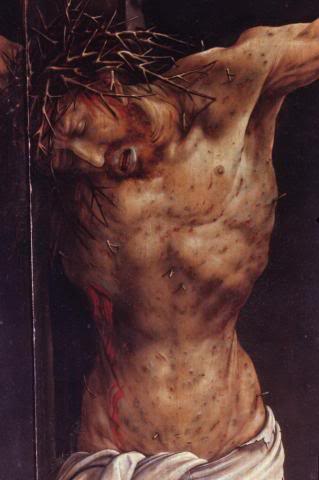
And Jesus cried out with a loud voice, and breathed His last. Then the veil of the temple was torn in two from top to bottom. So when the centurion, who stood opposite Him, saw that He cried out like this and breathed His last, he said, “Truly this Man was the Son of God!” (Mark 15:37-39).

O sorrow dread! God’s Son is dead! The Lord Jesus drinks the cup which His Father has given Him to the dregs. After enduring injustice, torture, and ridicule at the hands of both Pilate and the Jews, Jesus is crucified. Mark records that even those robbers executed with Him reviled Him, along with the crowd of on-lookers. Come down from the cross, King of Israel! Descend from the cross that we may see and believe! But Jesus would not come down before His job was finished. Indeed, neither would the chief priests and scribes have believed in Him if He did. They saw Jesus perform many miracles. They saw Him perform signs as a witness to His teachings which identified Him as the Christ. These men were the teachers of Israel. They searched the scriptures diligently, but did not realize, or would not admit, that they testified of Jesus.[1] They did not believe the words of Moses; they could not then believe in Jesus, even if he performed a miracle. Now, though they do not know it, they witness what is perhaps the greatest miracle of all. The sinless Son of God becomes sin, forsaken of His Father on the cross, to save sinful man, His enemy.[2] At three o’clock in the afternoon, Jesus cries out, and breathes His last.

Oh sorrow dread!
God’s Son is dead!
But by His expiation
Of our guilt upon the cross
Gained for us salvation.[3]

Mark does not record all the signs which accompanied Jesus’ death. Mark tells us about darkness, and the tearing of the veil of the temple. Three hours of supernatural darkness came over the whole land as Jesus hangs dying on the cross. Darkness is often related to judgment in scripture; here it is a sign of God’s judgment against sin.[4]

Oh sinful man!
It was the ban
Of death on thee that brought Him
Down to suffer for thy sins
And such woe hath wrought Him.[5]

The darkness covering the land was God’s judgment against sin; the tearing of the veil of the temple was God ending the old covenant. The veil of the temple was no mere curtain, like the ones hanging from rods in front of your living room windows. It was a big, thick barrier between God’s presence in the Most Holy Place and the people. It was around four inches thick, 60 feet long, and 30 feet wide. Only the high priest could enter the Most Holy Place once a year, and only with the blood of the sacrifice for the people’s sin. When the veil was torn, God proclaimed that the ministration of the Jewish high priest was at an end; the divine High Priest, Jesus, had now come and had entered in to the Most Holy Place of heaven itself with his own all-atoning blood.[6] Christ, through the eternal Spirit offered Himself without spot to God. He is the Mediator of the new covenant, by means of death, for the redemption of the transgressions under the first covenant, that those who are called may receive the promise of the eternal inheritance.[7]

Lo, stained with blood,
The Lamb of God,
The Bridegroom lies before thee,
Pouring out His life that He
May to life restore thee. Amen![8]


[1] John 5:39-47
[2] 2 Corinthians 5:21; Romans 5:10
[3] Hymn 261, “O Darkest Woe”, The Lutheran Hymnal, stanza 2. Author: Johann Rist. Translated: Catherine Winkworth
[4] Wicke, Harold E. People's Bible Commentary: Mark. Saint Louis, MO: Concordia Pub. House, 2004.
[5] Hymn 261, “O Darkest Woe”, The Lutheran Hymnal, stanza 3. Author: Johann Rist. Translated: Catherine Winkworth
[6]Lenski, R. C. H. The Interpretation of St. Mark's Gospel. Minneapolis, MN: Augsburg Publishing House, 1961; Hebrews 6:19; 9:3-15; 10:19
[7] Hebrews 9:11-15
[8] Hymn 261, “O Darkest Woe”, The Lutheran Hymnal, stanza 4. Author: Johann Rist. Translated: Catherine Winkworth

Friday, February 23, 2018

Woe to the Pharisees and Lawyers

And as He spoke, a certain Pharisee asked Him to dine with him. So He went in and sat down to eat. When the Pharisee saw it, he marveled that He had not first washed before dinner. Then the Lord said to him, “Now you Pharisees make the outside of the cup and dish clean, but your inward part is full of greed and wickedness. Foolish ones! Did not He who made the outside make the inside also? But rather give alms of such things as you have; then indeed all things are clean to you. “But woe to you Pharisees! For you tithe mint and rue and all manner of herbs, and pass by justice and the love of God. These you ought to have done, without leaving the others undone. Woe to you Pharisees! For you love the best seats in the synagogues and greetings in the marketplaces. Woe to you, scribes and Pharisees, hypocrites! For you are like graves which are not seen, and the men who walk over them are not aware of them.” Then one of the lawyers answered and said to Him, “Teacher, by saying these things You reproach us also.” And He said, “Woe to you also, lawyers! For you load men with burdens hard to bear, and you yourselves do not touch the burdens with one of your fingers. Woe to you! For you build the tombs of the prophets, and your fathers killed them. In fact, you bear witness that you approve the deeds of your fathers; for they indeed killed them, and you build their tombs. Therefore the wisdom of God also said, ‘I will send them prophets and apostles, and some of them they will kill and persecute,’ that the blood of all the prophets which was shed from the foundation of the world may be required of this generation, from the blood of Abel to the blood of Zechariah who perished between the altar and the temple. Yes, I say to you, it shall be required of this generation. “Woe to you lawyers! For you have taken away the key of knowledge. You did not enter in yourselves, and those who were entering in you hindered.” And as He said these things to them, the scribes and the Pharisees began to assail Him vehemently, and to cross-examine Him about many things, lying in wait for Him, and seeking to catch Him in something He might say, that they might accuse Him (Luke 11:37-54).
 
Jesus and His disciples go to dinner with unwashed hands. The Pharisees marveled, but not because they were disgusted at Jesus’ dirty fingernails; they marveled because Jesus and His disciples did not observe the Traditions of the Elders. The washing in question was a ceremonial one. It wasn’t meant to scrub the grime from their hands; it was meant to cleanse the gentile filth with which they may have been contaminated. These traditions, it was taught, were commands given by God, through Moses, to the Elders on Mt. Sinai, orally. They were not written down by Moses. The scribes, Pharisees, and teachers of the law taught that these traditions were God’s word, just like the written Scriptures (Torah[1]). By disregarding these traditions, Jesus shows His disciples, and us, that they are not.
 
Jesus calls the Pharisees hypocrites. They take great care to observe the Traditions of the Elders, but ignore God’s actual Law. Jesus says that they honor God with their lips, but their hearts were far from Him.[2] They were teaching as doctrines the commandments of men. They didn’t believe they were sinful. They were keeping all the rules. They did not repent. They did not believe the Gospel. They did not have faith in God; they had faith in their own good works. Jesus calls them unmarked graves and whitewashed tombs because of this. An unmarked grave looks like normal, healthy ground, vibrant with life in the form of thick, green grass. Beneath the surface, however, lies a rotting corpse. The painted tomb looks pretty and neat but inside there are dead men’s bones. According to the Law, to touch a dead body would make a man ceremonially unclean. He would have to be excluded for a time from the community, and the temple, where forgiveness of sins was to be found.[3] Jesus is telling the Pharisees that, because of their rejection of God’s commands in favor of man-made laws they thought they could keep, they are unclean. They are cut off from God, like the ceremonially unclean person who cannot offer his sacrifice for sin in the temple. Though they may look holy by their outward acts of piety, they are actually dead inside.
 
The temple and the sacrifices prescribed by God to be offered there were type and shadow of what was to come: Jesus. The temple was where God dwelt with His people Israel. Jesus, true God and true man, is Immanuel - God, with us. In the person of Jesus of Nazareth, God came into the world, though the world did not know Him, and His people did not receive Him.[4] Even now He is with us, according to both His divine and human natures, through Word and Sacrament, and the working of the Spirit, even until the end of the age.[5] The sacrifices showed the true cost of sin; only the shedding of blood could atone for it.[6] Animal sacrifice was insufficient. They had to be performed over and over again. Jesus is the one perfect sacrifice for sin.[7] He became sin for us so that the guilt of our sin would no longer be counted against us.[8] Jesus is our salvation. He is the one greater than the temple.[9] He is the payment for our sin - all of our sin - and the sin of the whole world.[10]
 
Since the temple was a shadow of the reality that was fulfilled in Christ, we need to participate in the real thing. The washing that counts is not the removal of the filth of the flesh, but the washing of regeneration and renewing of the Holy Spirit, whom God poured out abundantly through Jesus Christ our Savior, that having been justified by His grace, we should become heirs according to the hope of eternal life.[11] This is baptism, which saves us.[12] It is how we take part in Christ’s death and resurrection.[13] It is not a work done by men as a mere ceremony; it is a means by which God delivers to us His Word and promise, the forgiveness of sins won by Christ on the cross, and works repentance and faith in our hearts by His Holy Spirit.
 
______
 
[1] The Torah is the law of God as revealed to Moses and recorded in the first five books of the Hebrew Scriptures.
[2] Matthew 15:7-9
[3] Number 19:11-13
[4] John 1:1-13
[5] Matthew 28:19-20; FC SD VIII 78.
[6] Hebrews 9:22
[7] Hebrews 9:22-28
[8] 2 Corinthians 5:21
[9] Matthew 12:6
[10] 1 John 2:2
[11] Titus 3:5-7
[12] 1 Peter 2:18-22
[13] Romans 6:4-5; Galatians 2:20

Wednesday, November 16, 2016

The Signs of the Times and the End of the Age

Then Jesus went out and departed from the temple, and His disciples came up to show Him the buildings of the temple. And Jesus said to them, “Do you not see all these things? Assuredly, I say to you, not one stone shall be left here upon another, that shall not be thrown down.” Now as He sat on the Mount of Olives, the disciples came to Him privately, saying, “Tell us, when will these things be? And what will be the sign of Your coming, and of the end of the age?” And Jesus answered and said to them: “Take heed that no one deceives you. For many will come in My name, saying, ‘I am the Christ,’ and will deceive many. And you will hear of wars and rumors of wars. See that you are not troubled; for all these things must come to pass, but the end is not yet. For nation will rise against nation, and kingdom against kingdom. And there will be famines, pestilences, and earthquakes in various places. All these are the beginning of sorrows. Then they will deliver you up to tribulation and kill you, and you will be hated by all nations for My name’s sake. And then many will be offended, will betray one another, and will hate one another. Then many false prophets will rise up and deceive many. And because lawlessness will abound, the love of many will grow cold. But he who endures to the end shall be saved. And this gospel of the kingdom will be preached in all the world as a witness to all the nations, and then the end will come” (Matthew 24:1-14).

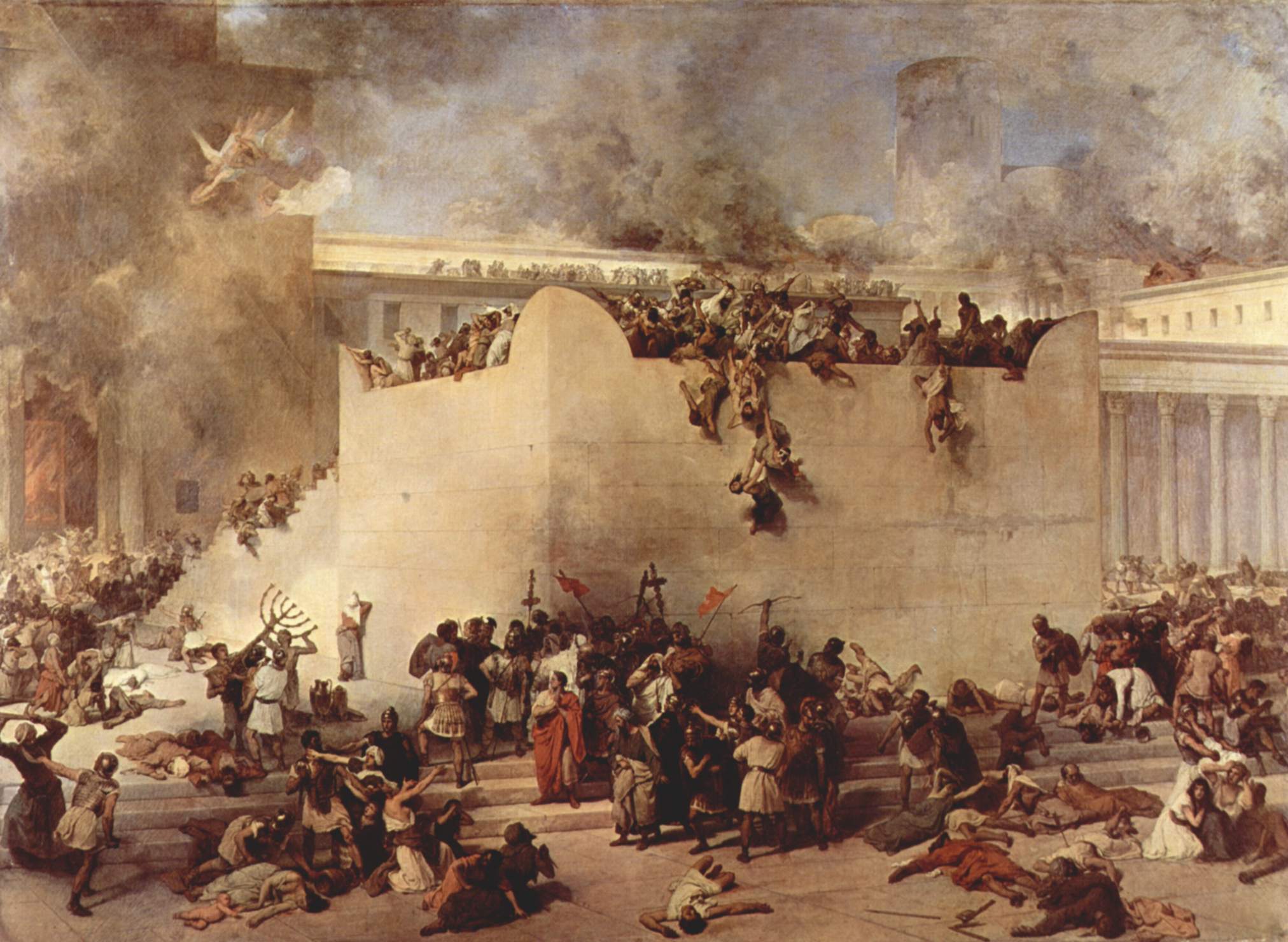
The disciples, like the Pharisees, and indeed, all the Jews of Jesus’ day, took great pride in the temple. It was to the nation of Israel, as we might say today, a national symbol. In those terms, it might be compared to America’s Capitol Building, the White House, or the Statue of Liberty. More importantly, it was the center of Jewish religious life. It was where the sacrifice for sin was made. It was where the presence of God Almighty abode with his people. It was, in the Most Holy Place, where the High Priest, on behalf of all the people, would enter into God’s presence bringing the blood of the sacrifice for the atonement of their sin. The temple was supremely important to the 1st Century Jew.

The idea and function of the temple was important, both in political and religious terms, and this was reflected in its construction. Solomon had constructed a large and ornate temple which housed the Ark of the Covenant. Herod’s was smaller and less magnificent than Solomon’s, but it was still an edifice built to reflect its importance. Herod, the self-proclaimed king of the Jews, wanted to get on his people’s good side. The bulk of the work on the temple took a decade (between 20-30 BC) to finish; the whole thing wasn’t complete until about 60 AD (Packer and Tenney 1980). He built his subjects a structure in which they could be proud, in which their religious business could be conducted properly, and which would gain for him the admiration of his subjects. So it is a natural and understandable thing for the disciples, chests puffed up with pride, to point out the temple complex to Jesus while looking down on it from the mountainside.

Jesus doesn’t react in the same way as the disciples, though. He tells them that, one day, this magnificent temple will be utterly destroyed and, “…not one stone shall be left here upon another, that shall not be thrown down.” The disciples shock and confusion is demonstrated by their response to Jesus. “Tell us,” they ask, “When will these things be? And what will be the sign of your coming, and of the end of the age?” Their pride is in the temple. Its destruction, to them, can only mean the end of the world. They want to know what to look for so they can be ready.

But, Jesus is vague. It would’ve been more satisfying for the disciples in that moment, I imagine, if Jesus had given them a date and time. “Yes,” he might have said, “the temple gets it in 70 AD, but the world keeps chugging along well into the 21st Century…” Instead of giving them a detailed schematic of precisely how things were going to play out during the End Times, he warns them not to be deceived by false Christs. He tells them to watch for wars and rumors of wars. And, the things he describes – nation rising against nation, famines, pestilences, earthquakes – were all going on around the disciples at that time, just as they are going on around us today. The end of the age has already begun. The disciples were, and we are, living in the last days. Geopolitical conflicts and natural disasters can help confirm this fact, but they cannot show us when the end will come. Evidently, Jesus wants the disciples and those who come after, to feel a sense of urgency about the end of the age and the Last Day so that we do not procrastinate (Albrecht and Albrecht 1996).

So many Christians today attempt to read the Bible through the headlines of the newspaper. The alleged modern day prophets and self-proclaimed apostles try to figure out which woe or trumpet judgment of the book of Revelation we are passing through based on the world’s political situation or what color the moon is. They look for the coming of a glorious millennial kingdom and a rapture where Jesus returns secretly to spirit his followers from the earth, things which are foreign to Holy Scripture, at least in the way much of American Evangelicalism interprets those things. They have become distracted from what Christ has told us to focus on: Himself. Kretzmann, in his New Testament commentary, explains it like this:

There is no trace of an idea of a millennium in this [the disciple’s] question. The belief which the Jews held, and which Christ here supports, is that the present age of the world, the age of sin and death, will end with the Last Judgment, without any intervening time of millennial glory. This is indicated also in the answer of Christ, when He tells them to see to it, to take heed, to guard against deception and terror. For the signs that would precede both the destruction of Jerusalem and the end of the world would be of a nature to demand calm minds and brave hearts (Kretzmann 1921).

Jesus redirects our attention away from earthly glory, and the man-made and natural terrors of this age which will all pass away, to that which is really important – remaining faithful to Christ. We do well to remember Our Lord’s words here. Through all the terrors, trials, tribulations, and persecutions, “…he who endures to the end shall be saved.”

If we hear these words, “But he who endures to the end shall be saved,” as Law, there is no comfort in them. Indeed, they then serve the first function of the Law and show us our sin. How can I, a poor, sinful being, endure even one hour, let alone until the end? If it were a work left to us to perform, we could not. Christ, however, has become the ultimate sacrifice for sin. And he, our High Priest in the order of Melchizedek, entered the presence of the Father, not with the blood of beasts, but with his own blood, and obtained for us eternal redemption from sin and death[1]. He has come to us through Word and Sacrament and created faith in us; By Word and Sacrament He sustains that faith. The temple and its sacrifices were the shadow of the reality to come through Christ. There is no longer any need of the “type” once the real thing has arrived.

So, rather than being frightened by the wars and rumors of wars, we should remember that we are living in the last days and that the hour is late. We need to repent of our sin and trust in the Lord Jesus. We need to gather around Word and Sacrament to receive his gifts. We need to remember that, though the world is indeed increasingly evil and hostile to God, Christians are ever nearer the great day of Christ’s return (Engelbrecht 2009).


Works Cited


Albrecht, G. Jerome, and Michael J. Albrecht. People's Bible Commentary: Matthew. St. Louis: Concordia Publishing House, 1996.

Engelbrecht, Rev. Edward A., ed. The Lutheran Study Bible. Saint Louis: Concordia Publishing House, 2009.

Kretzmann, Paul E. Popular Commentary of the Bible: New Testament. Vol. 1. 2 vols. St. Louis, MO: Concordia Publishing House, 1921.

Packer, J. I., and M. C. Tenney, . Illustrated Manners and Customs of the Bible. Nashville, TN: Thomas Nelson Publishers, 1980. 


[1] But Christ came as High Priest of the good things to come, with the greater and more perfect tabernacle not made with hands, that is, not of this creation. Not with the blood of goats and calves, but with His own blood He entered the Most Holy Place once for all, having obtained eternal redemption. For if the blood of bulls and goats and the ashes of a heifer, sprinkling the unclean, sanctifies for the purifying of the flesh, how much more shall the blood of Christ, who through the eternal Spirit offered Himself without spot to God, cleanse your conscience from dead works to serve the living God? And for this reason He is the Mediator of the new covenant, by means of death, for the redemption of the transgressions under the first covenant, that those who are called may receive the promise of the eternal inheritance (Hebrews 9:11-15).

Wednesday, August 5, 2015

Replacement Theology

The altar intended for use in a rebuilt Jewish temple.
Photo credit: The Temple Institute.
“Consider Abraham: ‘He believed God, and it was credited to him as righteousness.’ Understand, then, that those who believe are children of Abraham. The Scripture foresaw that God would justify the Gentiles by faith, and announced the gospel in advance to Abraham: ‘All nations will be blessed through you." So those who have faith are blessed along with Abraham, the man of faith’ (Galatians 3:6-9).

In March 2015 a website called Breaking Israel News reported that construction of a stone altar which would berequired for renewed sacrificial service in a rebuilt Jewish temple had been completed. The altar was built by The Temple Institute, a non-profit organization in Jerusalem founded in 1987, “…dedicated to every aspect of the Biblical commandment to build the Holy Temple of G-d on Mount Moriah in Jerusalem (The Temple Institute n.d.).” Currently, the Al Aqsa mosque and the Dome of the Rock, Islamic holy sites, occupy the Temple Mount, where Jews and some Evangelical Christians envision a rebuilt Jewish temple. The Temple Institute, however, has accounted for this by designing the new altar so that it can be taken apart and reassembled, “when circumstances become favorable.”

“One thing that makes this altar unique is that it was designed to be disassembled and quickly reassembled in its correct position on the Temple Mount. According to the Temple Institute, ‘The people of Israel are required to build an altar exclusively on the site of the original altar on Mount Moriah, the Temple Mount. When circumstances become favorable, this new altar can be quickly re-assembled on the proper location, enabling the Divine service to be resumed without delay (Balofsky 2015).’”

The Divine Service mentioned in the Temple Institute’s statement is not the communion service with which Confessional Lutherans are familiar. Rather, the phrase refers to the animal sacrifices prescribed in the Old Testament.

“The base of the altar contains two portals for collecting the blood poured during animal sacrifices, in accordance with the Torah. It is also crowned with four raised corners, called horns by the Torah (Balofsky 2015).”

Religious Jews are not the only ones working toward the goal of a rebuilt temple on the Temple Mount. Evangelical Dispensational Christians such as Tim LaHaye believe that a rebuilt temple and the physical nation of Israel are integral to the plot of End-Times prophecy. Dispensationalists such as LaHaye believe that “God’s plan for history demands a consistent distinction between national Israel and the church which includes an ongoing plan for national, ethnic Israel that culminates in Christ’s millennial kingdom (Tim LaHaye Ministries n.d.).”

These Christians believe that New Testament prophecies associated with the Jewish Temple, such as Matthew 24–25 and 2 Thessalonians 2:1–12, were not completely fulfilled in 70 AD, when Jerusalem was razed by the Romans. This view is a core part of Dispensationalism, which teaches that the Jews remain God's chosen people. Dispensationalist theologians, such as LaHaye, teach that the Third Temple will be rebuilt when the Antichrist makes peace between the modern nation of Israel and its neighbors after a world war. The Antichrist is often identified as the political leader of a world-wide national alliance, often identified by leaders in the dispensational movement as the European Union or the United Nations. The Antichrist will proclaim himself to be God at the rebuilt temple and demand worship. At some point before, during, or possibly after these events, Christians will be raptured off the earth by Christ. There will be a great tribulation culminating in the battle of Armageddon, the final return of Christ, and the inauguration of the Millennial Kingdom on earth (though not necessarily in that order). At some point during these events the physical nation of Israel will be saved – converted to Christ – en masse.

The future salvation of the national Israel will result in much greater blessings to the Gentiles. It is called "life from the dead" (v. 15). This phrase is interpreted in three different ways. First, it can be seen as a literal resurrection, that is, a general resurrection from the dead leading to blessed eternal life. In other words, the conversion of Israel will signal the resurrection of the last day. The restoration of the Jews at once will bring on the end. The dead will be raised and the Messiah's kingdom will be set up glorious and incorruptible. Professor Ernst Käsemann says, "The conversion of Israel is . . . also the last act of salvation history" (Matthew 2011).

This article isn’t meant to be a survey of Dispensational teachings, though it is helpful to be familiar with the landscape of Dispensationalism when navigating through the wilderness of American Evangelicalism. The focus of this article is to examine what popular Evangelical teachers, such as Tim LaHaye, teach about Israel in relation to what the Bible says about Israel. American Evangelicals who are of a Dispensationalist flavor often accuse other confessional Christians of engaging in “replacement” theology. Replacement theology is popularly defined as the teaching that the Christian Church has replaced the Israelites as God's chosen people, and that the Mosaic covenant has been replaced or superseded by the New Covenant (Supersessionism 2015). Opponents of this Replacement Theology charge that this view leads to persecution of Jews by Christians, as they are no longer seen as favored by God. Attempts to cast so-called Replacement Theology in an unflattering light notwithstanding, it is taught in Holy Scripture and stands in direct opposition to what is taught by much of the Christian church in America today.

In Chapters 9-11 in the Book of Romans, St. Paul writes about his anguish concerning his countrymen – his people according to the flesh. St. Paul makes a distinction between the Israel of the flesh, and the Israel of God. Rather than teaching that there are two separate peoples with whom God deals differently and apart from one another, however, St. Paul laments that one group (physical Israel) is lost while the other (spiritual Israel, or the Israel of God) is redeemed through Christ.

I speak the truth in Christ—I am not lying, my conscience confirms it through the Holy Spirit— I have great sorrow and unceasing anguish in my heart. For I could wish that I myself were cursed and cut off from Christ for the sake of my people, those of my own race, the people of Israel. Theirs is the adoption to sonship; theirs the divine glory, the covenants, the receiving of the law, the temple worship and the promises. Theirs are the patriarchs, and from them is traced the human ancestry of the Messiah, who is God over all, forever praised! Amen. It is not as though God’s word had failed. For not all who are descended from Israel are Israel. Nor because they are his descendants are they all Abraham’s children. On the contrary, “It is through Isaac that your offspring will be reckoned.” In other words, it is not the children by physical descent who are God’s children, but it is the children of the promise who are regarded as Abraham’s offspring. For this was how the promise was stated: “At the appointed time I will return, and Sarah will have a son” (Romans 9:1-9).

Lenski writes the following, regarding verse 6:

He [Paul] is clearing up what may cause a difficulty for earnest Christians when they look at the position assigned to Israel in God’s Word and yet see that Israel is lost. They may think that the Word of God has dropped away, that the outcome with regard to Israel proves it to be unreliable, non-dependable. Such would be mistaken regarding Israel and regarding the Word: regarding Israel because it does not include all the physical descendants of Abraham; regarding the Word because this is promise and itself excludes unbelief and unbelievers. Not the Word has fallen by the way, ‘it liveth and abideth forever’ (I Peter 1:23); but these Israelites, despite the Word and the promises which they had, have fallen by the way (Lenski 1945).

St. Paul cites all the things God has raised up for the salvation of men through the nation of Israel – the sonship, the divine glory, the covenants, the receiving of the law, the temple worship, the promises – culminating in the very Messiah himself. But then he goes on to say that, “Not all who are descended from Israel are Israel.” In other words, not every Jew can claim to be an Israelite simply because he is a Jew. St. Paul emphasizes here, as he does in Galatians, that faith in Christ is what saves a person, not their physical lineage. Despite all of the things St. Paul mentions here, because they rejected Christ, they did not belong to God. Jesus makes this point to the Pharisees in a rather more pointed way:

[speaking to the Jews...the Pharisees], "If you were Abraham's children," said Jesus, "then you would do the things Abraham did. As it is you are determined to kill me, a man who has told you the truth that I heard from God. Abraham did not do such things. You are doing the things your own father does." "We are not illegitimate children," they protested. "The only Father we have is God himself." Jesus said to them, "If God were your Father, you would love me, for I came from God and now am here. I have not come on my own; but he sent me. Why is my language not clear to you? Because you are unable to hear what I say. You belong to your father, the devil, and you want to carry out your father's desire. He was a murderer from the beginning, not holding to the truth, for there is no truth in him. When he lies, he speaks his native language, for he is a liar and the father of lies. Yet because I tell the truth, you do not believe me! Can any of you prove me guilty of sin? If I am telling the truth, why don't you believe me? He who belongs to God hears what God says. The reason you do not hear is that you do not belong to God" (John 8:39-47).

The Pharisees are not Abraham’s offspring because they do not have faith in Christ. They have the physical blood line, but they reject the promise. This is what St. Paul is grieving in the opening verses of Romans chapter nine. St. Paul, who loves his fellow Israelites-by-blood, laments the fact that they are lost – cut off from Israel – because they reject God’s promised Messiah and do not repent of their sin.

Israel is the name God gave to Jacob in Genesis 32. This name later expanded from Jacob to all the 12 tribes of people who descended from him. Rev. Alexander Lange, preaching on Jesus’ baptism by John the Baptist, explains that God shows his love for his people Israel by calling them his “firstborn son” (Exodus 4:22). Jesus, the Son of God, however, is Israel reduced to one. Israel was to be a light to the nations by living in a special relationship to God. He would be their savior and they would be faithful and obedient. Israel, however, was not faithful and obedient to God and needed a substitute:

John [the Baptist] was calling Israel to repentance. Then God sent Jesus to John with a very special mission — Jesus would become Israel’s substitute. He would become Israel Reduced to One. He would be the Israel that Israel never could be. Jesus would succeed where Israel had failed. Just look at our text and see how Jesus reenacted Israel’s life (Matthew 3:13-17). Like Israel, Jesus passed through water. Having been baptized, he was anointed by the Holy Spirit, just like Israel. God announced that this man is his beloved, firstborn Son, just as he once did with Israel. After his baptism, Jesus wandered in the wilderness...just like Israel. He was tested...just like Israel. Unlike Israel, Jesus withstood all temptations. He did not whine when he grew hungry or worship false gods. He did not grieve God’s Spirit. Unlike Israel, Jesus was a faithful, obedient Son. Jesus carried out God’s mission perfectly. He was the Light of the Word. He drew people to himself and told people about God’s wonderful works and steadfast love. Jesus was the perfect fulfillment of Israel (Lange 2014).

St. Paul expressly teaches that there are not two peoples, Jew and Gentile, with whom God deals separately from one another. On the contrary, Israel is the Body of Christ – all those, Jew or Gentile, who have been brought to penitent faith in Christ Jesus for the forgiveness of their sins. Jew and Greek, slave and free, male and female are all one through faith in Christ. To be in Christ is to be a part of Israel.

Now before faith came, we were held captive under the law, imprisoned until the coming faith would be revealed. So then, the law was our guardian until Christ came, in order that we might be justified by faith. But now that faith has come, we are no longer under a guardian, for in Christ Jesus you are all sons of God, through faith. For as many of you as were baptized into Christ have put on Christ. There is neither Jew nor Greek, there is neither slave nor free, there is no male and female, for you are all one in Christ Jesus. And if you are Christ's, then you are Abraham's offspring, heirs according to promise (Galatians 3:24-29).

St. Paul explains that, those who have been connected to Christ through baptism have been connected to his death, and will also be connected to his resurrection.

Do you not know that all of us who have been baptized into Christ Jesus were baptized into his death? We were buried therefore with him by baptism into death, in order that, just as Christ was raised from the dead by the glory of the Father, we too might walk in newness of life. For if we have been united with him in a death like his, we shall certainly be united with him in a resurrection like his. We know that our old self was crucified with him in order that the body of sin might be brought to nothing, so that we would no longer be enslaved to sin (Romans 6:3-6).

Finally, Pieper has this to say regarding the physical nation of Israel:

It is the express declaration of the Apostle that the present state of Israel is not one of hardening of the heart, but there is a hardening only of a part of Israel, and Paul’s words (Rom. 11:32): ‘God hath concluded them all in unbelief that He might have mercy upon all,’ apply to the Jews till the end of the world. Walther says well: ‘True though it be that the Jews have crucified and rejected their own Messiah, still, according to the mystery unfolded by the Apostle, Jews shall be converted as long as Gentiles are converted. Not only will the door of grace remain open till the end, but there shall always be a number of both who actually enter the Kingdom of God’ (Pieper 1953).


Works Cited


Balofsky, Ahuva. "New Details Emerge on Rebuilt Altar of Jewish Temple." Breaking Israel News. March 23, 2015. http://www.breakingisraelnews.com/33583/new-details-emerge-rebuilt-holy-temple-jewish-world/#GuKaMp3WphwdHsCh.97 (accessed July 24, 2015).

Lange, Rev. Alexander J. "Israel Reduced to One." St. John's Lutheran Church - East Moline, IL. January 12, 2014. www.stjohnsem.org/TextSermons/.../Israel%20Reduced%20to%20One.rtf (accessed July 27, 2015).

Lenski, Dr. Richard C. H. The Interpretation of St. Paul's Epistle to the Romans. Columbus, Ohio: Wartburg Press, 1945.

Matthew, Rev. P. G. "The Salvation of the Jews." Grace Valley Christian Center. May 29, 2011. http://www.gracevalley.org/sermon_trans/2011/Salvation_of_Jews.html#f1 (accessed July 27, 2015).

Pieper, D.D., Francis. Christian Dogmatics. Vol. III. IV vols. Saint Louis: Concordia Publishing House, 1953.
"Supersessionism." Wikipedia. June 23, 2015. https://en.wikipedia.org/wiki/Supersessionism (accessed July 24, 2015).

The Temple Institute. "About The Temple Institute." The Temple Institute. https://www.templeinstitute.org/about.htm (accessed July 24, 2015).

Tim LaHaye Ministries. "Pre-Trib Doctrinal Statement." Tim LaHaye Ministries. https://www.timlahaye.com/Home/Content/517 (accessed July 24, 2015).


Monday, April 14, 2014

Jesus at the Feast of Booths - II

Not until halfway through the Feast did Jesus go up to the temple courts and begin to teach. The Jews were amazed and asked, "How did this man get such learning without having studied?" (John 7:14-15).

It's difficult enough these days to get a job when you have all your ducks in a row. It's nearly impossible to do so without the proper credentials. For the vast majority of high school students that involves some sort of college education. College, of course, isn't right for everyone. Some people go to technical schools to receive practical hands-on training in their chosen field. Still others, such as policemen, may not be required to have a college education by their employer. They are sent to a police academy, where they are taught the skills and learn the information vital to a successful career of doughnut-eating and vindictive ticket-writing.

The thing these examples have in common is that, before one can begin a job, one is required to demonstrate proficiency. Imagine a "doctor" practicing without a medical degree, or a lawyer practicing without having passed the bar. Today we demonstrate our proficiency through some sort of license, degree, or certification. When the patient sees the diploma on the wall of their physicians office, they understand that it represents the many years of hard work, study, and practice (not to mention money) that the doctor spent learning and honing his craft. When the citizen sees the badge on the breast of the policeman, he can reasonably trust that the officer's job proficiency, as well as his authority, are derived from more than simply watching reruns of T.J. Hooker.

Jesus, however, had no credentials. He had no "degree", and this was a serious affront to "the Jews", the religious leaders made up of the scribes, the Pharisees, and the teachers of the Law. There may not have been a system of accredited seminaries in first century Judea like we have today in the United States, but there certainly was a system. Jesus, however, had not been a part of that system and for him to teach as he did was scandalous.

It wasn't, however, only that Jesus was teaching without being properly certified. When the Jews taught, they carefully cited previous teachers and scholars of the Law. They all sought to cite their teachings in order to show that they were correct (by two or three witnesses shall testimony be established, after all) and that they had credibility. Jesus taught, as Scripture says, as one who had authority. In other words, Jesus taught the people, not by showing what those rabbis who came before him said about the Law. He taught as the one who wrote and implemented the Law. This attitude was not lost on the people and the Jews. The Bible tells us that the people marveled and openly wondered what kind of statement Jesus was trying to make:

The people were amazed at his teaching, because he taught them as one who had authority, not as the teachers of the law...The people were all so amazed that they asked each other, “What is this? A new teaching—and with authority! He even gives orders to impure spirits and they obey him,” (Mark 1:22, 27).

This also included the religious leaders:

Jesus entered the temple courts, and, while he was teaching, the chief priests and the elders of the people came to him. “By what authority are you doing these things?” they asked. “And who gave you this authority?” Jesus replied, “I will also ask you one question. If you answer me, I will tell you by what authority I am doing these things. John’s baptism—where did it come from? Was it from heaven, or of human origin?” They discussed it among themselves and said, “If we say, ‘From heaven,’ he will ask, ‘Then why didn't you believe him?’ But if we say, ‘Of human origin’—we are afraid of the people, for they all hold that John was a prophet.” So they answered Jesus, “We don’t know.” Then he said, “Neither will I tell you by what authority I am doing these things (Matthew 21:23-27).

The Jews, however, really understood that Jesus was claiming deity for himself, and that's why they plotted to kill him. Jesus could, of course, teach in this way because he is the Messiah, the divine Son of God and second person of the Trinity. He is, as Scripture calls him, the author of life, the one through whom creation came into being, the one who was the very image of God the Father.

Jesus demonstrated this authority by what he did in addition to what he said and the manner in which he taught:

Which is easier: to say, ‘Your sins are forgiven,’ or to say, ‘Get up and walk’? But I want you to know that the Son of Man has authority on earth to forgive sins.” So he said to the paralyzed man, “Get up, take your mat and go home.” Then the man got up and went home (Matthew 9:5-7).

He restored sight to the blind, opened the ears of the deaf, loosed the tongues of the dumb, raised the dead, and ultimately, rose from the dead himself. The Jews saw all these things but refused to see them for the signs they were. These things were the credentials, so to speak, that holy scripture said would accompany the Messiah. The Jews, however, demanded that Jesus "tell them plainly" who he claimed to be, and asked for a sign to prove his claims. Having ears, they did not hear; having eyes they did not see.

“ [Peter said] Therefore let all Israel be assured of this: God has made this Jesus, whom you crucified, both Lord and Messiah.” When the people heard this, they were cut to the heart and said to Peter and the other apostles, “Brothers, what shall we do?” Peter replied, “Repent and be baptized, every one of you, in the name of Jesus Christ for the forgiveness of your sins. And you will receive the gift of the Holy Spirit. The promise is for you and your children and for all who are far off—for all whom the Lord our God will call.” With many other words he warned them; and he pleaded with them, “Save yourselves from this corrupt generation.” Those who accepted his message were baptized, and about three thousand were added to their number that day (Acts 2:37-41).

So, with this picture of Jesus presented to us, we are in the same situation as the Jews to whom St. Peter preached. When we give in to our sinful nature, gratifying it's desires and falling into sin, we are just as guilty as those who sought to put Jesus to death. The devil, the world, and our own sinful nature mislead us into false belief, despair and other sin. When we, however, repent of our sin, God, who is faithful and just, forgives our sin and cleanses us from all unrighteousness. We can rest in the assurance of Jesus' authority as God to forgive our sin, and we can live with the sure and certain hope that, even though we may suffer many things on this earth - including physical death - Jesus will, on the Last Day, raise all the dead, and give eternal life to all believers in Christ. Until that time, we strive to live in accordance with the new nature we have received by the Spirit:

So I say, walk by the Spirit, and you will not gratify the desires of the flesh. For the flesh desires what is contrary to the Spirit, and the Spirit what is contrary to the flesh. They are in conflict with each other, so that you are not to do whatever you want. But if you are led by the Spirit, you are not under the law (Galatians 5:16-18).