Showing posts with label Cross. Show all posts

Monday, March 23, 2020

The King on a Cross


Monday after Laetare

Now as they led Him away, they laid hold of a certain man, Simon a Cyrenian, who was coming from the country, and on him they laid the cross that he might bear it after Jesus (Luke 23:26).

As Jesus begins His journey down the Via Dolorosa, carrying the instrument of His torture and death, it is easy to imagine the crowd that gathers to watch Him. It was certainly composed of those who were his followers or associates, to some degree, those who opposed Him and sought His death, and those who wanted to see the spectacle. It is probably safe to say that Simon the Cyrenian wasn’t one of those people cheering for Jesus to die. Perhaps he was just an interested bystander whom the soldiers just happened to draft into their service. More likely, Simon was where he was because he was a follower of Jesus. Mark writes that Simon is the father of Alexander and Rufus,[1] and St. Paul mentions a man named Rufus in Romans.[2]

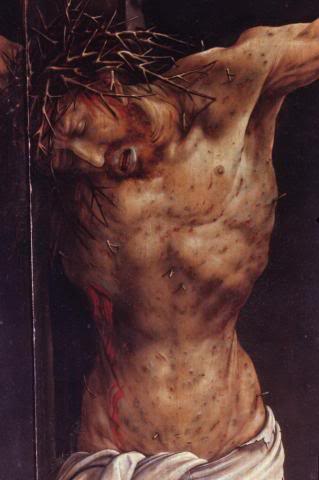
It is also easy to imagine why the Roman soldiers would have had to compel someone to carry Jesus’ cross for Him. Jesus had just been scourged and mocked by the solders. A scourging was serious business; it wouldn’t have been a surprise if Jesus had not even survived the scourging. It was common for victims of scourgings to suffer broken bones, lacerations, and significant blood loss.[3] After such treatment he certainly had no form or comeliness and when they saw Him there was certainly no beauty that they should desire Him: He is despised and rejected by men, a Man of sorrows and acquainted with grief.[4] Certainly, Jesus simply could not physically carry the cross the ½ mile down the Way of Sorrows to Gologtha, the Place of the Skull.

Jesus the man was unable to physically carry the cross down the road. Jesus the Messiah, God in human flesh, however, was the only one strong enough to bear the weight of the sin of the world on the cross. He Himself is the propitiation for our sins, and not for ours only but also for the whole world.[5] Surely he has borne our griefs and carried our sorrows! He was wounded for our transgressions! He was bruised for our iniquities! The chastisement for our peace was upon Him and by His stripes we are healed![6]

It is tempting to understand Isaiah’s prediction of the sin-bearing Messiah and His passion in the way our sinful flesh wants to understand it: as a promise of protection from worldly affliction and healing from physical illness. This is how the prosperity gospel heretics explain these things. They ignore Jesus’ suffering and never speak of sin, death, or the devil. They point to worldly success and prosperity as proof of real faith and God’s approval; economic hard times and illnesses show that faith is weak or absent. That is all a lie. The healing that Christ gives us all goes far beyond physical health. He heals us from sin, the disease that leads us to eternal death. Because He lives, those who share in Christ’s death and resurrection through their baptism will also live.[7] He has promised us that whoever believes in the Son may have everlasting life, and He will raise them up on the last day.[8] So, to echo Paul, for us to live is Christ and to die is gain.[9] He has not promised us an easy existence as members of His body in this fallen, sinful world. He has told us that in this world we have trouble. He has also promised us that we can take heart, because He has overcome the world. And He bids us to repent of our sin, believe the Gospel, and to take up our cross and follow Him along the way of sorrows.


[1] Mark 15:21
[2] Romans 16:13
[3] Nicolotti, Andrea. “What Do We Know about the Scourging of Jesus?” The Ancient Near East Today. American Schools of Oriental Research, December 2018. http://www.asor.org/anetoday/2018/12/What-Do-We-Know-About-Scourging-Jesus.
[4] Isaiah 53:3
[5] 1 John 2:2
[6] Isaiah 53:4-5
[7] John 14:19; Romans 6:3-5
[8] John 6:40
[9] Philippians 1:21

Wednesday, March 21, 2018

Jesus Dies on the Cross

And Jesus cried out with a loud voice, and breathed His last. Then the veil of the temple was torn in two from top to bottom. So when the centurion, who stood opposite Him, saw that He cried out like this and breathed His last, he said, “Truly this Man was the Son of God!” (Mark 15:37-39).

O sorrow dread! God’s Son is dead! The Lord Jesus drinks the cup which His Father has given Him to the dregs. After enduring injustice, torture, and ridicule at the hands of both Pilate and the Jews, Jesus is crucified. Mark records that even those robbers executed with Him reviled Him, along with the crowd of on-lookers. Come down from the cross, King of Israel! Descend from the cross that we may see and believe! But Jesus would not come down before His job was finished. Indeed, neither would the chief priests and scribes have believed in Him if He did. They saw Jesus perform many miracles. They saw Him perform signs as a witness to His teachings which identified Him as the Christ. These men were the teachers of Israel. They searched the scriptures diligently, but did not realize, or would not admit, that they testified of Jesus.[1] They did not believe the words of Moses; they could not then believe in Jesus, even if he performed a miracle. Now, though they do not know it, they witness what is perhaps the greatest miracle of all. The sinless Son of God becomes sin, forsaken of His Father on the cross, to save sinful man, His enemy.[2] At three o’clock in the afternoon, Jesus cries out, and breathes His last.

Oh sorrow dread!
God’s Son is dead!
But by His expiation
Of our guilt upon the cross
Gained for us salvation.[3]

Mark does not record all the signs which accompanied Jesus’ death. Mark tells us about darkness, and the tearing of the veil of the temple. Three hours of supernatural darkness came over the whole land as Jesus hangs dying on the cross. Darkness is often related to judgment in scripture; here it is a sign of God’s judgment against sin.[4]

Oh sinful man!
It was the ban
Of death on thee that brought Him
Down to suffer for thy sins
And such woe hath wrought Him.[5]

The darkness covering the land was God’s judgment against sin; the tearing of the veil of the temple was God ending the old covenant. The veil of the temple was no mere curtain, like the ones hanging from rods in front of your living room windows. It was a big, thick barrier between God’s presence in the Most Holy Place and the people. It was around four inches thick, 60 feet long, and 30 feet wide. Only the high priest could enter the Most Holy Place once a year, and only with the blood of the sacrifice for the people’s sin. When the veil was torn, God proclaimed that the ministration of the Jewish high priest was at an end; the divine High Priest, Jesus, had now come and had entered in to the Most Holy Place of heaven itself with his own all-atoning blood.[6] Christ, through the eternal Spirit offered Himself without spot to God. He is the Mediator of the new covenant, by means of death, for the redemption of the transgressions under the first covenant, that those who are called may receive the promise of the eternal inheritance.[7]

Lo, stained with blood,
The Lamb of God,
The Bridegroom lies before thee,
Pouring out His life that He
May to life restore thee. Amen![8]


[1] John 5:39-47
[2] 2 Corinthians 5:21; Romans 5:10
[3] Hymn 261, “O Darkest Woe”, The Lutheran Hymnal, stanza 2. Author: Johann Rist. Translated: Catherine Winkworth
[4] Wicke, Harold E. People's Bible Commentary: Mark. Saint Louis, MO: Concordia Pub. House, 2004.
[5] Hymn 261, “O Darkest Woe”, The Lutheran Hymnal, stanza 3. Author: Johann Rist. Translated: Catherine Winkworth
[6]Lenski, R. C. H. The Interpretation of St. Mark's Gospel. Minneapolis, MN: Augsburg Publishing House, 1961; Hebrews 6:19; 9:3-15; 10:19
[7] Hebrews 9:11-15
[8] Hymn 261, “O Darkest Woe”, The Lutheran Hymnal, stanza 4. Author: Johann Rist. Translated: Catherine Winkworth

Friday, March 9, 2018

Jesus Faces the Sanhedrin

As soon as it was day, the elders of the people, both chief priests and scribes, came together and led Him into their council, saying, “If You are the Christ, tell us.” But He said to them, “If I tell you, you will by no means believe. And if I also ask you, you will by no means answer Me or let Me go. Hereafter the Son of Man will sit on the right hand of the power of God.” Then they all said, “Are You then the Son of God?” So He said to them, “You rightly say that I am.” And they said, “What further testimony do we need? For we have heard it ourselves from His own mouth” (Luke 22:66-71).

Christ begins His journey to the cross in earnest. Jesus is troubled; He prays that the Father would remove the bitter cup from Him if possible. He knows what is coming: gruesome torture and agonizing physical death. He also knows that He is to become sin.[1] He will be forsaken on the cross by the Father for the sake of His enemies. He will be separated from God the Father. Being in agony, He prayed all the more earnestly; His sweat became as great drops of blood. Then comes the mob. This group of people is not coming for healing, or bread, or sermons. They come to seize Jesus. Betrayal, arrest, and interrogation. Mockery and beatings. At daybreak, a trial.

The High Priest asks Jesus if He is the Christ. Jesus doesn’t answer this question. He says, “Hereafter the Son of Man will sit on the right hand of the power of God.” When the High Priest asks Jesus if Jesus is the Son of God, He says yes. There is now no mistake or misunderstanding. Jesus is not a political Christ. He is not here to establish an earthly kingdom; His kingdom is not of this world.[2] His work is spiritual. He has come to save the world from sin, death, and the devil. To do that, he must go to the cross.

By His use of the phrase “Son of Man” Jesus communicates this to the High Priest. Jesus’ words call to mind the words of the prophet Daniel, and his vision of the Ancient of Days. The scene recounted by Daniel[3] is the Day of Judgment. The Ancient of Days is God the Father. Ten thousand times ten thousand attend to Him; they stand before Him awaiting the destruction of the beast and the establishment of the kingdom. Daniel writes: “And behold, One like the Son of Man, coming with the clouds of heaven! He came to the Ancient of Days and they brought Him near before Him. Then to Him was given dominion and glory and a kingdom, that all peoples, nations, and languages should serve Him. His dominion is an everlasting dominion, which shall not pass away, and His kingdom the one which shall not be destroyed.[4]” Hearing Jesus’ claim of divinity, the High Priest ended the trial. They wouldn’t need to proceed any further. They would not investigate the evidence that Jesus was the Christ. Jesus, assumed the High Priest, had committed blasphemy by making Himself equal to God.

Scripture teaches us that Jesus is indeed the Son of Man, God in human flesh. He was appointed heir of all things by God the Father. He is the brightness of the Father’s glory and the express image of His person. He upholds all things by the word of His power; when He had by Himself purged our sins, He sat down at the right hand of the Majesty on high.[5] Jesus is our real and perfect High Priest, seated at the right hand of God.[6] The earthly temple, the sacrifices, the priesthood and the High Priest were shadows of Jesus, intended to point us all to Him. He is the High Priest who does not need to offer daily sacrifice to cover sin. Jesus offered the perfect sacrifice one time for the sin of all people on the cross.


[1] 2 Corinthians 5:21
[2] John 18:36
[3] Daniel 7:9-14
[4] Daniel 7:13-14
[5] Hebrews 1:1-4
[6] Hebrews 7:25 - 8:6

Friday, April 6, 2012

It Is Finished - Good Friday

When he [Jesus] had received the drink, Jesus said, “It is finished.” With that, he bowed his head and gave up His spirit (John 19:30).

A criminal stands before a judge and awaits his sentence. The judge pronounces the man acquitted, bangs his gavel and tells the man he is free to go. If this man returns to the judge six months later and asks him to pronounce the judgment again because he doesn’t “feel” acquitted, the judge would probably have the man committed to an institution. The judgment has been made. It is finished.

What was it, exactly, that Jesus declared to have been “finished” while hanging on the cross? Certainly Jesus’ physical suffering was now at an end. He endured the pain of being cruelly mocked and beaten; of having to carry his own cross to the place where he would be killed. He endured the unimaginable horror of being nailed alive to the cross and set in place for all to see and, in the midst of this pain, as his life left him he endured the insults hurled at him by those who watched, and even from among the other condemned men.

Some writers suggest that what is finished is the fulfillment of Scripture. This is true as well, at least in some measure. It was part of Jesus’ mission to fulfill every command of the Father, and every prophecy of the Holy Scripture. Verse 28 of this very chapter of John’s Gospel confirms this for us with the words, “...Jesus, knowing that all was now finished, said (to fulfill the scripture), ‘I thirst.’” Beyond the physical thirst caused by dehydration, Jesus sought to fulfill his Father’s plan foretold in Scripture in every detail (Engelbrecht, 2009).

Verse 28 is an example of the intricacy of God’s working, and how He has caused all things in his plan of salvation to fit just-so, and point us to the Christ. One of the soldiers is prompted by Jesus’ words to give him some of the sour wine to drink. Jesus’ words and the soldier’s actions direct our attention to the words of Psalm 69:21 – and for my thirst they gave me sour wine to drink. As Jesus is the promised Son of David, the afflictions of King David recorded in Psalm 69 foreshadow what was to happen to Christ – great David’s greater son.

This, however, cannot be all that Jesus means when he says, “It is finished.” There are still other prophecies to be fulfilled, most notably, the resurrection.

No, what Jesus means when he cries out, “It is finished!” is this one thing more than any other – the death of Jesus finishes his redemptive work, the work of reconciliation and atonement:

This specific work is now brought to a close. The Lamb of God has made his great sacrifice for the world. It is this that is now done. Our great Substitute has paid the great price of ransom, paid it to the uttermost farthing. “It is finished” indeed! Others will yet preach and teach, and Jesus will work through them; as the King on David’s throne his regal work will continue forever; but the redemptive shedding of his blood, done once for all, is finished and stands as finished forever (Lenski, 1959).


Having fulfilled every command of the Father and every prophecy of Holy Scripture, with the exception of the resurrection which was yet to come, Jesus voluntarily died. “It is finished,” was not whispered from Jesus’ dying lips on his last weak and hard-fought breath. It is not a cry of exhaustion. Jesus declares that his redemptive work is finished in a voice loud enough for all of mankind to hear. John describes this utterance of Jesus using the words, “...he said...” Matthew, while he does not record the words Jesus uttered as John did, does tell us the tone in which they were spoken:

And Jesus cried out again with a loud voice and yielded up his spirit (Matthew 27:50).

Jesus’ final words, “Father, into your hands I commit my spirit!” are recorded for us in the Gospel of Luke[1]. From John we learn that Jesus made his declaration that his work was now finished with a loud voice just before he spoke his last; John expands on Luke’s earlier record (Lenski, 1959). Likewise, though they do not record Jesus’ words as Luke does, John and Matthew both say that Jesus gave up, or yielded up, his spirit, alluding to Luke’s account. Jesus yelled, “It is finished,” and spoke to his father saying, “Father, into your hands I commit my spirit.”

Jesus’ final words from the cross are a confirmation that all Jesus had been sent to do to seal our salvation had been completed. It is finished and the verdict has been rendered – we, though guilty of sin, have been set free, solely through the death and resurrection of Jesus Christ. Kretzeman writes:

And now, the great work having been accomplished and even the last passage of Old Testament Scripture having been fulfilled, Jesus Himself made the announcement of the redemption’s completion by calling out: It is finished. All that the Messiah was to endure and suffer, everything that belongs to the work of salvation, was finished (Kretzmann, 1921).


He has no need, like those high priests, to offer sacrifices daily, first for his own sins and then for those of the people, since he did this once for all when he offered up himself...he entered once for all into the holy places, not by means of the blood of goats and calves but by means of his own blood, thus securing an eternal redemption...for then he would have had to suffer repeatedly since the foundation of the world. But as it is, he has appeared once for all at the end of the ages to put away sin by the sacrifice of himself (Hebrews 7:27; 9:12, 26).

There is nothing we have to do – there is nothing we are able to do – in order to set our relationship with God right. Paul tells the Ephesians, “For it is by grace you have been saved, through faith – and this not from yourselves, it is the gift of God – not by works, so that no one can boast.[2]

No amount of so-called “good” things that we do can earn us God’s grace. God gives us His saving grace as a gift, through faith in Jesus Christ, based on the atoning sacrifice Jesus made on the cross. He has redeemed me, and all people, as Luther writes, “...not with gold or silver, but with His holy, precious blood and with His innocent suffering and death (Luther, 1986).[3]

Good works do have their place in a believer’s life – they are a response to the awesome gift God has freely given us through His Son. As Martin Luther explained, “A man is justified by faith alone, not by a faith that is alone.” A faith that is alone – that does not respond to God’s good news of salvation and forgiveness by producing good works – is no faith at all. Know, however, that all that needed to be accomplished to defeat sin, death, and the power of the devil, and to set mankind right with God, has been accomplished by the work of Christ Jesus. It is finished. We who believe must reflect to the world the love God has shown us, and wants to show to them, through everything that we say and do.


Works Cited

Engelbrecht, E. A. (2009). The Lutheran Study Bible, English Standard Version. Saint Louis: Concordia Publishing House.

Kretzmann, P. E. (1921). Popular Commentary of the Bible (Vol. I). St. Louis, MO, USA: Concordia Publishing House.

Lenski, R. C. (1959). the Interpretation of St. John's Gospel. Columbus: The Wartburg Press.

Luther, D. M. (1986). Luther's Small Catechism with Explanation. St. Louis, MO: Concordia Publishing House.


End Notes

[1] Luke 23:46
[2] Ephesians 2:8-9
[3] 2 Corinthians 5:15, 19; 1 Peter 1:18-19; 1 John 1:7; 2:2