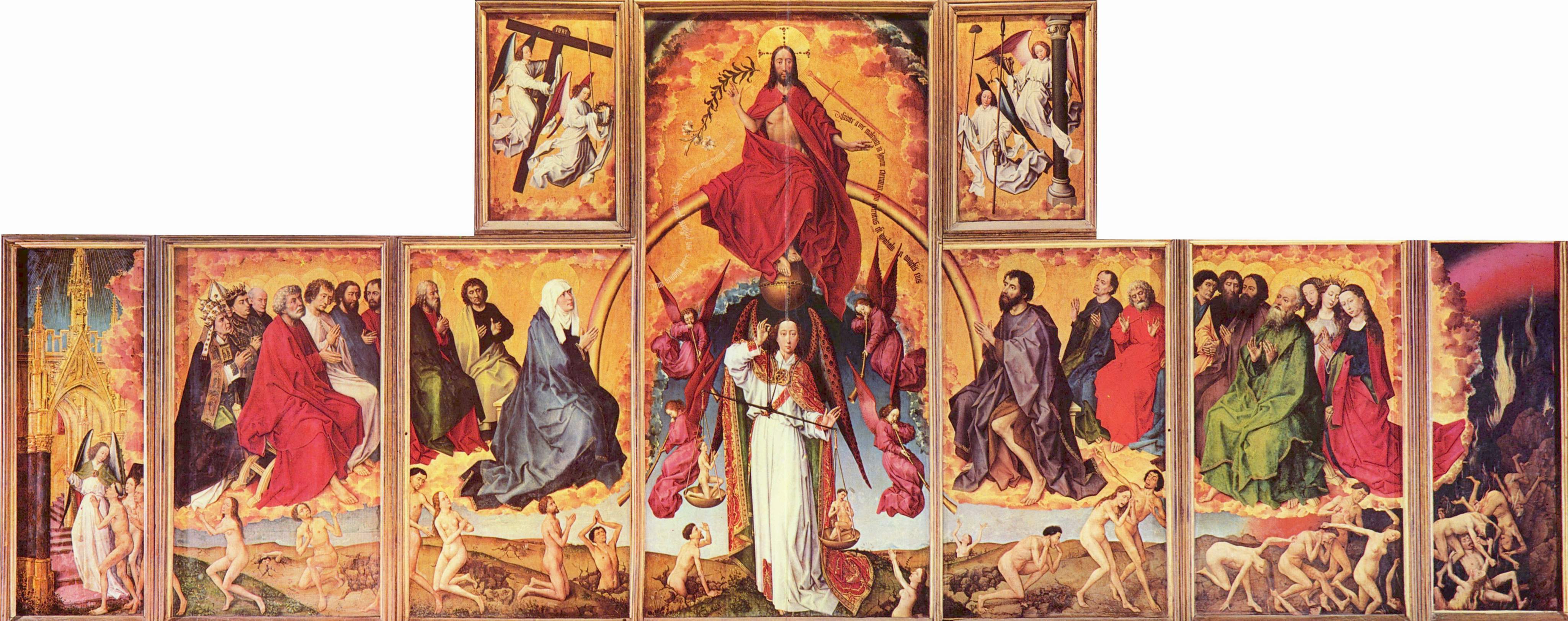
Showing posts with label Judgment. Show all posts

Sunday, October 16, 2022

The LORD Shall Judge the Peoples: Thoughts on Psalm 7

The LORD shall judge the peoples; judge me, O LORD, according to my righteousness, and according to my integrity within me (Psalm 7:8).

This verse frightens me every time I pray it.

I suppose that sounds strange to many ears. Our instinct is to think that reading the Bible is supposed to comfort us, not make us afraid. God’s word should make us feel good.

Perhaps that is what mainstream American Christian-style religion would teach. We like to mine verses for our comfort. The LORD is my Shepherd, I shall not want. I can do all things through Christ who strengthens me. We repeat them to ourselves as though they are true out of context.

The LORD is indeed my Shepherd. We cannot, however, ignore that something called the valley of the shadow of death is also involved. We aren’t afraid because Yahweh is with us, but we walk through the valley, nevertheless.

The Law is supposed to make us afraid. It should terrify our consciences. Jesus summarized the Law in two parts: Love the Lord your God with all your heart, soul, and mind, and to love your neighbor as yourself. That should make us afraid. Only someone who is tremendously naïve would think they could keep this law perfectly. Only someone who was delusional, or lying to himself would claim that he actually kept it.

So, when in the course of my prayers I pray verses like Psalm 7:8, it frightens me. It is the Law which terrifies the conscience and drives me to repentance. The last thing I want to do is to ask God to judge me according to my righteousness and my integrity. I know precisely how righteous I am because I am with me 24 hours a day. I am aware just how flimsy my integrity is.

In his immediate context, the psalmist is writing a prayer for deliverance from the physical danger which threatens him. He’s pleading with God to save him from their wickedness because David trusts in Yahweh, and his wicked persecutors do not. So, when he writes that he is righteous, it is like when Job is described as blameless. To say Job is blameless isn’t saying that he was without sin. It is saying that Job was an outwardly good man. He is a believer. He is a Christian.

That isn’t the only context, however. The Psalm is also gospel.

These words of David are also Jesus’ words. When you understand the Psalter as the prayer book of Christ, these verses that sound like harshest law are also sweetest gospel. If the law is what God requires of us, the gospel is what God has done for us. And since I am baptized into Christ, and His righteousness is now my own, I can be bold to pray, “Arise, O LORD, in Your anger; lift Yourself up because of the rage of my enemies; rise up for me to the judgment You have commanded (v.6).”

My defense is of God, who saves the upright in heart. The upright in heart is me, because of Christ. He became sin so that we might become the righteousness of God. Because we are in Him, because He has given us His righteousness and taken away our sin, we can pray His prayer and know we have what He promises. ###

Sunday, January 2, 2022

Thoughts on Psalm 11

In the Lord I take refuge. How then can you say to me: "Flee like a bird to
your mountain. For look, the wicked bend their bows; they set their arrows against the strings to shoot from the shadows at the upright in heart. When the foundations are being destroyed, what can the righteous do?" (Psalm 11:1-3).

David is not afraid when the evil men of this world do evil. In Psalm 11, he appears to be answering those around him who lament their seemingly hopeless situation - righteous men in an unrighteous world. David reminds them that God is in charge when they say to flee to the mountains. God will destroy the wicked.

It doesn't look like that, though. David realizes that. He doesn't deny that evil is in the world, or that wicked men do wicked things and even prosper. David knows, however, that the wicked things they do, even if they harm him, will not go unnoticed by God.

In His discussion with the disciples about the signs of the end of the age, Jesus tells them that the temple will be destroyed. He tells them that they should leave Jerusalem when they see this thing about to happen. "...then let those who are in Judea flee to the mountains..." But the foundation of those who believe in God. It is in Him they take refuge. This catastrophe that looks a lot like the end of the world will not destroy you, even if God allows it to kill you.

God is in His holy temple. The real one is in heaven. He is on His heavenly throne. God's kingdom is not of this corrupt and fallen world. And that God is the Lord Jesus.

God observes man from His throne in judgment. The Lord observes the righteous, but He hates the wicked. Who are the wicked? Who are the righteous? It is important because the wicked will be destroyed at the judgment on the Last Day. Upright men, however, will see God's face.

Jesus says that the pure in heart are blessed because they will see God. But we know that there are no pure in heart. There are none who are righteous, no, not even one. All have sinned. All have fallen short of the glory of God. So who will get to see God's face? Who will avoid the judgment of which David writes?

All of the people who saw Jesus when He declared, "Blessed are the pure in heart" saw the face of God because Jesus is God in human flesh. He is the image of the invisible God. He put on that flesh so He could rescue men from sin and death. He endured the punishment for our sin that we wicked men deserve so that we could see His face on the Last Day, and be saved from the fiery coals, burning sulfur, and scorching wind. ###

Friday, December 31, 2021

Thoughts on Psalm 46

The Last Judgment - Cranach the Elder
Therefore we will not fear, though the earth give way and the mountains fall into the heart of the sea, though its waters roar and foam and the mountains quake with their surging (Psalm 46:2-3).

God isn't going to stop the earth from giving way, or the mountains from falling. Not ultimately.

In fact, He is going to cause it to happen on the Last Day, when Our Lord Jesus returns to judge the living and the dead. He will come down from heaven with a loud command, with the voice of the archangel and with the trumpet call of God. The dead in Christ will rise first. Those who are alive at His coming will be caught up to meet Him in the air. "And so we will be with the Lord forever" (1 Thessalonians 4:17).

That's when the earth will melt, and the mountains will fall, and seas will foam, and why we won't be afraid.

We don't have to be afraid because we are in Jesus. We are part of His body. We are safely concealed inside the fortress, the God of Jacob, by our baptism into Christ.

This is the help God gives His people at break of day. His city, Zion, wherein He dwells is set apart. It is holy (v 4). When Jesus lifts His voice and the earth melts, the city of God's people will not fall. This is also how He makes wars cease to the ends of the earth (v. 9). He doesn't do it by diplomatic means. He doesn't put a magic spell on everyone to suddenly make them nice. He judges the wicked. He breaks the bow and shatters the spear. He burns the shields with fire.

Knowing the heavens will disappear with a roar, and the elements will be destroyed by fire, and the earth and everything in it will be laid bare, we should look forward to this day of God. We should wait for it eagerly, living godly lives that are set apart from the unbelieving world (2 Peter 3:10-13).

But living life soberly isn't being afraid.

We don't need to be afraid. Not of the end of the world. Not of war. Not of economic collapse. Not of disease. Not of our death. Not of anything. We belong to Christ. He bought us with His holy, precious blood, and by His innocent suffering and death on the cross. We will live under Him in His kingdom. We will serve Him in everlasting righteousness, innocence, and blessedness. No more sin, no more death, no more devil.

We will look on from inside His mighty fortress as He carries out His judgment, and throws the devil, death, and all the wicked into the lake of fire (Revelation 20: 7-15).

We will rejoice as He remakes creation anew. ###

Friday, December 17, 2021

The Sin and Doom of Godless Men

I read a devotional resource recently which used as the kernel for its brief message Jude 16:
These men are grumblers and fault-finders; they follow their own evil desires; they boast about themselves and flatter others for their own advantage.
It was a be-a-better-person message recalling the image of Ebenezer Scrooge in A Christmas Carol. Don't be a grumbler, boasting about yourself like Scrooge. There was redemption for him. He changed to be more likable. Because of Christ's birth, we can be transformed too.[1]

Indeed, we may be transformed by Christ. But what kind of transformation? Christ wasn't born into this world to provide us with a good example to follow, though He certainly also is that. Christ was born into this world to die on the cross as the ransom for many, the sinless sacrifice for our sin. Jesus was born into this world so that we could have eternal life.

The transformation we have in Jesus is from being dead in our sins, to being alive in Him. The being-nicer is a by-product of that, and it certainly isn't of primary importance.

Be advised: I say this, of course, being a cantankerous person.

Anyway, Jude 16 isn't about people who are crabby during the holidays. It isn't about Scrooges being convinced to treat their Bob Cratchets better. It's about false Christians. Apostates. The final judgment. It's about the Christian life in this fallen world and calling us Christians to persevere in the faith in the midst of it.

Jude is talking about the sin and doom of godless men.

Jude is warning the Church about apostates. Jude is reminding all of us of the warnings of the Apostles: that false teachers, false prophets, false apostles, and false christs would come and would deceive many people.

This is the consistent message of all the Apostles: Christ has died, Christ has risen, Christ will come again. He did this for you. Now, act like the new man that you are. Love and serve your neighbor. Gather together to hear God's word. Pray. Baptize. Eat Our Lord's body and blood, proclaiming His death until He comes. Watch your life and doctrine. Beware of wolves in sheep's clothing.

The men who are, as Jude calls them, grumblers and fault-finders who follow their own evil desires; who boast about themselves and flatter others for their own advantage.

We can rest assured, however, that these godless men will be convicted of all their ungodly acts when the Lord Jesus returns with thousands upon thousands of His holy ones to judge everyone on the Last Day.

He calls us to persevere. What does that look like? First off, according to Jude, it looks like remembering what we have been told already about the state of things and acknowledging it is true. We have been told that scoffers would come, and follow their ungodly desires. They would divide the Church. Second, knowing and acknowledging this, "build yourselves up in your most holy faith and pray in the Holy Spirit." Gather together to hear God's word and to receive His gifts in His sacraments. Call upon His name in trouble, pray, praise, and give thanks.

End Notes

[1] Gunn, Scott, editor. 2021. "Forward Day by Day: Daily Devotions for Disciples." Devotion for Friday, December 3. Cincinnati: Forward Movement, an agency of the Episcopal Church. www.forewardmovement.org.

Monday, May 11, 2020

Human Judgment

Christ the Pantocrator

Monday after Cantate

“You judge according to the flesh; I judge no one” (John 8:15).

To judge according to the flesh is to judge according to the mere appearance of a thing, or to make a decision about a thing based on human reasoning. Speaking to the Jews in this passage, Jesus uses the term “flesh” as He does in Chapter six when He says, “the flesh (that is, the human nature) profits nothing.[1]” This is in contrast to how He uses the same word earlier in chapter six during the Bread of Life discourse to describe His own flesh as real food.[2] This is the way Paul uses the term “the flesh” in his writings. Paul writes in Romans, “For I know that in me (that is, in my flesh) nothing good dwells;[3]” And, to the Galatians, “And those who are Christ’s have crucified the flesh with its passions and desires.[4]” The term “flesh”, as Jesus uses it here refers to the sinful human nature, which lusts against the Spirit, which two are contrary to one another.[5] This is the standard by which the Jews are judging Jesus. They do not accept the works He does, like healing the sick, restoring sight to the blind, and raising the dead. They claim that Jesus is doing these miracles by the power of the devil, that He is transgressing the Law of Moses when He heals on the Sabbath, or that He blasphemes when He says that holy Scripture is about Him, He is the only way to the Father, and calls Himself God.

But in the same sentence Jesus says something we might find odd. He says that He judges no one. If Jesus had said that, rather than judging according to the flesh, He judged according to the Spirit, this would be more logical. But Jesus does not say that. He says, “I judge no one.” How can this be true, especially when we Christians confess that He will come again in glory to judge both the living and the dead?[6] It is God’s word that judges. Jesus alludes to this type of judgment when He tells them, “It is also written in your law that the testimony of two men is true. I am One who bears witness of myself, and the Father who sent Me bears witness of Me.[7]” They should believe what Jesus teaches because in accordance with God’s word, Jesus has two who “bear witness” on His behalf: Himself, and God the Father. God’s word is what judges those who refuse to believe Jesus. Jesus will later tell His disciples, “If anyone hears My words and does not believe, I do not judge him; for I did not come to judge the world but to save the world. He who rejects Me, and does not receive my words, has that which judges him – the word that I have spoken will judge him on the last day.[8]” Christ offered life to His hearers, but their rejection would condemn them (The Lutheran Study Bible 2009, p. 1807).

Jesus says that He is the light of the world, but the Jews are blind to this light because they are judging Jesus, not by God’s Word as they believe in their legalism, but rather according to the flesh. This is not a problem that is unique to them. We people today are just as prone to reject Jesus as our ancient counterparts because of our sinful human nature, and chalk it up to being clever, sophisticated, and modern. But, we have the same sinful flesh to contend with as they, and therefore the same inclination toward sin and away from God. It is true of us as well: in us, that is, in our flesh, there is nothing good. Almost 100 years ago, a man named Pieper wrote about “modern theology”:

The moderns have nothing to offer but human doctrine. Refusing to accept Scripture as the Word of God, they have found it theologically unreliable and have substituted for it as the source of doctrine the human heart, the theological Ego…They are virtually demanding that theology be removed from the realm of divine truth into the sphere of subjective human opinion…we shall have to insist that what the Church needs is God’s theology and that the theology, the doctrine drawn by the theologian from Scripture…is divine doctrine (Christian Dogmatics 1957, p.53).

God’s word is true; it means what it says, and it does what it says. And it says that Christ died for our sins according to the Scriptures, that He was buried, and that He rose again on the third day.[9] It says that Jesus is the atoning sacrifice for our sins, and not only for ours but also for the sins of the whole world.[10] It says that He was the one promised, even going all the way back to the Garden, to come and set the captives free, destroying sin, death, and the devil.[11] It says that when we eat His body and drink His blood as he tells us to, we have the forgiveness of sins, life, and salvation.[12] It says that when we are baptized into Christ, we put on Christ,[13] our sins are washed away,[14] and we are saved all through the resurrection of Christ;[15] that baptism connects us to His death, and consequently to His resurrection, so it belongs to us.[16] So repent and believe the Gospel. Let’s not judge Jesus according to the flesh, and end up being judged ourselves by His word. Let’s not be too modern to receive the forgiveness of sins and inherit eternal life on the Last Day, for on that Day, all who are in their graves will hear His voice and come out, some to everlasting life, and some to everlasting condemnation.[17]


Works Cited


Concordia Publishing House. 2009. The Lutheran Study Bible. Edited by Edward A Engelbrecht, Paul E Deterding, Roland Cap Ehlke, Jerald C Joersz, Mark W Love, Steven P Mueller, Scott R Murray, et al. Saint Louis, MO: Concordia Publishing House.
Pieper, Francis. 1957. Christian Dogmatics. Edited by Walter W. F. Albrecht. Vol. 1. 4 vols. Saint Louis, MO: Concordia Publishing House.


[1] John 6:63
[2] John 6:55
[3] Romans 7:18
[4] Galatians 5:24
[5] Galatians 5:17
[6] John 5:28-30
[7] John 8:17-18
[8] John 12:47-48
[9] 1 Corinthians 15
[10] 1 John 2:2
[11] Luke 4:16-22
[12] Matthew 26:28; 1 Corinthians 11:23-29
[13] Galatians 3:27
[14] Acts 22:16
[15] 1 Peter 3:18-22
[16] Romans 6:3-11
[17] John 5:29

Monday, November 4, 2019

Private Property

November 4, 2019 - Monday after Trinity 20

The earth is the LORD’S, and all its fullness, the world and those who dwell therein. For He has founded it upon the seas, and established it upon the waters (Psalm 24:1-2).

The ownership of private property is an important concept to Americans. It might even be argued that they concept of private property ownership is fundamental to the development of Western Civilization. Property, and the money and currency we have developed to help us keep and dispose of our property, represents our time and effort, our work. A certain school of economists are fond of describing money as “frozen work”. We trade our time and effort doing a job and we receive money in compensation. We can then trade that money for other property we need or want, property some other person owned or created. God is the author of the idea of private property ownership; He commands us through Moses not to steal. In order to steal something from someone else, that other person must first have a legitimate claim on that property. He may have produced it, or he has the power to dispose of it as he wishes. To steal is to deprive the property owner, then, of a piece of their time; of something they gave up a portion of their time either making, or working to get money so that they could buy.

Socialism, what the dictionary calls the transition phase between capitalism and communism (though Karl Marx used the terms “socialism” and “communism” interchangeably),[1] subverts private property ownership. Indeed, it must. The goal of socialism is the collective, or governmental, control of the means of production. The means of production is just a fancy way of saying factories - the way “property” is produced. In this system, the State (the government, the “collective”) would decide what things were produced, how many of these things were produced, who has access to those things, and how those things could be used. As Marx wrote, “From each according to his ability, to each according to his needs.”

This isn’t intended to be a lecture on economics. It is, however, important to understand, at least broadly, these two ideas of capitalism and socialism, and their relationship to the concept of private property. In real capitalism, individuals, through their voluntary interactions and commerce with each other in the market, decide what property is produced, how, and to what degree; in a socialist system, the government does all that. The economy is centrally planned. 

Why the economics lesson? It is important to understand that God created the world. It is His property. He may dispose of it as He likes. As the psalmist writes, “The earth is the LORD’s and all it’s fullness.” The “fullness” would be us. We are also His creatures, whom He made out of the dust of the earth, into which He breathed the breath of life. We confess the creation in the words of the Venite:

For the Lord is a great God, and a great King above all gods. In His hand are the deep places of the earth, the strength of the hills is His also. The sea is His, and He made it, and His hands formed the dry land. Oh, come, let us worship and bow down, let us kneel before the Lord, our Maker.[2]

This means He can dispose of us and this world as He sees fit, since it is His property which He, through His Only-Begotten Son, Jesus Christ Created:

He is the image of the invisible God, the firstborn over all creation. For by Him all things were created that are in heaven and that are on earth, visible and invisible, whether thrones or dominions or principalities or powers. All things were created through Him and for Him. And He is before all things, and in Him all things consist. And He is the head of the body, the church, who is the beginning, the firstborn from the dead, that in all things He may have the preeminence.[3]

If this is not true, then God does not own us. If God and the creation are the fairy stories that modern atheists say they are, no one owns us or the world, which means that we own ourselves. It means that the things we have learned called Christian morality, do unto others as you would have others do unto you, is not a divine creation given to us, an absolute moral system written on our hearts by God, but rather a creation of man. If morality is not absolute, not created by God, but relative to man, then there is no reason, except a personal desire to submit to it, or compulsion by a stronger human force. Right and wrong, rather than being concrete and unchangeable things, become abstract ideas, relative to the dominant culture. Every culture dictates their own “right”, the one that is appropriate for them. Different cultures, with different ideas of “right” might come into conflict, but the stronger will prevail, and whatever is synthesized out of the clash of those two opposing ideas is “right”. 

Modern atheists, living in the afterglow of Christendom, where Christian values are still widely known and kept, even by people who are not Christians, think they like this idea. They like the idea of owning themselves. It means that they don’t have to answer to anyone except themselves, which is quite convenient, since they are in charge of making up all the rules now. In an interview, comedian Stephen Fry was asked what he would say to God if he were called before God’s judgement seat in order to get into heaven. He answered that he would turn the judgement back on God. To Mr. Fry, God was the one who was sinful and immoral:

“I’ll say: bone cancer in children, what’s that about? How dare you create a world where there is such misery that’s not our fault? It’s utterly, utterly evil. Why should I respect a capricious, mean-minded, stupid god who creates a world which is so full of injustice and pain? The god who created this universe, if he created this universe, is quite clearly a maniac, an utter maniac, totally selfish. We have to spend our lives on our knees thanking him. What kind of god would do that? Yes, the world is very splendid, but it also has in it insects whose life cycle is to burrow into the eyes of children and make them blind...I wouldn’t want to [get into heaven]. I wouldn’t want to get in on his terms. They are wrong.”[4]

There is a lot to digest in Mr. Fry’s statement, and not at all entirely unreasonable questions to raise. 

Of course, the fact of the matter is that Mr. Fry does not believe that there can be a God, because of the existence of evil. We get into trouble when we assume that the misery isn’t our fault. In reality, God, sin, death, and the state of the universe do not have their existence based on whether or not we humans approve of them. God does not cease to exist because we selfish people, who worship ourselves, don’t understand Him, and subsequently reject Him, much as a petulant child doesn’t understand that the doctor who wants to vaccinate him is working for the child’s good. The doctor doesn’t disappear because the child hates him and, in the end, the child gets the shot.

Or, to put it another way, just because we don’t like what God says or does, how He disposes of His property, doesn’t change anything. It isn’t as though we get let out of the judgement because we don’t like the rules. When Job asked similar questions of God, God showed up in a whirlwind and answered Him:

Shall the one who contends with the Almighty correct Him? He who rebukes God, let him answer it.[5]

Job’s response, his speechlessness and subsequent repentance, is the reality of what will come of any man standing before the Almighty God.

I suspect it is for this reason atheism and evolutionary theory go together so well. It takes away ownership of the earth and it’s fullness from the Creator, and gives it to the creation. More importantly, it removes any obligation for man to abide by God’s morality - Love the LORD your God with all your heart, with all your soul, and with all your mind...You shall love your neighbor as yourself - and allows man to make up his own. But we all know this is nonsense. Creation itself bears witness to it’s creator; God’s law, written on our hearts bears witness to the fact that we are evil, fallen and sinful creatures. 

There is also another way in which God has claim of ownership over the earth and all it’s fullness: through Jesus, God in human flesh, second person of the Holy Trinity, Redeemer of the world. Jesus bought back the property that He created, after it had been stolen from Him. Adam and Eve plunged mankind, and all of creation, into sin by their disobedience to God, and their selfish desire to become like Him. The entire creation was put under the curse, now utterly corrupted, and subject to sin, death, and Satan, who was responsible for introducing sin into the world. But God knew that, before it’s foundation, He would redeem the world through the blood of Jesus. God promised Adam and Eve that they would be redeemed, and that Satan’s head would be crushed by the woman’s offspring, even as He sent them out of the earthly paradise. He spent hundreds and hundreds of years preparing and gathering to Himself a people, whom He would set apart from all the other peoples of the earth, through whom this offspring - this Seed - would one day come. He gave them peculiar civil laws and religious worship, so that they would be reminded of the Seed to come, and keep them set apart from the rest of the world; He hammered into their collective heads just what kind of a God He was, as C. S. Lewis wrote:

Those people were the Jews, and the Old Testament gives an account of the hammering process. Then comes the real shock. Among these Jews there suddenly turns up a man who goes about talking as if He was God. He claims to forgive sins. He says He has always existed. He says He is coming to judge the world at the end of time.[6]

Jesus, God in human flesh, took on human nature and lived the sinless life that it was impossible for man to live. Born of the Virgin Mary, born sinless, He was born under the Law. And He kept the Law perfectly, as mankind could not do. Then, He was crucified for us under Pontius Pilate, as the Lamb of God, the perfect sacrifice to take away the sins of the world. He was executed as a criminal and a blasphemer in our place, taking the punishment the world deserved, according to the scriptures. He rose again from the dead on the third day, again, as written in the scriptures. He is the propitiation for our sins, the ransom for many. And He will come again with glory, to judge the quick and the dead, and to take possession of His creation as King, once and for all; He will remake it, purging it of sin and death forever. 

It makes no difference if we like this or not. In fact, we don’t like it, none of us. He has to prepare us. He sends His servants, pastors, into the world to preach His Word; they call people to repentance for their sins, and announce to them the forgiveness Christ has won for them on the cross. He connects us to His death and His resurrection in Holy Baptism, where He saves us and washes away our sin. He feeds us with His very body and blood in the Lord’s Supper, nourishing, sustaining, and increasing our faith, so that no matter what misery and injustice we must endure while we live in this fallen creation, it will be for our good. Even the ultimate evil, death, will ultimately be for our good, if we are in Christ. The worst thing that the devil can do to us is kill our bodies. But Jesus tells us not to fear the one who can kill the body, but rather the One who can destroy both body and soul in hell - God Almighty. So, even though we may not understand or like the things that happen to us in this life, we strive to live according to the new creation, His own possession, that He has made us in our Baptism; we love the Lord with all our hearts and we love our neighbors as ourselves, showing our faith by our works. And when we sin, we repent, knowing that we have been baptized into Christ, and that He died for the forgiveness of our sin, and rose for our justification. He also gives us gifts to possess. His death and His resurrection are ours. His life is our life. Because He lives, we shall live. In this world there is trouble and injustice. Christ has overcome the world. He is the ultimate justice.

-------
1. “Socialism: Definition of Socialism by Lexico.” Lexico Dictionaries | English. Lexico Dictionaries. Accessed November 12, 2019. https://www.lexico.com/en/definition/socialism.

2. Lutheran Intersynodical Hymnal Committee, and Evangelical Lutheran Synodical Conference of North America. 1941. The Lutheran hymnal: authorized by the synods constituting the Evangelical Lutheran Synodical Conference of North America. Saint Louis, Missouri: Concordia Publishing House.

3. Colossians 1:15-18

4. Independent Staff. “Stephen Fry 'Blasphemy': Comedian's Remarks about God That Prompted Police Investigation in Full.” The Independent, May 7, 2017. https://www.independent.co.uk/news/world/europe/stephen-fry-blasphemy-god-ireland-police-investigation-quotes-in-full-a7722256.html.

5. Job 40:2

6. Lewis, C. S. Mere Christianity (version alt.binaries.e-book 2002), 1953. https://www.dacc.edu/assets/pdfs/PCM/merechristianitylewis.pdf.

Saturday, July 20, 2019

Crowded or Empty? Thoughts on a YouTube Video About Hell


This video from Word of Fire is interesting. Bishop Barron talks a lot about hell, but he never gets around to answering the question that is the title of his video: Is hell crowded or empty? To cut to the chase, he equivocates; he says that he doesn’t know. He doesn’t believe hell is a literal place (I suppose that would make it empty?), but rather a spiritual place where we, creatures having free will in spiritual matters, isolate ourselves from God by rejecting Him through our own free choice. He refers to hell as a metaphor for the deep loneliness and isolation one experiences after rejecting God. He does conclude that, “We may reasonably hope that all people are saved.”

There are some good things in the video, but how much arsenic do you want in your bottle of drinking water? The government sets limits for contaminants in drinking water based on the toxicity levels of various substances. The Environmental Protection Agency has set an arsenic maximum contaminant level for public water supplies at 0.010 mg/L (milligrams/Liter).[1] Sadly, we are unable to do the same with false teaching. Jesus wants us to teach all that He has commanded;[2] and just as a little leaven will work it’s way through the whole lump of dough,[3] a little heresy will work it’s way through the whole church, if we aren’t careful. I think Bishop Barron’s video about hell is a milligram too much arsenic in my doctrinal water bottle to swallow.

Bishop Barron summarizes several theologians, Roman and Evangelical, and their views on salvation. He summarizes Karl Barth as a Universalist using Barth’s quote, “All are saved in the cross of Christ.” I don’t know all there is to know about Karl Barth, or even agree with a lot of what I do know, but the statement, “All are saved in the cross of Christ," is true, even if it isn’t in the way Barth meant it. Jesus died for, and indeed saved, the whole world.[4] Some men resist and reject receiving that gift. It’s the old story of the million dollar check: Bill Gates can write you a $1 million check. The money is yours. You have $1 million. If, however, you refuse to cash the check when he offers it to you - or probably more accurately, you throw the envelope away when it comes in the mail - you don’t benefit from the gift that was freely given to you. Those who are saved are saved by God’s working alone; those who are not receive all the credit for their damnation themselves.

The Bishop agrees with Hans Urs von Balthasar, the final theologian he presents. Balthasar says that we can believe all people are saved, but we can’t know it for sure; the reason we can’t be certain, he explains, is because men have free will and can reject God. I wouldn’t say, as the Bishop explains, that human freedom can resist God’s act of love; rather, the Bible tells us that we have no freedom, as we are dead in trespasses and sins; we are, by nature, objects of wrath.[5] That’s why we resist, and we are able to reject. It is our natural inclination to pursue the desires of our flesh, sin, and to reject God. It is clear, however, that there is no free will in spiritual matters, in the common understanding of the term. We are either slaves to sin and enemies of God, or we are slaves to Christ and set free from sin.[6]

His position on hell seems to be that he believes it to be real, but not exactly a physical place, like Pocatello, Idaho, and God, being Love, doesn’t send people there. Billy Graham said things that sound similar. This shouldn’t be surprising, since Rome and American Evangelicalism often have a similar view of free will. Rev. Graham sometimes talked about hell being complete separation from God, rather than an actual physical place where fire burns you forever.

More important, the mature Graham steered away from hell in general, and when he did talk about it, all that he would affirm with certainty was that it meant separation from God... “The only thing I could say for sure is that hell means separation from God. We are separated from his light, from his fellowship. That is going to be hell. When it comes to a literal fire, I don’t preach it because I’m not sure about it.”[7]

Other evangelical teachers have said similar things. These evangelical teachers, however, were not necessarily denying the existence of a literal place called hell, wherein the actual physical people who were damned would be. It may be partly a case of trying to use words to describe the indescribable. I don’t know why Billy Graham would equivocate on hell, or why anyone who believes Scripture would say that it isn’t a literal place. Christ says,

“If your hand causes you to sin, cut it off. It is better for you to enter into life maimed, rather than having two hands, to go to hell, into the fire that shall never be quenched—where ‘Their worm does not die and the fire is not quenched.’”[8]

Jesus goes on to teach that it isn’t our hand that causes us to sin, but our corrupt heart, so don’t go chopping off your hand. But we will indeed enter into a literal eternal life with a resurrected body; what in the text would cause us to read the second part of Jesus’ quote as figurative? Of course, American Evangelicalism also denies Jesus’ words their literal meaning when He says, “Take, eat; this is My body, given for you,”[9] but I digress...

The Bible teaches that hell, like heaven, is a place. On the Last Day the dead will be raised. We will all be gathered before Him. [10] The righteous will inherit the kingdom prepared for them from the foundation of the world; to the wicked He will say,

“Depart from Me, you cursed, into the everlasting fire prepared for the devil and his angels.”[11]

And these will go away into everlasting punishment, but the righteous into eternal life.[12] This is not a parable. This is not figurative language. Jesus tells us how the Judgment will be, and it includes a hell with fire, and Him sending people to it. Jesus, with His new, perfect resurrected body, is in heaven (also a place) right now, ruling over the universe; He is seated at the right hand of God the Father.[13]

When He is speaking to His Apostles, Jesus teaches them about the true fear of God. He says:

“Whatever I tell you in the dark, speak in the light; and what you hear in the ear, preach on the housetops. And do not fear those who kill the body but cannot kill the soul. But rather fear Him who is able to destroy both soul and body in hell.”[14]

Who is it who is able to destroy both soul and body in hell? God. When Christ returns to judge the world on the Last Day we will see from which side the door of hell is locked.

Just because something is “dark” doesn’t mean it is false. I get the impression that Bishop Barron doesn’t like the idea of hell as a physical place where people actually go as a result of God’s judgment because it seems dark, scary, and mean. There are, however, a lot of dark things which are true.

Bishop Barron condemns Origen for being a Universalist at the beginning of the video, but the big reveal of his own position is... universalism! It’s an equivocating kind, but it is universalism nonetheless. He says we can have reasonable hope that all will be saved, but we can’t know it. That’s just plain rubbish. Scripture tells us that not everyone will be saved. The number of the saved will be a great multitude which no one can count,[15] but that doesn’t mean it will be everyone. Jesus uses the illustration of men in a field and women grinding at a mill to depict the Judgment. He says two men will be in the field, one will be taken, the other will be left, etc. He then connects this illustration to the clearest type of the Day of the Lord, Judgment Day, in the Bible - the Flood, wherein eight people are saved in the ark from the flood waters, out of all of mankind.[16] Ultimately, I want everyone to be saved, but that is God’s work, which He does through the means of His Word. And we simply don’t know, this side of heaven, what the individual results are. We only know what God reveals to us in His Word, and He has revealed to us that

narrow is the gate and difficult is the way which leads to life, and there are few who find it.[17]

The bottom line is this: You may hope whatever you like, but that doesn’t change the fact that not all people will be saved. Bishop Barron isn’t simply saying here, “Gee, I hope everybody gets saved.” He’s trying to validate the heresy of universalism through the use of philosophy and reason. It’s the same old human story, different day. When he says we can hope all people are saved he is giving permission to believe this. What he doesn’t give is any proof from Holy Scripture. The Roman Catholic Church, on the other hand, teaches that the eternal death of hell is the consequence for mortal sin.[18] They also teach, rightly, that hell is the location of the damned.[19] The Roman Catholic Church and the Lutherans, regarding hell, agree as we confess in the Athanasian Creed together, “And those who have done good will enter into eternal life, and those who have done evil into eternal fire.”

God certainly is love; God certainly has the power to save everyone. He has indeed saved the whole world in the cross of Christ. Jesus, true God, begotten of the Father from eternity, and also true man, born of the Virgin Mary, my Lord, has redeemed me, a lost and condemned creature. He has purchased and won me from all sins, from death, and from the power of the devil. He has purchased me, not with gold or silver, but with His holy, precious blood and with His innocent suffering and death. He has done this for all men. Many stiff-necked people, however, always resist the working of God’s Holy Spirit in the words of the gospel.[20] We can hope that all men are saved by God, in the sense that we would like for it to happen; we have no indication from Holy Scripture, however, that this is the case. Quite to the contrary: God demonstrates that He wishes to deal with us through the means of His Word, and not other special ways we don’t know about, even though He is quite capable of doing so.[21] God’s Word tells us that many will reject Jesus as the multitudes did in John chapter 6.[22] Families will be divided over faith in Christ.[23] The love of many will grow cold all through the time of the end, but he who endures to the end will be saved.[24] This implies that some men will not endure, and therefore not be saved. Those men will find themselves in a very real, physical place called hell. Since not all men will be saved, that means that hell is not/will not be empty.

This discussion reminds me of a conversation Jesus had with His disciples about tragedy, and people who suffer it.[25]

There were present at that season some who told Him about the Galileans whose blood Pilate had mingled with their sacrifices. And Jesus answered and said to them, “Do you suppose that these Galileans were worse sinners than all other Galileans, because they suffered such things? I tell you, no; but unless you repent you will all likewise perish. Or those eighteen on whom the tower in Siloam fell and killed them, do you think that they were worse sinners than all other men who dwelt in Jerusalem? I tell you, no; but unless you repent you will all likewise perish.”[26]

We spill all this ink, and spend all this time, talking about hell. Why? We are afraid of it. We’re looking for an out. We can rest a little easier if we can see that either those who end up in hell deserved it more than we do, or no one will ultimately go there at all. This is what the disciples thought about the Galileans in the passage above. They must’ve been worse sinners, for something so terrible to happen to them. Jesus says no. We all deserve punishment for our sin. Jesus says we shouldn’t focus on trying to figure out how some tragedy is the punishment for the sin of those who experienced it. We should repent. Tragic events we see and experience should cause us to reflect on our sinful state, repent, and be forgiven by Jesus. It is the same with hell. Rather than using philosophy and reason to think all the damned out of hell, or reason why we ourselves don’t deserve it in the first place, the descriptions Jesus gives us of hell should terrify us. It should cause us to think about our sinfulness and repent of our sin. Hearing this Word, we should reflect on the wondrous love of Christ, who would suffer physical pain and death, and the pains of hell itself, to pay the ransom for those who are His enemies.  We should hear God’s Word and believe what it says. We should trust in Our Lord Jesus, who promised that He went away to prepare a place for us with Him.[27] If we are worried about the eternal state of those around us, we should do as we are called to do, and scatter the seed of God’s Word as the sower in Jesus’ parable.[28]


Bibliography

Interdicasterial Commission for the Catechism of the Catholic Church. Cathechism of the Catholic Church. New Hope, KY: Urbi et Orbi Communications, 1994.

Luther, Martin. "The Smalcald Articles." The Book of Concord: The Confessions of the Lutheran Church. Edited by F. Bente. bookofconcord.org.

Michigan Department of Environment, Great Lakes, and Energy. "Arsenic in Well Water." Michigan.gov. https://www.michigan.gov/documents/deq/deq-wd-gws-wcu-arsenicwellwater_270592_7.pdf (accessed July 16, 2019).

Wacker, Grant. America's Pastor: Billy Graham and the Shaping of a Nation. Cambridge: The Belknap Press of Harvard University, 2014.


[1] “Arsenic in Well Water,” Michigan Department of Environment, Great Lakes, and Energy, Google, accessed July 16, 2019, https://www.michigan.gov/documents/deq/deq-wd-gws-wcu-arsenicwellwater_270592_7.pdf.
[2] Matthew 28:17-20
[3] Galatians 5:7-15
[4] John 1:29-34; 3:16
[5] Ephesians 2:1-10
[6] Romans 8:1-2
[8] Mark 9:43-44
[9] Matthew 26:26
[10] Matthew 25:31-46
[11] Matthew 25:41
[12] Matthew 25:46
[13] Luke 24:51; Acts 1:9-11; Psalm 110:1; Romans 8:34; Ephesians 1:20-23
[14] Matthew 10:27-28
[15] Revelation 7:9
[16] Matthew 24:36-44
[17] Matthew 7:13, emphasis added
[18] Libreria Editrice Vaticana, Catechism of the Catholic Church, (New Hope: Urbi Et Orbi Communications, 1994), 456.
[19] Libreria Editrice Vaticana, Catechism of the Catholic Church, (New Hope: Urbi Et Orbi Communications, 1994), 164-165.
[20] Acts 7:51
[21] Martin Luther, “Smalcald Articles,” accessed July 16, 2019, http://bookofconcord.org/smalcald.php#confession. “In a word, enthusiasm inheres in Adam and his children from the beginning [from the first fall] to the end of the world, [its poison] having been implanted and infused into them by the old dragon, and is the origin, power [life], and strength of all heresy, especially of that of the Papacy and Mahomet. Therefore we ought and must constantly maintain this point, that God does not wish to deal with us otherwise than through the spoken Word and the Sacraments. It is the devil himself whatsoever is extolled as Spirit without the Word and Sacraments. For God wished to appear even to Moses through the burning bush and spoken Word; and no prophet neither Elijah nor Elisha, received the Spirit without the Ten Commandments [or spoken Word]. Neither was John the Baptist conceived without the preceding word of Gabriel, nor did he leap in his mother's womb without the voice of Mary. And Peter says, 2 Pet. 1:21: The prophecy came not by the will of man; but holy men of God spake as they were moved by the Holy Ghost. Without the outward Word, however, they were not holy, much less would the Holy Ghost have moved them to speak when they still were unholy [or profane]; for they were holy, says he, since the Holy Ghost spake through them (SA III, 9-13).
[22] John 6:60-71
[23] Matthew 10:34-36
[24] Matthew 24:12-14
[25] Luke 13:1-5
[26] ibid.
[27] John 14:3
[28] Matthew 13:1-9