Showing posts with label Roman Catholicism. Show all posts

Saturday, July 20, 2019

Crowded or Empty? Thoughts on a YouTube Video About Hell


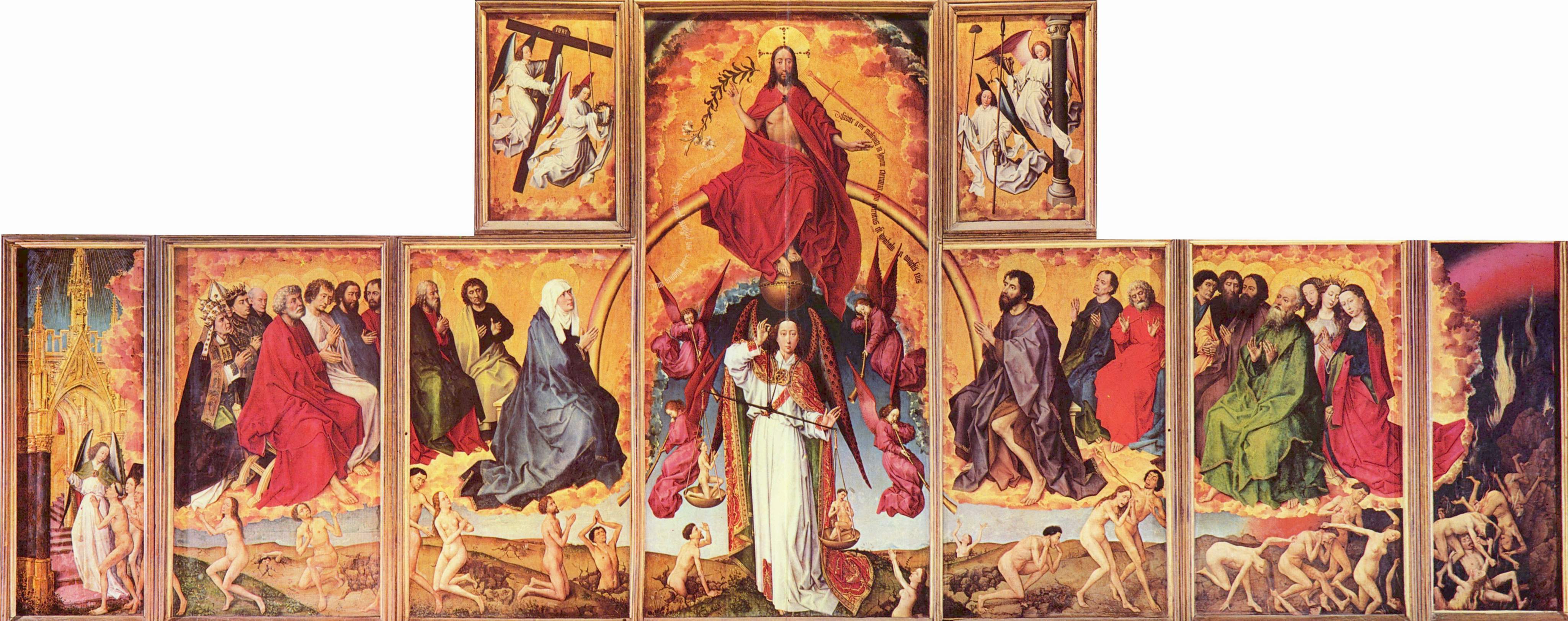
This video from Word of Fire is interesting. Bishop Barron talks a lot about hell, but he never gets around to answering the question that is the title of his video: Is hell crowded or empty? To cut to the chase, he equivocates; he says that he doesn’t know. He doesn’t believe hell is a literal place (I suppose that would make it empty?), but rather a spiritual place where we, creatures having free will in spiritual matters, isolate ourselves from God by rejecting Him through our own free choice. He refers to hell as a metaphor for the deep loneliness and isolation one experiences after rejecting God. He does conclude that, “We may reasonably hope that all people are saved.”

There are some good things in the video, but how much arsenic do you want in your bottle of drinking water? The government sets limits for contaminants in drinking water based on the toxicity levels of various substances. The Environmental Protection Agency has set an arsenic maximum contaminant level for public water supplies at 0.010 mg/L (milligrams/Liter).[1] Sadly, we are unable to do the same with false teaching. Jesus wants us to teach all that He has commanded;[2] and just as a little leaven will work it’s way through the whole lump of dough,[3] a little heresy will work it’s way through the whole church, if we aren’t careful. I think Bishop Barron’s video about hell is a milligram too much arsenic in my doctrinal water bottle to swallow.

Bishop Barron summarizes several theologians, Roman and Evangelical, and their views on salvation. He summarizes Karl Barth as a Universalist using Barth’s quote, “All are saved in the cross of Christ.” I don’t know all there is to know about Karl Barth, or even agree with a lot of what I do know, but the statement, “All are saved in the cross of Christ," is true, even if it isn’t in the way Barth meant it. Jesus died for, and indeed saved, the whole world.[4] Some men resist and reject receiving that gift. It’s the old story of the million dollar check: Bill Gates can write you a $1 million check. The money is yours. You have $1 million. If, however, you refuse to cash the check when he offers it to you - or probably more accurately, you throw the envelope away when it comes in the mail - you don’t benefit from the gift that was freely given to you. Those who are saved are saved by God’s working alone; those who are not receive all the credit for their damnation themselves.

The Bishop agrees with Hans Urs von Balthasar, the final theologian he presents. Balthasar says that we can believe all people are saved, but we can’t know it for sure; the reason we can’t be certain, he explains, is because men have free will and can reject God. I wouldn’t say, as the Bishop explains, that human freedom can resist God’s act of love; rather, the Bible tells us that we have no freedom, as we are dead in trespasses and sins; we are, by nature, objects of wrath.[5] That’s why we resist, and we are able to reject. It is our natural inclination to pursue the desires of our flesh, sin, and to reject God. It is clear, however, that there is no free will in spiritual matters, in the common understanding of the term. We are either slaves to sin and enemies of God, or we are slaves to Christ and set free from sin.[6]

His position on hell seems to be that he believes it to be real, but not exactly a physical place, like Pocatello, Idaho, and God, being Love, doesn’t send people there. Billy Graham said things that sound similar. This shouldn’t be surprising, since Rome and American Evangelicalism often have a similar view of free will. Rev. Graham sometimes talked about hell being complete separation from God, rather than an actual physical place where fire burns you forever.

More important, the mature Graham steered away from hell in general, and when he did talk about it, all that he would affirm with certainty was that it meant separation from God... “The only thing I could say for sure is that hell means separation from God. We are separated from his light, from his fellowship. That is going to be hell. When it comes to a literal fire, I don’t preach it because I’m not sure about it.”[7]

Other evangelical teachers have said similar things. These evangelical teachers, however, were not necessarily denying the existence of a literal place called hell, wherein the actual physical people who were damned would be. It may be partly a case of trying to use words to describe the indescribable. I don’t know why Billy Graham would equivocate on hell, or why anyone who believes Scripture would say that it isn’t a literal place. Christ says,

“If your hand causes you to sin, cut it off. It is better for you to enter into life maimed, rather than having two hands, to go to hell, into the fire that shall never be quenched—where ‘Their worm does not die and the fire is not quenched.’”[8]

Jesus goes on to teach that it isn’t our hand that causes us to sin, but our corrupt heart, so don’t go chopping off your hand. But we will indeed enter into a literal eternal life with a resurrected body; what in the text would cause us to read the second part of Jesus’ quote as figurative? Of course, American Evangelicalism also denies Jesus’ words their literal meaning when He says, “Take, eat; this is My body, given for you,”[9] but I digress...

The Bible teaches that hell, like heaven, is a place. On the Last Day the dead will be raised. We will all be gathered before Him. [10] The righteous will inherit the kingdom prepared for them from the foundation of the world; to the wicked He will say,

“Depart from Me, you cursed, into the everlasting fire prepared for the devil and his angels.”[11]

And these will go away into everlasting punishment, but the righteous into eternal life.[12] This is not a parable. This is not figurative language. Jesus tells us how the Judgment will be, and it includes a hell with fire, and Him sending people to it. Jesus, with His new, perfect resurrected body, is in heaven (also a place) right now, ruling over the universe; He is seated at the right hand of God the Father.[13]

When He is speaking to His Apostles, Jesus teaches them about the true fear of God. He says:

“Whatever I tell you in the dark, speak in the light; and what you hear in the ear, preach on the housetops. And do not fear those who kill the body but cannot kill the soul. But rather fear Him who is able to destroy both soul and body in hell.”[14]

Who is it who is able to destroy both soul and body in hell? God. When Christ returns to judge the world on the Last Day we will see from which side the door of hell is locked.

Just because something is “dark” doesn’t mean it is false. I get the impression that Bishop Barron doesn’t like the idea of hell as a physical place where people actually go as a result of God’s judgment because it seems dark, scary, and mean. There are, however, a lot of dark things which are true.

Bishop Barron condemns Origen for being a Universalist at the beginning of the video, but the big reveal of his own position is... universalism! It’s an equivocating kind, but it is universalism nonetheless. He says we can have reasonable hope that all will be saved, but we can’t know it. That’s just plain rubbish. Scripture tells us that not everyone will be saved. The number of the saved will be a great multitude which no one can count,[15] but that doesn’t mean it will be everyone. Jesus uses the illustration of men in a field and women grinding at a mill to depict the Judgment. He says two men will be in the field, one will be taken, the other will be left, etc. He then connects this illustration to the clearest type of the Day of the Lord, Judgment Day, in the Bible - the Flood, wherein eight people are saved in the ark from the flood waters, out of all of mankind.[16] Ultimately, I want everyone to be saved, but that is God’s work, which He does through the means of His Word. And we simply don’t know, this side of heaven, what the individual results are. We only know what God reveals to us in His Word, and He has revealed to us that

narrow is the gate and difficult is the way which leads to life, and there are few who find it.[17]

The bottom line is this: You may hope whatever you like, but that doesn’t change the fact that not all people will be saved. Bishop Barron isn’t simply saying here, “Gee, I hope everybody gets saved.” He’s trying to validate the heresy of universalism through the use of philosophy and reason. It’s the same old human story, different day. When he says we can hope all people are saved he is giving permission to believe this. What he doesn’t give is any proof from Holy Scripture. The Roman Catholic Church, on the other hand, teaches that the eternal death of hell is the consequence for mortal sin.[18] They also teach, rightly, that hell is the location of the damned.[19] The Roman Catholic Church and the Lutherans, regarding hell, agree as we confess in the Athanasian Creed together, “And those who have done good will enter into eternal life, and those who have done evil into eternal fire.”

God certainly is love; God certainly has the power to save everyone. He has indeed saved the whole world in the cross of Christ. Jesus, true God, begotten of the Father from eternity, and also true man, born of the Virgin Mary, my Lord, has redeemed me, a lost and condemned creature. He has purchased and won me from all sins, from death, and from the power of the devil. He has purchased me, not with gold or silver, but with His holy, precious blood and with His innocent suffering and death. He has done this for all men. Many stiff-necked people, however, always resist the working of God’s Holy Spirit in the words of the gospel.[20] We can hope that all men are saved by God, in the sense that we would like for it to happen; we have no indication from Holy Scripture, however, that this is the case. Quite to the contrary: God demonstrates that He wishes to deal with us through the means of His Word, and not other special ways we don’t know about, even though He is quite capable of doing so.[21] God’s Word tells us that many will reject Jesus as the multitudes did in John chapter 6.[22] Families will be divided over faith in Christ.[23] The love of many will grow cold all through the time of the end, but he who endures to the end will be saved.[24] This implies that some men will not endure, and therefore not be saved. Those men will find themselves in a very real, physical place called hell. Since not all men will be saved, that means that hell is not/will not be empty.

This discussion reminds me of a conversation Jesus had with His disciples about tragedy, and people who suffer it.[25]

There were present at that season some who told Him about the Galileans whose blood Pilate had mingled with their sacrifices. And Jesus answered and said to them, “Do you suppose that these Galileans were worse sinners than all other Galileans, because they suffered such things? I tell you, no; but unless you repent you will all likewise perish. Or those eighteen on whom the tower in Siloam fell and killed them, do you think that they were worse sinners than all other men who dwelt in Jerusalem? I tell you, no; but unless you repent you will all likewise perish.”[26]

We spill all this ink, and spend all this time, talking about hell. Why? We are afraid of it. We’re looking for an out. We can rest a little easier if we can see that either those who end up in hell deserved it more than we do, or no one will ultimately go there at all. This is what the disciples thought about the Galileans in the passage above. They must’ve been worse sinners, for something so terrible to happen to them. Jesus says no. We all deserve punishment for our sin. Jesus says we shouldn’t focus on trying to figure out how some tragedy is the punishment for the sin of those who experienced it. We should repent. Tragic events we see and experience should cause us to reflect on our sinful state, repent, and be forgiven by Jesus. It is the same with hell. Rather than using philosophy and reason to think all the damned out of hell, or reason why we ourselves don’t deserve it in the first place, the descriptions Jesus gives us of hell should terrify us. It should cause us to think about our sinfulness and repent of our sin. Hearing this Word, we should reflect on the wondrous love of Christ, who would suffer physical pain and death, and the pains of hell itself, to pay the ransom for those who are His enemies.  We should hear God’s Word and believe what it says. We should trust in Our Lord Jesus, who promised that He went away to prepare a place for us with Him.[27] If we are worried about the eternal state of those around us, we should do as we are called to do, and scatter the seed of God’s Word as the sower in Jesus’ parable.[28]


Bibliography

Interdicasterial Commission for the Catechism of the Catholic Church. Cathechism of the Catholic Church. New Hope, KY: Urbi et Orbi Communications, 1994.

Luther, Martin. "The Smalcald Articles." The Book of Concord: The Confessions of the Lutheran Church. Edited by F. Bente. bookofconcord.org.

Michigan Department of Environment, Great Lakes, and Energy. "Arsenic in Well Water." Michigan.gov. https://www.michigan.gov/documents/deq/deq-wd-gws-wcu-arsenicwellwater_270592_7.pdf (accessed July 16, 2019).

Wacker, Grant. America's Pastor: Billy Graham and the Shaping of a Nation. Cambridge: The Belknap Press of Harvard University, 2014.


[1] “Arsenic in Well Water,” Michigan Department of Environment, Great Lakes, and Energy, Google, accessed July 16, 2019, https://www.michigan.gov/documents/deq/deq-wd-gws-wcu-arsenicwellwater_270592_7.pdf.
[2] Matthew 28:17-20
[3] Galatians 5:7-15
[4] John 1:29-34; 3:16
[5] Ephesians 2:1-10
[6] Romans 8:1-2
[8] Mark 9:43-44
[9] Matthew 26:26
[10] Matthew 25:31-46
[11] Matthew 25:41
[12] Matthew 25:46
[13] Luke 24:51; Acts 1:9-11; Psalm 110:1; Romans 8:34; Ephesians 1:20-23
[14] Matthew 10:27-28
[15] Revelation 7:9
[16] Matthew 24:36-44
[17] Matthew 7:13, emphasis added
[18] Libreria Editrice Vaticana, Catechism of the Catholic Church, (New Hope: Urbi Et Orbi Communications, 1994), 456.
[19] Libreria Editrice Vaticana, Catechism of the Catholic Church, (New Hope: Urbi Et Orbi Communications, 1994), 164-165.
[20] Acts 7:51
[21] Martin Luther, “Smalcald Articles,” accessed July 16, 2019, http://bookofconcord.org/smalcald.php#confession. “In a word, enthusiasm inheres in Adam and his children from the beginning [from the first fall] to the end of the world, [its poison] having been implanted and infused into them by the old dragon, and is the origin, power [life], and strength of all heresy, especially of that of the Papacy and Mahomet. Therefore we ought and must constantly maintain this point, that God does not wish to deal with us otherwise than through the spoken Word and the Sacraments. It is the devil himself whatsoever is extolled as Spirit without the Word and Sacraments. For God wished to appear even to Moses through the burning bush and spoken Word; and no prophet neither Elijah nor Elisha, received the Spirit without the Ten Commandments [or spoken Word]. Neither was John the Baptist conceived without the preceding word of Gabriel, nor did he leap in his mother's womb without the voice of Mary. And Peter says, 2 Pet. 1:21: The prophecy came not by the will of man; but holy men of God spake as they were moved by the Holy Ghost. Without the outward Word, however, they were not holy, much less would the Holy Ghost have moved them to speak when they still were unholy [or profane]; for they were holy, says he, since the Holy Ghost spake through them (SA III, 9-13).
[22] John 6:60-71
[23] Matthew 10:34-36
[24] Matthew 24:12-14
[25] Luke 13:1-5
[26] ibid.
[27] John 14:3
[28] Matthew 13:1-9

Friday, November 23, 2018

Make Your Calling and Election Sure

The Death of Capt. John H. Miller - Saving Private Ryan
Therefore, brethren, be even more diligent to make your call and election sure, for if you do these things you will never stumble; for so an entrance will be supplied to you abundantly into the everlasting kingdom of our Lord and Savior Jesus Christ (2 Peter 1:10-11).

It sure sounds like Peter is saying here that, in order to keep your salvation, you must do good works. In the verses immediately preceding 2 Peter 1:10, he gives us a list of things to do so we can make our calling and election sure: Add to your faith virtue… knowledge… self-control… perseverance… godliness… brotherly kindness… love.[1] Do these things and your election will be sure; stop doing them, and it won’t be. Doing this list of good works will earn you the pardon Christ has won for you. It’s like the end of the movie “Saving Private Ryan”, when Tom Hanks’ character, dying, having secured the salvation of the aforementioned Private Ryan, looks into his eyes and, with his dying breath says, “Earn this.”[2] This is the way the theologians of the Roman church in Luther’s day certainly thought about good works.

When Rome responded to the Augsburg Confession in a document called the Roman Confutation, they rejected the Lutheran insistence that the forgiveness of sins is not merited by doing good works.[3] One of the scripture texts they used to try to support their argument was 2 Peter 1:10. But, as Philip Melanchthon replied in the Apology to the Augsburg Confession: If the promise were to depend upon our works it would not be sure. If forgiveness of sins were to be given because of our works, when would we know that we had received it?[4] That’s sort of the whole idea upon which the system of indulgences that developed in the medieval church was built; You can’t be sure you’ve given enough money, or done enough good, to insure your salvation, so you’d better give and do just a little bit more. This idea of making your calling and election sure, that Peter writes about here, is often misunderstood this way by Roman Catholic and Protestant alike. Peter, however, is actually instructing us to cultivate the good works, which flow naturally out of us because of our faith in Christ, rather than doing those good works to turn us into, or insure that we remain, Christians.

James also gives this same type of exhortation. In chapter two of his letter, James says that faith without works is dead: But someone will say, “You have faith, and I have works.” Show me your faith without your works, and I will show you my faith by my works. You believe that there is one God? You do well. Even the demons believe – and tremble.[5] James is not teaching contrary to Christ, or Peter, or most notably Paul, who constantly writes that it is by grace you are saved, and not by works. To the contrary, James’ words here enhance those of Paul; James is explaining the same idea as Paul and Peter, but coming from the opposite direction. What that means is this: Paul begins by telling us that we are saved by God’s grace alone through faith in Christ, and not by works. After explaining that, Paul then exhorts the Christians who have been saved by grace through faith, to then do good works. He tells us to act like the Christians God has made us into. We are to cultivate the good works, which naturally come forth from our new nature, and we are to resist and deny the impulses and desires of the flesh: And those who are Christ’s have crucified the flesh with it’s passions and desires. If we live in the Spirit, let us also walk in the Spirit. Let us not become conceited, provoking one another, envying one another.[6] And later: For he who sows to the flesh will of the flesh reap corruption, but he who sows to the Spirit will of the Spirit reap everlasting life. And let us not grow weary while doing good, for in due season we shall reap if we do not lose heart. Therefore, as we have opportunity, let us do good to all, especially to those who are of the household of faith.[7] These exhortations come only after Paul expounds on how man is justified by faith, how the law brings a curse and it’s purpose is to show us our sin, and that we are all heirs to God’s promise in Christ.

Paul explains that, since we are baptized into Christ’s death and resurrection, we should not let sin reign in our mortal bodies. We should not obey sin’s lusts. We should not present our members as instruments of unrighteousness to sin.[8] This is also what the apostle John teaches when he writes: By this we know love, because He laid down His life for us. And we also ought to lay down our lives for the brethren. But whoever has this world’s goods, and sees his brother in need, and shuts up his heart from him, how does the love of God abide in him? My little children, let us not love in word or in tongue, but in deed and in truth.[9] This teaching, however, is no innovation of Peter, Paul, James, or John; it comes from Christ. This is what Christ is saying when He instructs the now forgiven woman caught in adultery to go forth and sin no more.[10] This is the meaning of the exhortation of both Christ and John the Baptist to bear fruit in keeping with repentance. We are forgiven, set free from sin, and bondservants to Christ; we should not waste our freedom, time, and energy pursuing opportunities to sin. We have been called to follow Christ.[11]

Melanchthon, responding to the Roman theologians, explains the folly of trying to make one’s calling sure by good works in the way they wrongly understood Peter’s words: Now you see, reader that our adversaries have not wasted any effort in learning logic, but have the art of concluding whatever pleases them from the Scriptures. For they conclude, “Make your calling sure by good works.” Therefore, they think that works merit the forgiveness of sins. This is a very nice way of thinking, if one would argue this way about a person who’s death sentence had been pardoned. “The judge commands that from now on you stop stealing for others. Therefore, you have earned the pardon from the punishment, because you no longer steal from others.” To argue in this way makes a cause out of no cause. Peter speaks of works following the forgiveness of sins and teaches why they should be done…Do good works in order that you may persevere in your calling, in order that you do not lose the gifts of your calling. They were given to you before, and not because of works that follow, which now are kept through faith.[12]

You can’t earn a gift. You can only be grateful for it. Christ has died as the atonement for the sins of the world; He rose from the grave as the conqueror or death. He gives us this gift through His Word because He loves us; we take hold of it by faith, created in us by the working of the Holy Spirit. He joins us to Him, to His death and resurrection, and gives us the Holy Spirit, in our baptism. He nourishes us, as sap flowing through a tree feeds all it’s branches, when we eat His body and drink His blood in the Lord’s Supper as He commanded. Because He has made us a new creature, He calls us to live according to the nature of that new creature, and not according to the impulses of the sinful flesh with which we must still contend, all the days of our lives. Our works are evidence of our faith.


[1] 2 Peter 1:5-7
[2] Saving Private Ryan. Directed by Steven Spielberg. Performed by Tom Hanks, Edward Burns, Tom Sizemore, Jeremy Davies, and Vin Diesel. USA: DreamWorks, 1998. https://youtu.be/Lv-67DFlOsM
[3] "The Confutatio Pontificia." The Roman Confutation 1530. Accessed November 25, 2018. http://bookofconcord.org/confutatio.php. In the twentieth article, which does not contain so much the confession of the princes and cities as the defense of the preachers, there is only one thing that pertains to the princes and cities - viz. concerning good works, that they do not merit the remission of sins, which, as it has been rejected and disapproved before, is also rejected and disapproved now.
[4] Ap. XX 87
[5] James 2:17-18
[6] Galatians 5:24-26
[7] Galatians 6:8-10
[8] Romans 6:12-13
[9] 1 John 3:16-18
[10] John 8:11
[11] Engelbrecht, Edward, et. al., eds. The Lutheran Study Bible: English Standard Version. Saint Louis: Concordia Pub. House, 2009.
[12] Ap. XX 89-90

Wednesday, August 23, 2017

The Amazing Secret of the Souls in Purgatory, or...How We Are Justified by Grace through Faith in Christ

Read how Roman Catholics and the ELCA have "moved from the divisions of
Martin Luther's 95 theses to 32 statements of agreement" in this
National Catholic Register story by Peter Jesserer Smith from 2016.
With all the talk of Lutheran/Roman Catholic unity going on out there, one might get the impression that the Reformation is obsolete. It was an important part of the history of Western Civilization, but the curtain has closed on that scene a long time ago. Today, we can look back at the Reformation as a period during which medieval people argued about medieval issues, and sometimes tried to kill each other as a result (not that we modern, enlightened people could relate to that situation at all). Indeed, this why the Vatican is commemorating the Reformation – because it is dead. It is over. Finished. Kaput. You don’t commemorate something that is still alive, vital, and relevant. You celebrate that. You commemorate something that has passed away, like the anniversary of the death of a loved one.

The reason this is such a big deal now, is because 2017 marks the 500th anniversary of the beginning of the Reformation. This is because history has chosen to designate the date that Dr. Martin Luther nailed his 95 Theses to the door of the Castle Church in Wittenberg, October 31, 1517, as the official beginning of the Reformation.[1] For the last year, and even longer, Christians of all stripes have been getting ready for 2017. Confessional Lutheran groups, like the Lutheran Church-Missouri Synod, have been preparing for the anniversary by emphasizing the things that were taught during the Reformation: That man is justified before God by grace, through faith alone in Jesus Christ. Liberal Lutherans, like those in the Evangelical Lutheran Church in America, have chosen a different path. These Lutherans have been working for unity with the Roman Catholic Church. These two churches have been meeting, issuing statements, and signing declarations since at least 1999 to achieve this end.[2] The Vatican has even issued a commemorative Reformation stamp.[3]

Not that I’m against unity. I am not. I would love nothing more than for Christendom to be truly united in one church body, under its head, Christ. I am against a false and contrived unity.

As much as some groups might try to say that the differences between the Roman Catholic Church and Confessional Lutheranism (what resulted from the Reformation, and is codified in the Book of Concord) are now so insignificant that we could join together in communion, it simply is not the case. Theologically liberal Lutherans who disregard the Lutheran Confessions may like to hold hands with theologically liberal, academically enlightened, Roman Catholics, stroking each other’s feelings, and cooing to each other in the language of Higher Criticism about how Holy Scripture is faulty. Their confessional counterparts, however, have made no such concessions. The argument between Wittenberg and Rome – or Augsburg and Trent, if you like – is about how man is justified before God. It has not yet been resolved, and is not likely to be, in my opinion, before Christ returns.

The main issue surrounding the posting of the 95 Theses, in a nutshell, was that of purgatory and indulgences. Luther wanted to debate the subject, so he posted the Theses, written in Latin, on the door of the Castle Church in Wittenberg on October 31, 1517. This was not some act of defiance or vandalism. Lacking the modern means of communication, this was normal practice at the university. The Theses were quickly reprinted, translated, and distributed throughout Germany and Europe. Luther addressed the issue of indulgences from a number of angles[4]: The Pope doesn’t have the power he claims over the souls in purgatory; The Pope can only release people from punishments that he has imposed; Every truly penitent Christian already has pardon for his sins; Indulgences discourage works of mercy. Probably most famously, Luther talks about the Pope’s claim to control the so-called treasury of merit,[5] by asking why he does not simply grant indulgence to all the souls in purgatory:

Why does not the pope empty purgatory, for the sake of holy love and of the dire need of the souls that are there, if he redeems an infinite number of souls for the sake of miserable money with which to build a Church? The former reasons would be most just; the latter is most trivial.[6]

While this may have been a pressing issue in the 16th Century, the selling of indulgences isn’t really a “thing” anymore, right? Well, yes and no. The Roman church doesn’t actually sell indulgences in the way they did when the Pope was trying to raise money for building St. Peter’s basilica. There is no man like Johannes Tetzel, wandering the countryside, frightening people with the prospect of thousands of years of torture in purgatory, to get them to part with their money. Indulgences, however, still play a large and important role in the Roman Catholic religious system. The system of indulgences was modified in 1968 from a system of specific time periods (hours, days, weeks, months, years, etc.) to one of “partial” and “plenary” indulgence.[7]

An indulgence is a remission before God of the temporal punishment due to sins whose guilt has already been forgiven, which the faithful Christian who is duly disposed gains under certain prescribed conditions through the action of the Church which, as the minister of redemption, dispenses and applies with authority the treasury of the satisfactions of Christ and the saints. An indulgence is partial or plenary according as it removes either part or all of the temporal punishment due to sin. Indulgences may be applied to the living or the dead.[8]

This isn’t simply some forgotten dogma in the Catechism of the Catholic Church that goes untaught. There are scores of pamphlets, popular books, and devotionals written about the souls in purgatory, and how to gain indulgence for them, and for one’s self. In one such booklet, Maria Simma talks about what Purgatory is, how she has been visited by souls being purified there, and what she does to gain for them indulgence:

What exactly is Purgatory? I’d say that it’s a marvelous invention of God...Suppose that one day a door opens, and a splendid being appears, extremely beautiful, of a beauty that has never been seen on earth. You are fascinated, overwhelmed by this being of light and beauty, even more so that this being shows that he is madly in love with you – you have never dreamed of being loved so much. You sense too that he has a great desire to draw you to him, to be one with you. And the fire of love which burns in your heart impels you to throw yourself into his arms. But wait – you realize at this moment that you haven’t washed for months and months, that you smell bad; your nose is running, your hair is greasy and matted, there are big dirty stains on your clothes, etc. So you say to yourself, “No, I just can’t present myself in this state. First I must go and wash; a good shower, then straight away I’ll come back.” But the love which has been born in your heart is so intense, so burning, so strong, that this delay for the shower is absolutely unbearable. The pain of the absence, even if it only lasts for a couple of minutes, is an atrocious wound in the heart, proportional to the intensity of the revelation of the love – it is a “love-wound.” Purgatory is exactly like this. It’s a delay imposed by our impurity, a delay before God’s embrace, a wound of love which causes intense suffering, a waiting, if you like, a nostalgia for love. It is precisely this burning, this longing which cleanses us of whatever is still impure in us.[9]

Maria goes on to describe how, when she was a little girl, she saw visions of people in her bedroom at night. She told her priest about the occurrences, and he confirmed to that she was being visited by the souls in purgatory. Maria described the reason for their visits:

In most cases, they ask to have Masses celebrated and that one be present at these Masses; they ask to have the rosary said and also that one make the Stations of the Cross...We must do a great deal for the souls in Purgatory, for they help us in their turn. We must have much humility; this is the greatest weapon against evil, against the Evil One. Humility drives evil away.[10]

This teaching about how the guilt of sin is remitted by our human works is contrary to God’s Word. God the Father, out of his mercy, and because of the death of Jesus on the cross, forgives sinners. We have redemption through the blood of Christ. He is the atoning sacrifice for our sins.

In Him we have redemption through His blood, the forgiveness of sins, according to the riches of His grace...And He Himself is the propitiation for our sins, and not for ours only but also for the whole world (Ephesians 1:7; 1 John 2:2).

In fact, Scripture teaches that God declares sinners righteous for Christ’s sake. Our sins have been “credited” to Christ, and his righteousness has been credited to us. When we believe the Gospel, this message of reconciliation, our faith is credited to us as righteousness.

For I am not ashamed of the gospel of Christ, for it is the power of God to salvation for everyone who believes, for the Jew first and also for the Greek...Therefore we conclude that a man is justified by faith apart from the deeds of the law...But to him who does not work but believes on Him who justifies the ungodly, his faith is accounted for righteousness (Romans 1:16; 3:28; 4:5).

The Lutheran Confessions boldly confess the Scriptural teaching on man’s justification, the doctrine by which the Church stands or falls:

Our churches teach that people cannot be justified before God by their own strength, merits, or works. People are freely justified for Christ’s sake, through faith, when they believe that they are received in to favor and that their sins are forgiven for Christ’s sake. By His death, Christ made satisfaction for our sins. God counts this faith for righteousness (Romans 3:21-26; 4:5).[11]

This is what the Roman Catholic Church has to say, officially, about the doctrine of Justification:

If any one saith, that by faith alone the impious is justified; in such wise as to mean, that nothing else is required to co-operate in order to the obtaining the grace of Justification, and that it is not in any way necessary, that he be prepared and disposed by the movement of his own will; let him be anathema.[12]

The canons on Justification  from the Council of Trent make for some interesting reading. They systematically anathematize the Gospel. That word anathema, incidentally, means “cursed”. So, what Canon IX, quoted above, is saying, is that anyone who believes that they are justified before God by faith alone, without an act, or movement, of their own will (works), is cursed. This is official teaching of the Roman Catholic Church, and has never been modified, or rescinded.

The only Lutherans and Roman Catholics who have come to agreement on the doctrine of Justification are the Lutherans and Roman Catholics who have abandoned Holy Scripture and the teachings of their churches.


[1] The Augsburg Confession, not the 95 Theses, is the primary confession of faith of the Lutheran Church and one of the most important documents of the Lutheran Reformation. The Augsburg Confession was written in both German and Latin and was presented by a number of German rulers and free-cities at the Diet of Augsburg on June 25, 1530. The Holy Roman Emperor Charles V had called on the Princes and Free Territories in Germany to explain their religious convictions in an attempt to restore religious and political unity in the Holy Roman Empire and rally support against the Turkish invasion. It is the fourth document contained in the Lutheran Book of Concord. Central to the document and its subsequent Apology is its explanation of the Biblical doctrine of Justification. Confessional Lutherans teach forensic, or "legal", justification. This means that God declares the sinner to be "not guilty" (justified) because Christ has taken his place, living a perfect life according to God's law and suffering for his sins. For Confessional Lutherans justification is in no way dependent upon the thoughts, words, and deeds of those justified through faith alone in Christ. The new obedience that the justified sinner renders to God through sanctification follows justification as a consequence, but is not part of justification. For these reasons, if I were in charge of picking a date for the start of the Reformation, I would choose June 25, 1530, rather than the conventional October 31, 1517. Joseph Klotz, “Augustana,” The Hodgkins Lutheran, April 25, 2013, http://hodgkinslutheran.blogspot.com/2013/04/augustana.html.

[2]The Joint Declaration on the Doctrine of Justification (JDDJ) is a document created, and agreed to, by the Catholic Church's Pontifical Council for Promoting Christian Unity (PCPCU) and the Lutheran World Federation in 1999. It states that the churches now share "a common understanding of our justification by God's grace through faith in Christ.” “Joint Declaration of the Doctrine of Justification,” Wikipedia, accessed August 22, 2017, https://en.wikipedia.org/wiki/Joint_Declaration_on_the_Doctrine_of_Justification.

You can read the document here:

[3]Jan Bentz, “Breaking: Vatican to issue stamp featuring Martin Luther,” LifeSiteNews, January 17, 2017. https://www.lifesitenews.com/news/vatican-gives-stamp-of-approval-to-martin-luther The Vatican office charged with issuing stamps, known as the Philatelic and Numismatic Office, confirmed Tuesday to LifeSiteNews that Luther, who broke away from the Catholic Church in a schism 500 years ago, will be celebrated with a postage stamp in 2017. The office is in charge of the annual commission of stamps, coins, and other commemorative medals.

[4] Martin Luther, Disputation of Doctor Martin Luther on the Power and Efficacy of Indulgences, trans. Adolph Spaeth, L.D. Reed, Henry E. Jacobs, et. Al., (Philadelphia: A. J. Holman Company, 1915), Vol.1, pp. 29-38. Accessed August 22, 2017. http://bookofconcord.org/95theses.php.

[5]  The Treasury of Merit, as concisely defined by Merriam Webster, is the superabundant satisfaction of Christ for human sins and the excess of merit of the saints which according to Roman Catholic theology is effective for salvation of others and is available for dispensation through indulgences. “Treasury of Merits,” Merriam-Webster, accessed August 22, 2017. https://www.merriam-webster.com/dictionary/treasury%20of%20merits.

[6] Theses 82, ibid.

[7] “The Divine Mercy Devotion,” EWTN, accessed August 22, 2017, https://www.ewtn.com/devotionals/mercy/what.htm.  A plenary indulgence means that by the merits of Jesus Christ, the Blessed Virgin Mary and all the saints, the full remission of the temporal punishment due to sacramentally forgiven sins is obtained. The person becomes as if just baptized and would fly immediately to heaven if he died in that instant. A partial indulgence means that a portion of the temporal punishment due to forgiven sin is remitted. Partial indulgences are received either by doing some act to which a partial indulgence is attached (e.g. praying a partially indulgenced prayer), or by the incomplete fulfillment of the conditions attached to a plenary indulgence.

[8] Catechism of the Catholic Church. New Hope, KY: Urbi et Orbi Communications, 1994.

[9] Medjugorje, Sister Emmanuel. The amazing secret of the souls in purgatory. Santa Barbara, CA: Queenship Pub. Co., 2005.

[10] ibid. p. 7-8, 14.

[11] AC IV 1-3.

[12] “On Justification,” The Council of Trent, accessed August 22, 2017, http://www.thecounciloftrent.com/ch6.htm