Showing posts with label theology. Show all posts

Thursday, July 26, 2018

Criteria for Hymn Selection: Scriptural

Let the word of Christ dwell in you richly in all wisdom, teaching and admonishing one another in psalms and hymns and spiritual songs, singing with grace in your hearts to the Lord. And whatever you do in word or deed, do all in the name of the Lord Jesus, giving thanks to God the Father through Him (Colossians 3:16-17).

This Bible passage stands on the page facing the first hymn in The Lutheran Hymnal. The strongest hymns will not only be based on the truths of God’s Word, but will contain clear biblical references that help the faithful rehearse again and again those truths. Such hymns put into their mouths what has first been put into their ears. Clear allusions to the Word of God echo from throughout hymnody that is biblically rich.

It is not the fact that it is possible to misunderstand or interpret the text in a way which is contrary to Scripture and the Confessions which would cause a hymn to be excluded, but whether such a misrepresentation is likely. Neither would hymns be included because it is possible to read a text with “Lutheran eyes” — a type of corrective vision. In matters of the church’s practice, clarity of doctrine is of paramount importance so as to not mislead.

In this light, we may rightly choose to reject hymns which have become closely associated with practices and traditions which are antithetical to the Gospel, such as altar calls. If the singing of certain hymns has the effect of blurring distinctions between the orthodox confession of the faith and heterodox beliefs, we are obliged to abstain.

God’s Word is Our Great Heritage

God’s Word is our great heritage
And shall be ours forever;
To spread its light from age to age 
Shall be our chief endeavor.
Through life it guides our way,
In death it is our stay.
Lord, grant while worlds endure,
We keep its teachings pure
Throughout all generations.

Thursday, July 19, 2018

Criteria for Hymn Selection: Incarnational

The philosophy of Plato, which filtered into the church through Augustine’s neo-Platonism, may be briefly described as an idea or ideal towards which one strives to arrive. 

The Gospel is not concerned with ideals. The Gospel does not talk about with how we get closer to Jesus. Rather, it announces how Christ graciously comes all the way to us. The Christian confession is not at its best when it contemplates the kingdom of God in terms of lower to higher, closer or nearer, comparatives and superlatives. At issue is not that we become more and more like God, but rather that He became like us, taking on our flesh and yet was without sin. 

It is not that we go to God, but rather that He comes all the way to us through the means of grace. He does not come to us through symbols or imagery but through Word and Sacrament. Luther put it this way:

Although [God] is present in all creatures, and I might find him in stone, in fire, in water, or even in a rope, for he certainly is there, yet he does not wish that I seek Him there apart from the Word, and cast myself into the fire or the water, or hang myself on the rope. He is present everywhere, but He does not wish that you grope for Him everywhere. Grope rather where the Word is, and there you will lay hold of Him in the right way. Otherwise you are tempting God and committing idolatry. For this reason He has set down for us a definite way to show us how and where to find Him, namely the Word. (AE 36:342)

That which is not incarnational is most likely allegorical. Can sinners be saved by figures of speech? People may enjoy symbolism, metaphors, and illustrations as interesting, inspiring, enlightening or even entertaining, but there is no power in allegories to save. Figures of speech might provide some sense of stimulated elation wherein the audience imagines that it is getting closer to God, but this is at best an illusion.

In the same vein, the Lord God does not love in a way that admits of degrees: more or less or so much. He loves entirely and completely in a way that is so vast that we cannot comprehend or describe it. It is not that we love Him but that He loves us – and His love in Christ is not measured by degrees, lesser or greater, comparatives or superlatives.

O Lord, How Shall I Meet Thee

Love caused Thy incarnation,
Love brought Thee down to me;
Thy thirst for my salvation
Procured my liberty.
O love beyond all telling,
That led Thee to embrace,
In love all love excelling,
Our lost and fallen race!

Rejoice, then, ye sad-hearted,
Who sit in deepest gloom,
Who mourn o'er joys departed
And tremble at your doom.
Despair not, He is near you,
Yea, standing at the door,
Who best can help and cheer you
And bids you weep no more.

Thursday, July 12, 2018

Criteria for Hymn Selection: Christocentric

“The righteous live alone by God’s grace, work, Word and might reveal in Christ which is their preaching, hymn, praise and song.” Martin Luther, The Good Confession of Psalm 118 (1530; Erl. 41:57-58).

It has been popular to use the hyphenated “Christ-centered” as a compound adjective to describe such things as education, marriage, or counseling. Perhaps it would be better to say solus Christus, "Christ alone," rather than “Christocentric.” Saying that Jesus is at the center does not necessarily address that which may lie at the periphery. Thus, the Scriptures do not speak of a Christ at the center but rather: "Christ is all and in all." (Col 3:11b), as is also echoed in other passages of Scripture emphasizing the "all things" from and through and by Christ alone.

In Thee Alone, O Christ, My Lord

In Thee alone, O Christ, my Lord, 
My hope on earth remaineth;
I know Thou wilt Thine aid afford,
Naught else my soul sustaineth.
No strength of man, no earthly stay
Can help me in the evil day;
Thou, only Thou, canst aid supply.
To Thee I cry; On Thee I bid my heart rely.

Thursday, June 21, 2018

Criteria for Hymn Selection: Theology

By Rev. Joel Brondos

“Theology must sing.”
Martin Franzmann

The first Lutheran cantor, Johann Walter, maintained in the 16th century that music is “wrapped up and locked up in theology, so that he who desires, pursues, and studies theology at the same time lays hold of the art of music, even though he may fail to see, feel, or understand this.”

The Lutheran Confessions even use the text of a well-known hymn to emphasize a doctrinal point (Formula of Concord, Solid Declaration, Article I:23, “They teach that what is sung in our churches, ‘Through Adam’s fall is all corrupt . . .”).

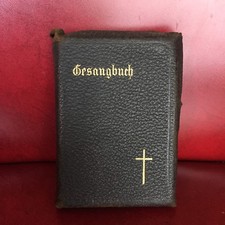
Centuries later, the first president of The Lutheran Church — Missouri Synod, C.F.W. Walther, wrote concerning the hymn selection process for the 1847 Kirchengesangbuch:

“In the selection of the adopted hymns the chief consideration was that they be pure in doctrine; that they have found almost universal acceptance within the orthodox German Lutheran Church and have thus received the almost unanimous testimony that they had come forth from the true spirit (of Lutheranism); that they express not so much the changing circumstances of individual persons but rather contain the language of the whole church.” Hymns selected for this new hymnal follow in this tradition.

In our own day, Robin Leaver has expressed it this way: “For the people of our churches, theology is largely formed by the hymns they sing,” (“Renewal in Hymnody,” Lutheran Quarterly, no. 6 [Winter 1992], 367).


The hymnody of The Lutheran Church — Missouri Synod is part and parcel with its theology. That which we believe, teach, and confess finds concrete expression through the hymns which we sing.