Showing posts with label Brondos. Show all posts

Friday, March 29, 2024

Thoughts on Jesus' Seven Words from the Cross: The First Word

Thoughts on the First Word from the Cross

by Rev. Joel A. Brondos

The Crucifixion, by Bellini

Being retired, I rarely preach anymore, but after some 40 years of preparing sermons (I graduated from Concordia Seminary - St. Louis in 1984), I still ruminate on various texts. Here are some thoughts I would have shared on Christ's seven "words" from the cross (in Greek and Latin, "word" can refer to thoughts and sentences).

"Father, forgive them, for they do not know what they do" (Luke 23:34)

With these words from the cross, our Lord showed what was on His mind while He was suffering on the cross.

His thoughts were not about anger, retribution, vengeance, or justice -- but forgiveness. It was for forgiveness that He was nailed to the accursed cross. He had not come to condemn the world of sinners, but that the world through Him might be saved [John 3:17].

Those who sneered while looking upon Him used their words to mock, blaspheme, and ridicule Him. They, too, were included among those for whom He was giving His life. The ones right under His nose, turned up their noses and held Him in contempt -- yet He did not respond in kind.

He did not threaten them in reply, saying, "When I rise from the dead, you guys are in for a world of hurt! I'm going to kill you!" but rather, "when He was reviled, did not revile in return; when He suffered, He did not threaten, but committed Himself to Him who judges righteously" (1 Peter 2:23).

Christ's enemies did not know what they were doing. Now, ignorance is no excuse for breaking the Law. Any sheriff can tell you that, but the thought is also expressed in the Old Testament (Leviticus 5:18; Ezekiel 45:20). And yet, there was a sense in which they had to be ignorant. Who would have driven nails into the hands and feet of Jesus utterly convinced that He was both true God and true man. Those who had come to arrest Jesus in the garden got a glimpse that Jesus was the great I AM, and they fell back when they heard Jesus say, "I am He." Or as we read in Colossians 2:8, "which none of the rulers of this age knew; for had they known, they would not have crucified the Lord of glory."

The hatred and invectives of those enemies of the cross did not stop at Golgotha. When they no longer had Jesus to kick about, they went after His disciples. They went after Stephen.

Stephen, a man full of faith and the Holy Spirit (Acts 6:3,5), never had the opportunity to read any of Paul's epistles. The words which Paul wrote to the Philippians were never read to Stephen: "Let this mind be in you which was also in Christ Jesus . . . [who] humbled Himself and became obedient to the point of death, even the death of the cross."

Nevertheless, Stephen had the mind of Christ, forgiving those who were stoning him to death, crying out with a loud voice, out with a loud voice, "Lord, do not charge them with this sin," calling on God and saying, "Lord Jesus, receive my spirit" as he knelt down and "fell asleep."

But even though Stephen never knew anything about Paul's letters, Paul (who at that time was Saul) had the opportunity to hear Stephen. Saul had consented to the stoning of Stephen. He breathed threats and murder against the disciples of the Lord. In Acts 22:20, Paul himself confessed: "when the blood of Your martyr Stephen was shed, I also was standing by consenting to his death, and guarding the clothes of those who were killing him."

If anyone was an "in" + "amicus," literally, "not a friend" -- if anyone was an enemy of the cross -- it was Saul. But in the forgiveness of Christ's cross conveyed through the words on the dying lips of Stephen, Paul came to know "For if when we were enemies, we were reconciled to God through the death of His Son, much more, having been reconciled, we shall be saved by His life" (Romans 5:10) and again, "And you, who once were alienated and enemies in your mind by wicked works, yet now He has reconciled" (Colossians 1:21).

Today's world spends billions of dollars to have vengeance and retribution streamed onto their 84-inch smart screens or to read about such things on their tablets. Writers and directors set us up in the beginning of movies and novels to be shocked at some abhorrent evil or injustice. By the end of the movie or book, we expect to see the antagonists die a most gruesome death. We expect the enemies to get justice from a wide array of implements of destruction. It is not likely that the same amount of revenues could be collected in a story which ends with the enemies being forgiven (though there are a few).

We, by nature, are not friends of the Lord God almighty. We demonstrate this by our selfishness, our carelessness, our lusts, our pride, our complaints, our wasted time, our willfulness -- our sinfulness. We justly deserve temporal and eternal punishment. We cannot plead ignorance, but with the apostle Paul, we confess, "For I know of nothing against myself, yet I am not justified by this; but He who judges me is the Lord" (1 Corinthians 4:4).

And yet by the grace and mercy of our crucified Lord, we do not come to a bitter end. We do not face the holy and righteous justice of the almighty Lord God. Jesus faced that bitter end for us on the cross.

Christ died for enemies like us. And by His grace, mercy, and peace through faith, through Christ's words of forgiveness from the cross, we, too, are enlivened to "love your enemies, bless those who curse you, do good to those who hate you, and pray for those who spitefully use you and persecute you" (Matthew 5:44).

Thursday, July 26, 2018

Criteria for Hymn Selection: Scriptural

Let the word of Christ dwell in you richly in all wisdom, teaching and admonishing one another in psalms and hymns and spiritual songs, singing with grace in your hearts to the Lord. And whatever you do in word or deed, do all in the name of the Lord Jesus, giving thanks to God the Father through Him (Colossians 3:16-17).

This Bible passage stands on the page facing the first hymn in The Lutheran Hymnal. The strongest hymns will not only be based on the truths of God’s Word, but will contain clear biblical references that help the faithful rehearse again and again those truths. Such hymns put into their mouths what has first been put into their ears. Clear allusions to the Word of God echo from throughout hymnody that is biblically rich.

It is not the fact that it is possible to misunderstand or interpret the text in a way which is contrary to Scripture and the Confessions which would cause a hymn to be excluded, but whether such a misrepresentation is likely. Neither would hymns be included because it is possible to read a text with “Lutheran eyes” — a type of corrective vision. In matters of the church’s practice, clarity of doctrine is of paramount importance so as to not mislead.

In this light, we may rightly choose to reject hymns which have become closely associated with practices and traditions which are antithetical to the Gospel, such as altar calls. If the singing of certain hymns has the effect of blurring distinctions between the orthodox confession of the faith and heterodox beliefs, we are obliged to abstain.

God’s Word is Our Great Heritage

God’s Word is our great heritage
And shall be ours forever;
To spread its light from age to age 
Shall be our chief endeavor.
Through life it guides our way,
In death it is our stay.
Lord, grant while worlds endure,
We keep its teachings pure
Throughout all generations.

Thursday, July 19, 2018

Criteria for Hymn Selection: Incarnational

The philosophy of Plato, which filtered into the church through Augustine’s neo-Platonism, may be briefly described as an idea or ideal towards which one strives to arrive. 

The Gospel is not concerned with ideals. The Gospel does not talk about with how we get closer to Jesus. Rather, it announces how Christ graciously comes all the way to us. The Christian confession is not at its best when it contemplates the kingdom of God in terms of lower to higher, closer or nearer, comparatives and superlatives. At issue is not that we become more and more like God, but rather that He became like us, taking on our flesh and yet was without sin. 

It is not that we go to God, but rather that He comes all the way to us through the means of grace. He does not come to us through symbols or imagery but through Word and Sacrament. Luther put it this way:

Although [God] is present in all creatures, and I might find him in stone, in fire, in water, or even in a rope, for he certainly is there, yet he does not wish that I seek Him there apart from the Word, and cast myself into the fire or the water, or hang myself on the rope. He is present everywhere, but He does not wish that you grope for Him everywhere. Grope rather where the Word is, and there you will lay hold of Him in the right way. Otherwise you are tempting God and committing idolatry. For this reason He has set down for us a definite way to show us how and where to find Him, namely the Word. (AE 36:342)

That which is not incarnational is most likely allegorical. Can sinners be saved by figures of speech? People may enjoy symbolism, metaphors, and illustrations as interesting, inspiring, enlightening or even entertaining, but there is no power in allegories to save. Figures of speech might provide some sense of stimulated elation wherein the audience imagines that it is getting closer to God, but this is at best an illusion.

In the same vein, the Lord God does not love in a way that admits of degrees: more or less or so much. He loves entirely and completely in a way that is so vast that we cannot comprehend or describe it. It is not that we love Him but that He loves us – and His love in Christ is not measured by degrees, lesser or greater, comparatives or superlatives.

O Lord, How Shall I Meet Thee

Love caused Thy incarnation,
Love brought Thee down to me;
Thy thirst for my salvation
Procured my liberty.
O love beyond all telling,
That led Thee to embrace,
In love all love excelling,
Our lost and fallen race!

Rejoice, then, ye sad-hearted,
Who sit in deepest gloom,
Who mourn o'er joys departed
And tremble at your doom.
Despair not, He is near you,
Yea, standing at the door,
Who best can help and cheer you
And bids you weep no more.

Thursday, July 12, 2018

Criteria for Hymn Selection: Christocentric

“The righteous live alone by God’s grace, work, Word and might reveal in Christ which is their preaching, hymn, praise and song.” Martin Luther, The Good Confession of Psalm 118 (1530; Erl. 41:57-58).

It has been popular to use the hyphenated “Christ-centered” as a compound adjective to describe such things as education, marriage, or counseling. Perhaps it would be better to say solus Christus, "Christ alone," rather than “Christocentric.” Saying that Jesus is at the center does not necessarily address that which may lie at the periphery. Thus, the Scriptures do not speak of a Christ at the center but rather: "Christ is all and in all." (Col 3:11b), as is also echoed in other passages of Scripture emphasizing the "all things" from and through and by Christ alone.

In Thee Alone, O Christ, My Lord

In Thee alone, O Christ, my Lord, 
My hope on earth remaineth;
I know Thou wilt Thine aid afford,
Naught else my soul sustaineth.
No strength of man, no earthly stay
Can help me in the evil day;
Thou, only Thou, canst aid supply.
To Thee I cry; On Thee I bid my heart rely.

Thursday, June 21, 2018

Criteria for Hymn Selection: Theology

By Rev. Joel Brondos

“Theology must sing.”
Martin Franzmann

The first Lutheran cantor, Johann Walter, maintained in the 16th century that music is “wrapped up and locked up in theology, so that he who desires, pursues, and studies theology at the same time lays hold of the art of music, even though he may fail to see, feel, or understand this.”

The Lutheran Confessions even use the text of a well-known hymn to emphasize a doctrinal point (Formula of Concord, Solid Declaration, Article I:23, “They teach that what is sung in our churches, ‘Through Adam’s fall is all corrupt . . .”).

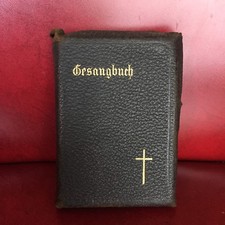
Centuries later, the first president of The Lutheran Church — Missouri Synod, C.F.W. Walther, wrote concerning the hymn selection process for the 1847 Kirchengesangbuch:

“In the selection of the adopted hymns the chief consideration was that they be pure in doctrine; that they have found almost universal acceptance within the orthodox German Lutheran Church and have thus received the almost unanimous testimony that they had come forth from the true spirit (of Lutheranism); that they express not so much the changing circumstances of individual persons but rather contain the language of the whole church.” Hymns selected for this new hymnal follow in this tradition.

In our own day, Robin Leaver has expressed it this way: “For the people of our churches, theology is largely formed by the hymns they sing,” (“Renewal in Hymnody,” Lutheran Quarterly, no. 6 [Winter 1992], 367).


The hymnody of The Lutheran Church — Missouri Synod is part and parcel with its theology. That which we believe, teach, and confess finds concrete expression through the hymns which we sing.

Thursday, June 14, 2018

Criteria for Hymn Selection: “Sing praises with understanding” (Psalm 47:7b)

By Rev. Joel Brondos

This series is offered for consideration as objective criteria to address subjective concerns used in the process of selecting hymns for use in hymnals and services.
 “The Lord is my strength and song, And He has become my salvation” (Exodus 15:2; Psalm 118:14; Isaiah 12:2)

Where there is salvation, there is singing.

Singing springs forth from the lips of people who have been delivered from sin, death, the devil, the world and their own flesh. As Luther wrote in his preface to the Babst hymnal in 1545:

"For God has cheered our hearts and minds through his dear Son, whom he gave for us to redeem us from sin, death and the devil. He who believes this earnestly cannot be quiet about it. But he must gladly and willingly sing and speak about it so that others also may come and hear it. And whoever does not want to sing and speak of it shows that he does not believe and that he does not belong under the new and joyful testament, but under the old, lazy, and tedious testament." (AE 53:332-33)

Similarly, Robin Leaver writes,

"Music is the accompanying counterpoint to the Divine message and in all the mighty acts of God, music is never very far away. From eternity to eternity, from creation to judgment, from Genesis to Revelation, the sound of music is to be heard.” Even the heavens, the sea, mountain and forest break into singing." (1 Chron. 16:32-33; Is. 44:23)

For Lutherans, hymn singing is the corporate confession of God’s work in Christ. It is not primarily a clergy-manipulated attempt to elicit certain emotions from people. It is not essentially a human-centered effort obey a sovereign God who demands utmost praise according to His divine Law. The hymns, psalms and spiritual songs of God’s people are rather sung confessions of the works and gifts of Him who has obtained such deliverance as declared by the Holy Scriptures.

The Word of God begets the song of the Church.

Hymns recall and recount the promises and works of Jesus Christ among people who know their sin and their need before a righteous God. In this way, people learn to love hymns not for the sake of their melody, rhythm, childhood memories or sentimental phrases, but rather because they are people who cling to the saving work of God in Christ which is expressed in the hymns.

Saturday, May 13, 2017

Luther's Sermon for the First Sunday After Trinity

In a sermon on 1 John 4, Luther addresses those pastors and people who wrongly imagine that they can preach and listen only to the Gospel apart from the rebuke and admonition of the Law:

YOU have often heard and are now hearing the complaint, which is universal in all the world, that when human beings hear the preaching of faith about the remission of sins, they embrace it, because it is a delightful preaching: God has sent His Son for you. But when it is said that you must adorn your faith to the praise of God, and sins are rebuked, no one wants to hear anything more.

In towns everywhere, people distinguish among preachers. “This one is a fine preacher, who talks about grace and mercy; and what is even finer, he does not scold anyone or frighten people.” That is the way people commonly talk and act. If he does rebuke [sins], they undertake to have him removed. Therefore, many [of these preachers] have returned to us.

When you are scolded as a usurer, adulterer, or whatever kind of swine you are, or [it is said] that a peasant, a townsman, or a nobleman is godless, no one will suffer that. “But if I am a usurer, adulterer, swindler, and [the preacher] does not scold me, ah, what a pious man he is!”

[Are you] really righteous because I [do not] rebuke your vices? Then let the devil be [your] preacher. If I see peasants, townsmen, noblemen and do not chastise them, then I will go to the devil along with you. For [God says in] Ezekiel 3 [:18]: “I will require [their] blood at your [hands],” and they themselves will go to the devil. You shall give an account of yourself. I will not be responsible for that in the hour of death or of judgment. Rather, I shall declare what is contrary to the commandment, and then if you do not obey, you do it at your own peril.

. . . Surely an upright [Christian] gladly hears an admonition to faith, not to be greedy or a usurer, and he amends himself. I would want a brother to admonish me when I go astray. But they refuse to tolerate anyone who rebukes them [even] in general. When I say that usurers belong to the devil, why do you cry out? It is because you yourself are guilty. If you want to know which dog has been struck, it is the one who cries out.8 Therefore, you are accusing yourself, if you grumble, and are defaming yourself. As Cicero says, when vices are rebuked in general terms, whoever becomes angry at it shows himself to be guilty.

Whoever cannot bear it when unbelief is rebuked along with the fruits of unbelief, he is most certainly the dog who has been struck. But this is the purpose for which they want to misuse the Gospel: that they may do whatever they want, and the preachers should confirm it and so be cast down to hell along with them, or else we should nullify the Gospel and the ministry [of the Word], etc., [saying,] “Oh, it is all the same; do whatever you want and you will be saved!”

The Word must be unbound [cf. 2 Tim. 2:9]. It must be freely preached. Human nature has been corrupted by unbelief, which brings its fruits along with it. Therefore, sins must be rebuked, as in the Ten Commandments, etc. If you don’t want to listen to God, then don’t!

Luther, Martin. “Sermon for the First Sunday after Trinity, 1 John 4:16–21.” Luther’s Works: Sermons V. Ed. & trans. by Christopher Boyd Brown. Vol. 58. Saint Louis, MO: Concordia Publishing House, 2010, pp. 234–235.