Showing posts with label Israel. Show all posts

Friday, March 29, 2024

You Are Right in Saying I Am A King

Pilate then went back inside the palace, summoned Jesus and asked him, "Are you the king of the Jews?" "Is that your own idea," Jesus asked, "or did others talk to you about me?" "Am I a Jew?" Pilate replied. "It was your people and chief priests who handed you over to me. What is it you have done?" Jesus said, "My kingdom is not of this world. If it were, my servants would fight to prevent my arrest by the Jews. But now my kingdom is from another place." "You are a king, then!" said Pilate. Jesus answered, "You are right in saying I am a king. In fact, for this reason I was born, and for this I came into the world, to testify to the truth. Everyone on the side of truth listens to me" (John 18:33-37).

Who would have thought that anti-semitic non-Christians would start using the phrase "Christ is King" as a way to intimidate and slander Jewish people?

Not me, that's for sure.

Imagine my surprise when on one of my regular podcasts, for an entire hour, this was the topic of discussion.

The host explained how Candace Owens, recently separated from Ben Shapiro's "The Daily Wire" used the phrase in a post on X back in November 2023. She was called out for anti-semitism by other members of the Daily Wire. Some of them posted about how the phrase is anti-semitic, and that Jesus' name should never be used to slander the race from which Jesus came, God's chosen people, the Jews. I think Andrew Klavan's response is worth reading/hearing

For sure Jesus' name should never be used to demean others. To do so is to violate the Second Commandment. But it also got me thinking. The leftist media is going to have a field day showing hypocrites who call themselves Christians who are taking Jesus' name in vain, using it for the vile purpose of trying to disparage another human being because of their so-called race. It won't be long before there are stories in the mainstream media asserting that saying "Christ is King" is hate speech, and orthodox Christianity is a right wing hate group.

First, let's get this out of the way right off the bat. Anti-semitism is wrong. Like racism of all other varieties, anti-semitism is sin. Christianity, in fact, doesn't recognize the concept of race as it is understood in the American socio-political context.

As trite as it may sound, the saying is true: there is only one race - the human race. All people, being descended from our common parents Adam and Eve, are all part of the same human family. We are called to love the Lord our God with all our heart, soul, strength, and mind, and to love our neighbor as ourself. To hate him because he is of a different ethnicity than we are is the opposite of that command, and therefore we must repent. Moreover, as St. Paul says to the Galatians, all of us who are a part of the body of Christ are united in a way that supercedes all earthly differences:

You are all sons of God through faith in Christ Jesus, for all of you who were baptized into Christ have clothed yourselves with Christ. There is neither Jew nor Greek, slave nor free, male nor female, for you are all one in Christ Jesus. If you belong to Christ, then you are Abraham's seed, and heirs according to the promise (Galatians 3:26-29).

In spite of this, some might be tempted to say that Christians should stop using the phrase "Christ is King" because it has been tainted with bigotry. The racist white supremacist Nick Fuentes has been using "Christ is King" in some of his speeches.

The impulse to not sound like these distasteful individuals, or to be associated with their evil movements is understandable. Indeed we should not want to sound like them. We must be careful, however, that we don't overcorrect and slip into doctrinal error because we don't want to be called racists.

More importantly, we must not let evil men steal from us our doctrine.

This is just another way for Satan to get us to be ashamed of the Gospel message. We must instead declare with St. Paul that we are not ashamed of the Gospel of Christ, because it is the power of God for the salvation of all who believe, first for the Jew, then for the Greek. Satan would like nothing more than to silence Christians from proclaiming the Gospel truth that Jesus, true God in human flesh, Savior of mankind, is King of the universe.

Despite who says it, or who it makes angry, and what their reasons are, Christ is, indeed, King. He has died for the sins of the world. He has risen from the dead for the justification of those who believe. And He will come again in glory, as King, to be our judge. We Christians are to proclaim this message of the cross, and that there is forgiveness of sins, life, and salvation for all who repent of their sin and believe in Christ.

No matter what, people are going to be offended by the Gospel. It is, as St. Paul says, a stumbling block to Jews, and foolishness to Gentiles. But to we who are being saved it is the power of God and the wisdom of God.

However, maintaining this doctrinal truth in America is not easy. It is difficult to walk the narrow road between the ditch of being labled an anti-semite on the one side, and denying what Christ says about Himself being the only way of salvation for all mankind on the other.

Ben Shapiro shared a post from Robert P. George on X which gets something very wrong regarding Christianity's teaching on Jews and Judaism, and illustrates just what the problem is. The post says:

"For Catholics and other Christians, Holy Week is a time of spiritual preparation for Easter. It is also a time to recall the rootedness of our faith in that of our 'elder brothers' -- the Jewish people, 'whose covenant with God is unbroken and unbreakable.'"

White supremacists saying "Christ is King" in order to encourage the defamation of Jewish people is wrong. That wrong, however, doesn't make what Ben Shapiro posted in response to this controversy true. We Christians must be careful not to go too far in the other direction and act as though we are part of the same religion, or worshipping the same God as the religious Jews. We are not, and we do not. God's special relationship with the physical nation of Israel ended with the coming of Jesus and their rejection of Him.

Jesus teaches plainly of the impending rejection of the nation of Israel by God (Judisch, 1978):

"Therefore I tell you that the kingdom of God will be taken away from you and given to a people who will produce it's fruit" (Matthew 21:43).

Jesus makes this point in His parable of the Great Banquet as well. The Great King prepared his banquet, but the invited guests rejected the invitation and refused to come. The servant reported this to the master, who sent the servant out to the streets and alleys of the town to invite the poor, the cripled, the blind, and the lame:

"'Sir,' the servant said, 'what you ordered has been done, but there is still room.' Then the master told his servant, 'Go out to the roads and country lanes and compel them to come in, so that my house will be full. I tell you, not one of those who were invited will get a taste of my banquet" (Luke 14:22-24).

God, the Great King, sent the invitation to His great banquet to His chosen guests through Moses and the prophets. John the Baptist came as the herald, announcing that the time had come. The kingdom of God, the preaching of Christ, was at hand. All the invited guests should come to the banquet (Kretzmann, 1921). But Israel, as a whole, rejected the invitation. Jesus turns from the Jews, though He longed to gather them as a hen gathers her chicks, because they refused to be gathered. He invites the spiritually blind, poor and lame, tax collectors, sinners, and Gentiles to fill His house.

In Christ all those who repent and believe the good news, Jew and Gentile alike, are united into one body, which is Christ's. Christ's Gospel is indeed the power of God for the salvation of everyone who believes, first for the Jew, then for the Gentile. And, in Christ, we are Abraham's seed and part of the Israel of God where there is no Jew or Gentile, slave or free, male or female. We are heirs to God's promise of forgiveness, life, and eternal salvation in Jesus.

The good news is that Christ came to die as the propitiation for the sin of the whole world. That includes everybody, including Jewish people. He offers that forgiveness for sin, life, and salvation to all people through His word and by His sacraments. To say that the Jewish people have a special relationship with God because of their ethnic heritage is a false teaching. What is worse is that it makes people of Jewish heritage feel secure because of their blood line when they are outside of the body of Christ. It gives them hope where there is none, in their flesh. But Jesus says faith in Him is man's only hope:

"...Does this offend you? What if you see the Son of Man ascend to where he was before! The Spirit gives life; the flesh counts for nothing. The words I have spoken to you are spirit and they are life. Yet there are some of you who do not believe (John 6:61-64).

Definitively Jesus declares:

"I am the way and the truth and the life. No one comes to the Father except through me," (John 14:6).

------------------------

Bibliography

Judisch, Douglas. 1978. "An Evaluation of Claims to the Charismatic Gifts." Grand Rapids: Baker Book House. The Purpose of the Prophetic Gifts, p. 43.

Kretzman, Paul E.. 1921. "Popular Commentary on the Bible: New Testament Vol. 1." St. Louis: Concordia Publishing House, pp. 346-347.

Robinson, William C Harrison, Everett F., et. al., eds. 1999. "Wycliffe Dictionary of Theology." Church. Peabody: Hendrickson Pub.

Wednesday, January 30, 2019

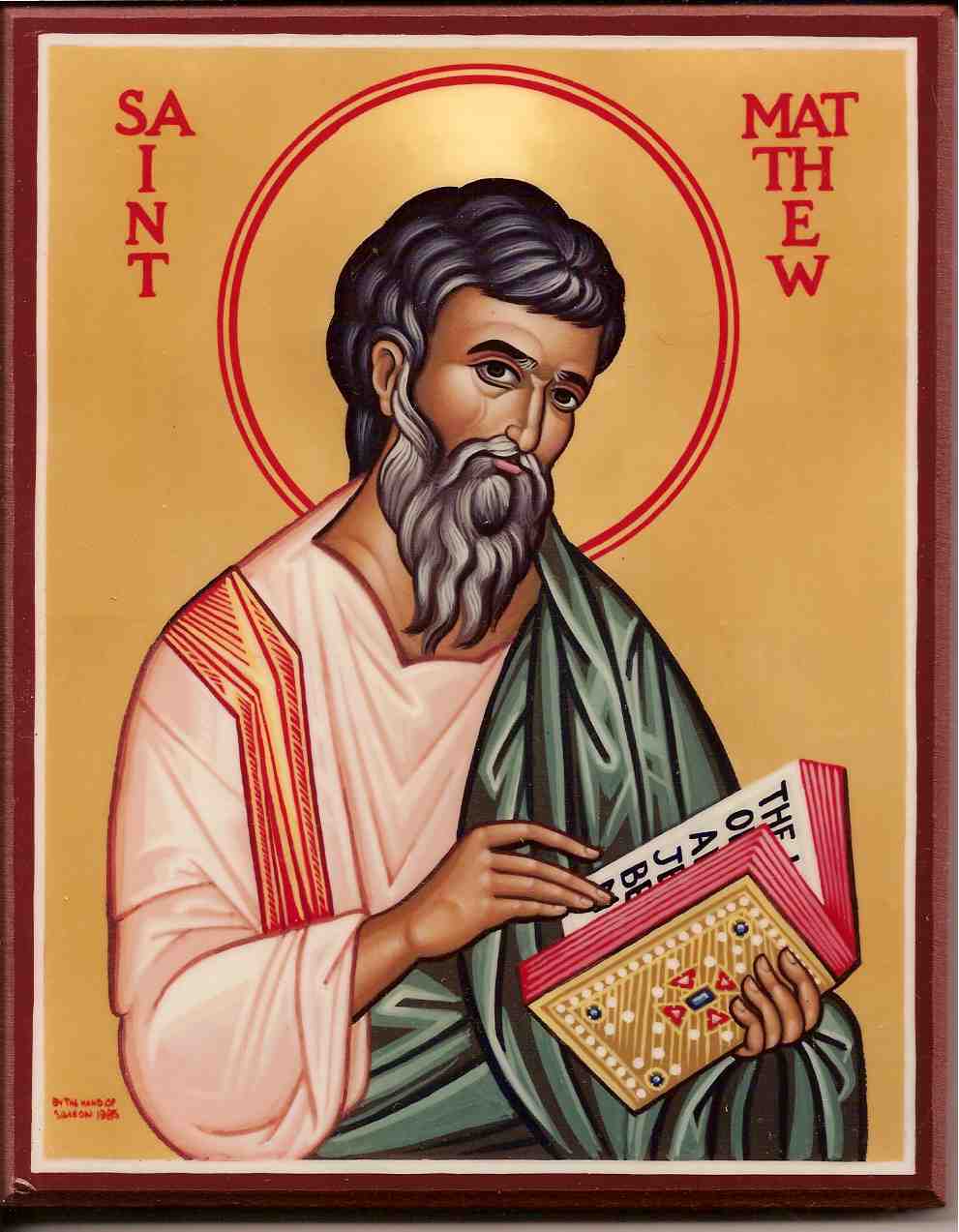
Matthew the Tax Collector

As Jesus passed on from there, He saw a man named Matthew sitting at the tax office. And He said to him, “Follow Me.” So he arose and followed Him. Now it happened, as Jesus sat at the table in the house, that behold, many tax collectors and sinners came and sat down with Him and His disciples. And when the Pharisees saw it, they said to His disciples, “Why does your Teacher eat with tax collectors and sinners?” When Jesus heard that, He said to them, “Those who are well have no need of a physician, but those who are sick. But go and learn what this means: ‘I desire mercy and not sacrifice.’ For I did not come to call the righteous, but sinners, to repentance” (Matthew 9:9-13).

Much like the calling of the four fishermen,[1] Jesus calls Matthew. He does not, however, promise to make Matthew a “fisher of men”. This doesn’t mean Matthew is being called to a lesser Apostleship; it means that the fishing imagery, which would have been meaningful to Peter, Andrew, James, and John, doesn’t make as much sense when applied to a tax collector. Matthew, like the four fishermen, seemingly abandons his profession without any second thought or hesitation. This is not, however, the first Matthew has ever heard of Jesus. Being a follower of John the Baptist, Matthew knew, as the four fishermen did, that Jesus was the Messiah. Matthew heard John the Baptist preach that tax collectors, such as himself, should collect no more than what is appointed for,[2] and that Jesus was the Lamb of God who takes away the sin of the world. He, having heard the proclamation of God’s Word, contrite in front of the mirror of the Law, responded in faith when Jesus called Matthew into His direct service.

Jesus accompanies Matthew to his home. Matthew has a feast to which those other associates of his are invited, along with Jesus’ other disciples. Knowing that Jesus is the One promised to redeem Israel, it is only natural that Matthew would want to deliver that good news to those into whose midst God had placed him, by virtue of his vocation. No doubt Matthew had little difficulty filling his table with people. By this time, Jesus had done miracles, and preached and taught publicly. Jesus’ notoriety had spread. Most recently, Jesus had forgiven the sins of, and physically healed, a paralyzed man.[3] The multitudes following Jesus saw this, but so did The Jews – the Scribes, the Pharisees, the Sadducees, and the Teachers of the Law. By healing the paralytic, Jesus demonstrated to the Jews that He had the authority to forgive sins, something only God could do. But the very people who should’ve recognized the Messiah did not receive Him.[4] They were seeking to justify themselves by their keeping of the Law. The Jews, therefore, began looking for any type of scandal they could use to discredit Him in the eyes of the people. Associating with tax collectors, collaborating Jews who served the hated Roman government, certainly qualified as such a scandal.

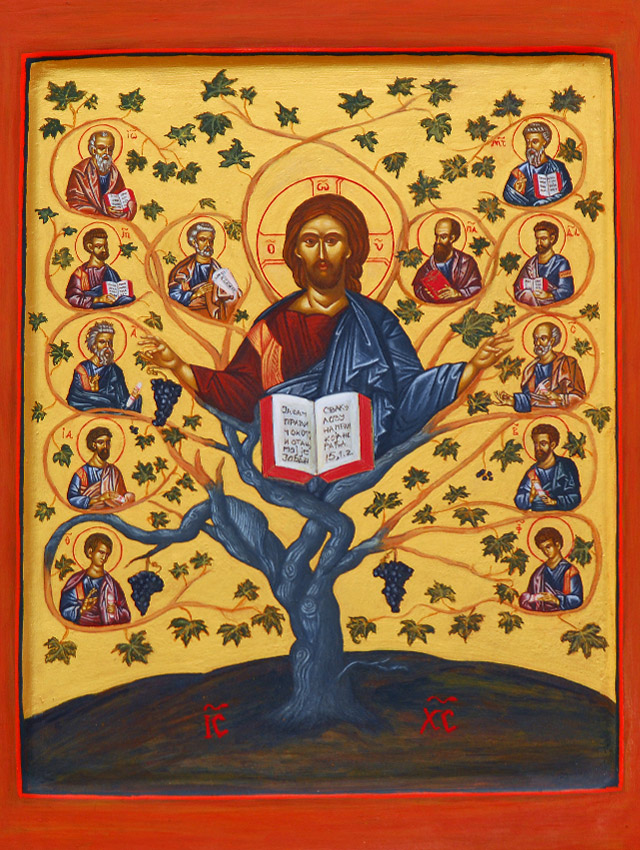
The first part of Jesus’ reply to the Pharisees seems obvious. Of course a healthy person doesn’t need to be treated by a physician. Jesus is saying that those to whom He has come are sick, and He is the physician. This is most certainly true, and Jesus is indeed saying that those tax collectors and sinners are, well… sinners. The Jews, however, misunderstand Him; they recognize that the people with whom Jesus was eating were sinners, but they think they are excluded from that group. They think they are ok because of their righteous keeping of the Law. Jesus, however, came to heal all people of their terminal disease of sin, Jew and Gentile, Pharisee or tax collector. Jesus, who is Israel reduced down to one, creates a new, perfect Israel in Himself. He is the vine;[5] His Father, the Vinedresser, grafts wild olive shoots called Gentiles into Jesus; He takes the branches that were broken off, the unbelieving Jews, and grafts them into the vine again as well.[6] He unites us sinners to His death and resurrection, by His grace, through faith in Him. He creates that faith in men through His Word - proclaimed, or connected with the physical elements of water in baptism, or bread and wine by which He gives us His body and blood to eat and drink in the Lord’s Supper: Or do you not know that as many of us as were baptized into Christ Jesus were baptized into His death?[7] But when the kindness and the love of God our Savior toward man appeared, not by works of righteousness which we have done, but according to His mercy He saved us, through the washing of regeneration and renewing of the Holy Spirit, whom He poured out on us abundantly through Jesus Christ our Savior, that having been justified by His grace we should become heirs according to the hope of eternal life.[8]

Jesus quotes the prophet Hosea in response to the Pharisees: O Ephraim, what shall I do to you? O Judah, what shall I do to you? For your faithfulness is like a morning cloud, and like the early dew it goes away. Therefore I have hewn them by the prophets, I have slain them by the words of My mouth; and your judgments are like light that goes forth. For I desire mercy and not sacrifice, and the knowledge of God more than burnt offerings.[9] Jesus tells the Pharisees that their faith has disappeared like the early dew. It has evaporated. They trust in their works to make them acceptable to God. He has slain them by the words from His mouth. His proclamation of the Law exposes their sin, and that of all men; it kills them, and calls them to repentance. Jesus desires them to believe, to have faith, to be healed, rather than for them to keep every minute regulation of the Law by the outward act. He wants them, and all men, to recognize their illness and come to the only Physician who can cure it. Only after faith in Jesus is kindled within the heart by the working of the Holy Spirit through the Word, will we strive to obey God’s Law out of gratitude. We sinful human beings, like the tax collectors, like the Pharisees, like all men born since the Fall, are sick with the disease of sin which leads to death. Only the Great Physician has the cure – His own body and blood, given and shed for the remission of sins.


[1] Matthew 4:18-22
[2] Mark 2:14
[3] Matthew 9:1-8
[4] John 1:11
[5] John 15:1-8
[6] Romans 11:19-24
[7] Romans 6:3
[8] Titus 3:4-7
[9] Hosea 6:4-6

Monday, November 12, 2018

Israel's Rejection Not Final

Concerning the gospel they [the Jews] are enemies for your sake, but concerning the election they are beloved for the sake of the fathers. For the gifts and the calling of God are irrevocable. For as you were once disobedient to God, yet have now obtained mercy through their disobedience, even so these also have now been disobedient, that through the mercy shown you they also may obtain mercy. For God has committed them all to disobedience, that He might have mercy on all. Oh, the depth of the riches both of the wisdom and knowledge of God! How unsearchable are His judgments and His ways past finding out! (Romans 11:28-33).


No one was ever saved by virtue of their physical, genetic connection to Abraham. God has always considered those to be children of Abraham – Israel, God’s chosen people – who were Abraham’s children by faith. Jesus makes this case to the Pharisees in chapter eight of St. John’s Gospel.[1] Jesus says that the Pharisees, because of their unbelief, are not children of Abraham, but of the devil, because Abraham believed God, and it was credited to him as righteousness.[2] God cultivated the nation of Israel to bring forth Jesus, the Seed. He is truly Abraham’s offspring, the promised Seed, true Israel.[3] And we know that Scripture has confined all, Jew and Gentile, under sin, that the promise of redemption might be given to all who believe.[4] It is therefore also accurate to say, as St. Paul does, that God has committed them all (the Jews) to disobedience, that He might have mercy on all.[5] This does not guarantee that all Jews, because they are Jewish, will either come to faith in Christ, or be saved according to some other plan apart from Christ. As St. Paul says elsewhere, the veil of Moses remains unlifted in the reading of the Old Testament among the Jews, because the veil is taken away in Christ.[6]

St. Paul quotes the prophet Jeremiah prophesying about the nation of Israel and their spiritual adultery, to show that not all of Israel according to the flesh (indeed, rather only a small portion of it) would come to faith in Christ and be saved. St. Paul compares the situation to that of Elijah hiding in the cave afraid for his life. Elijah laments to God that the whole of Israel has turned against God and was seeking to kill him. But God tells Elijah that God had reserved to Himself a remnant, 7,000 men who had not bowed the knee to Baal.[7] God will save the Jews, as He saved St. Paul, as He saved all of faithful Israel, as he saves Jew and Gentile today – through faith in the promised Seed, Christ.

St. Paul likens the falling away of his fellow Israelites in the flesh to branches being broken off an olive tree. Dead branches were broken off, and wild olive branches were grafted in. It is no accident that St. Paul writes this way. God called Israel, “Green Olive Tree, Lovely and of Good Fruit”.[8] But, because they broke the covenant by worshipping false gods, God, through the prophet Jeremiah, proclaimed the following: With the noise of a great tumult He has kindled fire on it, And its branches are broken.[9] But Jesus, the Seed of Abraham, the Righteous Branch, is Israel reduced to one. He did all the things Israel could not do. He kept the Law perfectly. He died as the atoning sacrifice for the sin of the world.[10] He rose from the dead. Christ conquered sin, death, and the devil; He gives us the gifts of forgiveness and eternal life that He won for us, by His grace, through faith in Him.

Jesus describes Himself as the True Vine, and He calls those who believe in Him branches: I am the vine, you are the branches. He who abides in Me, and I in him, bears much fruit; for without Me you can do nothing. If anyone does not abide in Me, he is cast out as a branch and is withered; and they gather them and throw them into the fire, and they are burned.[11] We are connected to Christ, the True Vine, to His death and resurrection, through baptism.[12] We are nourished through the life-giving sap of Word and Sacrament. We are fed by Christ’s true body and blood given us to eat and to drink in the Sacrament of the Altar, the Lord’s Supper. We are fed when we do not despise preaching and God’s Word, but rather hold it sacred, and gladly hear and learn it. And, as we are nourished by the True Vine, we branches bear much fruit. Cutting ourselves off from these things is to cut one’s self off from the True Vine. A severed branch remains green and supple for a short time after it is cut, but is soon dry and dead. Such is the risk we run when we neglect the assembling of ourselves together.[13]

All Israel will indeed be saved. True Israel, those connected to the True Vine, do not reject the call of repentance, and the gift of forgiveness of sins and eternal life which God gives us in Christ, through faith in Him. They, who sleep in the dust of the earth, shall awake to everlasting life on the Last Day.[14] This is the will of the Father, that everyone who sees the Son and believes in Him may have everlasting life, and be raised up at the last day.[15]


[1] John 8:37-40
[2] Galatians 3:6
[3] Genesis 22:18; Galatians 3:16
[4] Galatians 3:22
[5] Romans 11:32
[6] 2 Corinthinas 3:16
[7] 1 Kings 19:18; Romans 11:4
[8] Jeremiah 11:16
[9] Ibid.
[10] 1 John 4:10
[11] John 15:5-6
[12] Romans 6:3-5
[13] Hebrews 10:25
[14] Daniel 12:1-3;
[15] John 6:39-40

Thursday, September 27, 2018

To the Twelve Tribes

James, a bondservant of God and of the Lord Jesus Christ, To the twelve tribes which are scattered abroad: Greetings (James 1:1).

James addresses his letter to the twelve tribes scattered abroad. This statement tells us a lot about how the early Christians viewed themselves, and the ethnic nation of Israel. James, and his early Christian brethren, understood that the Christian Church, made up of Jew and Gentile, slave and free, male and female, was the true Israel, the Israel of God. The phrase, “the twelve tribes scattered abroad” refers to what historians call the Diaspora. Diaspora can, in modern usage, refer to the dispersion of any ethnic group from their original homeland. In the Biblical context, however, the Diaspora refers specifically to the dispersion of the Israelites beyond Israel. The people of Israel were carried off into exile when the Northern Kingdom, and later the Southern Kingdom, were destroyed in the 6th century BC. A large population of Jews continued to live outside of Israel even after they were given leave to return to Jerusalem and rebuild the temple.

So, to whom is James writing? He calls the readers, “my brethren” in verse two. Certainly James, the half-brother of Jesus, would feel a kinship with his people according to the flesh, just as St. Paul did. St. Paul wrote that he would choose to be damned if it meant salvation for his fellow Jews. James’ letter is, above all else, about faith in Christ, and how that faith manifests itself in everyday life. Faith that does not bear the fruit of good works is dead. It is no faith at all. This is not a letter written to people who did not believe in Christ. This letter was written to give guidance and admonition to Christians, not primarily as a tool of Evangelism intended to convert non-believers, at least in the same way as, for instance, Peter’s Pentecost sermon. Why is this important? There are many people who believe that the ethnic Jewish people enjoy special status with God as His chosen people, by virtue of the fact that they are Jews. This is similar to what the Pharisees taught, and they were soundly rebuked by Our Lord. The Pharisees calmed to be true Israelites - Abraham’s children, and children of God. Jesus tells them that they are, rather, children of the devil. “If God were your Father, you would love me, for I came from God and now am here,” Jesus tells them. The Pharisees are not Abraham’s offspring because they do not have faith in Christ. They have the physical blood line, but they reject the promise. There is an entire branch of Christianity that teaches God will remove Christians from the earth via rapture, so that God can gather all the Jews in Israel, just prior to the end of all things. Once so gathered, they will undergo a mass conversion to Christ, and thus, it is taught, all the Jews will be saved, right before the Last Judgment.

This one verse in the epistle of James, however, shows that the early Christian church did not see things that way. They understood, as the rest of scripture teaches, that not all who are descended from Israel are Israel. They understood that it is not the children by physical descent who are God’s children, but it is the children of the promise who are regarded as Abraham’s children. This teaching is sometimes derogatorily called replacement theology. Scripture, however, is clear. There are not two peoples. Israel, God’s chosen people, is not comprised of a specific ethnic blood line. It is the Body of Christ: all those, Jew or Gentile, who have been brought to penitent faith in Christ Jesus for the forgiveness of their sins. This was true in Old Testament times, just as it is true In New Testament times. The Old Testament faithful looked forward to the coming of the promised savior, as Jesus said Abraham rejoiced to see Jesus’ day; the New Testament faithful trust in Jesus who has come, died, risen and ascended, to atone for our sins and justify us before God the Father. Just as Abraham believed God, and it was accounted to him for righteousness; therefore know that only those who are of faith are sons of Abraham.

Tuesday, August 7, 2018

Righteous Israel Shall Live By Faith

O foolish Galatians! Who has bewitched you that you should not obey the truth, before whose eyes Jesus Christ was clearly portrayed among you as crucified? This only I want to learn from you: Did you receive the Spirit by the works of the law, or by the hearing of faith? Are you so foolish? Having begun in the Spirit, are you now being made perfect by the flesh? Have you suffered so many things in vain—if indeed it was in vain? Therefore He who supplies the Spirit to you and works miracles among you, does He do it by the works of the law, or by the hearing of faith?— just as Abraham “believed God, and it was accounted to him for righteousness.” Therefore know that only those who are of faith are sons of Abraham. And the Scripture, foreseeing that God would justify the Gentiles by faith, preached the gospel to Abraham beforehand, saying, “In you all the nations shall be blessed.” So then those who are of faith are blessed with believing Abraham. For as many as are of the works of the law are under the curse; for it is written, “Cursed is everyone who does not continue in all things which are written in the book of the law, to do them.” But that no one is justified by the law in the sight of God is evident, for “the just shall live by faith.” Yet the law is not of faith, but “the man who does them shall live by them.”Christ has redeemed us from the curse of the law, having become a curse for us (for it is written, “Cursed is everyone who hangs on a tree”), that the blessing of Abraham might come upon the Gentiles in Christ Jesus, that we might receive the promise of the Spirit through faith (Galatians 3:1-14).

The Jews were proud of the fact that Abraham was their flesh and blood ancestor. And, because of their connection to Abraham, they were special. God says as much; God says that Abraham’s descendants would be more numerous than the stars in heaven.[1] Abraham believed the LORD and the LORD accounted Abraham’s faith in the LORD’s promise for righteousness. After the Children of Israel, the descendants of Abraham, were rescued from bondage in Egypt and were preparing to enter the Promised Land, God calls these people holy; they were chosen by God to be a people for Himself, a special treasure above all the peoples on the face of the earth.[2] God did not choose them, however, because of anything they had done; He didn’t choose them because they were more numerous than other nations; He didn’t choose them because of their wealth or military might: But because the LORD loves you, and because He would keep the oath which He swore to your fathers, the LORD has brought you out with a mighty hand, and redeemed you from the house of bondage, from the hand of Pharaoh king of Egypt.[3]

So, the physical connection to Abraham was important to the Jews, particularly the Pharisees. They thought of their ancestry in terms American Express would appreciate: Membership has its privileges. They thought that by their physical connection to Abraham they enjoyed special status with God. What they did not understand was it wasn’t any work or physical characteristic that set Israel apart. It was faith in God’s promised redemption and in His Promised Redeemer. Abraham was justified before he received the sign of circumcision, by faith.[4] The promise that Abraham would be heir to the world was not to him or his seed through the law, but through the righteousness of faith.[5] So the important connection with Abraham was not with him physically, having his blood running through your veins, but rather having the same faith in you, taking hold of those same promises of God. This is why John the Baptist would see the Pharisees and say: “Brood of vipers! Who warned you to flee from the wrath to come? Therefore bear fruits worthy of repentance, and do not say to yourselves, ‘We have Abraham as our father.’ For I say to you that God is able to raise up children to Abraham from these stones.[6] They had the same blood as Abraham, but not the same faith, and so they were not children of Abraham.

Jesus says the same thing. He shows up doing things only God can do; He forgives sins. He tells people that He is the Messiah and demonstrates the proof of His claim through Holy Scripture and by performing miracles that the Jews expected the Messiah, who was the fulfillment of all of God’s promises, to do. He teaches in the synagogues, pointing to messianic scriptures and applying them to Himself, like when He read the scroll of Isaiah and was rejected at Nazareth. Their response to Jesus proclaiming the year of the LORD’s favor was to try and throw Him off a cliff.[7] Jesus is consistently rejected by the leaders of the Jewish nation, the very people who were supposed to recognize Him, but instead gloried in their own works and flesh. “You search the scriptures,” Jesus says to the Pharisees, “for in them you think you have eternal life; and these are they which testify of Me. But you are not willing to come to Me that you may have life. [8]“ Because they rejected Him, because they did not have faith in God’s Word and promise, they were no longer children of Abraham. They were children of their father, the devil.[9] They were branches, broken off the True Vine, withered and unable to bear any fruit, fit only to be gathered into the fire and burned;[10] Their physical lineage doesn’t matter. It doesn’t matter that they are related to Abraham by blood; the righteous shall live by faith. And, as many as walk according to this rule, that of boasting not in the flesh but in the cross of Our Lord Jesus Christ, by which the world has been crucified to them, peace be upon them, and upon the Israel of God – all believers in Christ, regardless of their physical ancestry; This is the new, or more accurately, the true Israel of God, the household of faith.[11]


[1] Genesis 15:4-5
[2] Deuteronomy 7:6
[3] Deuteronomy 7:8
[4] Romans 4:9-12
[5] Romans 4:13-18
[6] Matthew 3:7-9
[7] Luke 4:16-30
[8] John 5:39-40
[9] John 8:39-47
[10] John 15:1-8
[11] Galatians 6:10

Thursday, July 26, 2018

Victory over the Amalekites

Now Amalek came and fought with Israel in Rephidim. And Moses said to Joshua, “Choose us some men and go out, fight with Amalek. Tomorrow I will stand on the top of the hill with the rod of God in my hand.” So Joshua did as Moses said to him, and fought with Amalek. And Moses, Aaron, and Hur went up to the top of the hill. And so it was, when Moses held up his hand, that Israel prevailed; and when he let down his hand, Amalek prevailed. But Moses’ hands became heavy; so they took a stone and put it under him, and he sat on it. And Aaron and Hur supported his hands, one on one side, and the other on the other side; and his hands were steady until the going down of the sun. So Joshua defeated Amalek and his people with the edge of the sword. Then the Lord said to Moses, “Write this for a memorial in the book and recount it in the hearing of Joshua, that I will utterly blot out the remembrance of Amalek from under heaven.” And Moses built an altar and called its name, The-Lord-Is-My-Banner; for he said, “Because the Lord has sworn: the Lord will have war with Amalek from generation to generation” (Exodus 17:8-16).

The People of Israel are rescued by Yahweh in spite of their constant rebellion. He brought them out of Egypt by His mighty hand; they can claim no part in making Pharaoh let them go. Yahweh defeated the Egyptians in the Red Sea when pursued Israel; it could not be claimed that their escape and the Egyptian’s defeat came about by the force of their arms. God provided food for the children of Israel in the wilderness; no one could claim that Israel was self-sufficient. In fact, they ran out of provisions. They complained to Moses and longed for the rather romanticized life they had in Egypt, where they sat around pots full of meat. God provided them water from a most unlikely source when they had no water to drink. They dug no well; they found no stream. They complained. Yahweh, through the working of Moses, gives the children of Israel water to drink, gushing forth from a rock. This was not dead water from a stagnant pool that would make them sick and die, but living water, flowing forth from the rock that Moses was told by God to strike. And that rock, St. Paul tells us, was Christ.[1] Being struck by the rod of the Law, Christ provides living water to refresh and nourish His people in the dead and dry wilderness.

Now Amalek, descendent of Esau, came and fought with Israel at Rephidim. Now they must defeat the enemy themselves. Moses sends Joshua. “Choose us some men and go out, fight with Amalek. Tomorrow I will stand on the top of the hill with the rod of God in my hand,” Moses says. He will pray; the mediator making intercession for his people to Yahweh. The people may be fighting a battle but it is Yahweh who wins it for them. Moses stands on the hill, arms outstretched in prayer. When Moses held up his hand, Israel prevailed; when he let down his hand Amalek prevailed. The Israelites were fighting, but Yahweh was the source of their strength and victory.

So Joshua defeated Amalek and his people with the edge of the sword. Here we see another shadow of Christ: Joshua, who will eventually succeed Moses as the leader of Israel. Moses will give them the Law and show them their sin. Joshua, or Yeshua, which is anglicized as Jesus, will do what Moses cannot do. Joshua will lead Israel across the Jordan into the Promised Land. He will defeat Israel’s enemies with the edge of the sword. Christ, the Joshua who is the fulfillment of this shadow, has defeated Israel’s enemies, once and for all, on the cross; He has purchased and won us from sin, death, and the devil with His holy, precious blood, and by His innocent suffering and death on the cross. He rose from the dead on the third day, having conquered death and the grave, and ascended into heaven. He will come again with glory, to judge the living and the dead. In righteousness He judges and makes war. John describes Him in Revelation:

His eyes were like a flame of fire, and on His head were many crowns. He had a name written that no one knows except Himself. He was clothed in a robe dipped in blood, and His name is called the Word of God. And the armies in heaven, clothed in fine linen, white and clean, followed Him on white horses. Now out of His mouth goes a sharp sword, that with it He should strike the nations. And He Himself will rule them with a rod of iron. He Himself treads the winepress of the fierceness and wrath of Almighty God. And He has on His robe and on His thigh a name written: King of Kings and Lord of Lords (Revelation 19:11-16).

We have been rescued by God’s might hand from our slavery to sin. Though we were by our nature children of wrath, God loved us. Even when we were dead in our transgressions, God made us alive together with Christ, by His grace.[2] Even though we continue to rebel against Him by our sinful thoughts, words, and deeds, He grants us repentance and faith through His means of Word and Sacrament. If we say we have no sin, we deceive ourselves, and the truth is not in us. But if we confess our sins, God, who is faithful and just, will forgive our sins and cleanse us from all unrighteousness. We Christians are the Israel of God, wandering in the wilderness, making our way to the Promised Land. We are following the true Joshua, Jesus Christ. We have been enlisted into His army. We have been washed clean from our sin, not by passing through the Red Sea, but in the waters of Holy Baptism[3]. We have been given robes of clean, fine linen. And we must be strong in the Lord and the power of His might, not our own. And though we must fight in the wilderness, we must know that it is by Christ’s work on the cross, not our own working, that our enemies of sin and death have been defeated. We must put on the whole armor of God so that we may be able to stand against the wiles of the devil; that we may be able to withstand in the evil day, and having done all, to stand. We gird our waist with truth, which is God’s Word of Law and Gospel; we put on the breastplate of righteousness, which is a righteousness that comes from Christ and is not our own; we shoe our feet with the preparation of the gospel of peace; we take the shield of faith, the helmet of salvation, and the sword of the Spirit, which is the Word of God;[4] a sword which is sharp enough to pierce even to the division of soul and spirit, and of joints and marrow, and is a discerner of thoughts and intents of the heart.[5] And we pray in the Spirit on all occasions with all kinds of prayers and requests, being alert and praying always for all the saints, our brothers and sisters in Christ.[6]


[1] 1 Corinthians 10:4
[2] Ephesians 2:3-5
[3] Ephesians 5:26; Titus 3:5-8 1 Peter 3:18-21
[4] Ephesians 6:14-17
[5] Hebrews 4:12
[6] Ephesians 6:18

Monday, April 2, 2018

The Road to Emmaus

The Road to Emmaus
Then He said to them, “O foolish ones, and slow of heart to believe in all that the prophets have spoken! Ought not the Christ to have suffered these things and to enter into His glory?” And beginning at Moses and all the Prophets, He expounded to them in all the Scriptures the things concerning Himself (Luke 24:25-27).

Two of the disciples walk together along the road to Emmaus. The risen Lord Jesus meets them and walks with them. They are kept from recognizing Him by supernatural means. The Lord asks them what they are discussing as they walk. Why are they sad? Cleopas tells Jesus a summary of His unjust crucifixion and death at the hands of the rulers of the Jews. He even tells Jesus of the resurrection; they do not yet believe. Some of the other disciples went to the tomb and found it just as the women had said, but Jesus they did not see.

Cleopas is sad because he thought Jesus was the one who was going to redeem Israel. But how can Israel have a dead redeemer? Cleopas, like his compatriots who deserted Jesus in Gethsemane, had certain erroneous expectations about the redeemer of Israel. They wanted a messiah like Judas Maccabaeus; one who would rise up with a mighty army and fight off those who held the nation of Israel in bondage. They wanted a political messiah who would restore sovereignty to Israel, and set up a grand kingdom. And they, naturally, would also be exalted in this kingdom, being part of the redeemer’s inner circle. The disciples even argued over who would sit at Jesus’ side as he reigned.[1]

Before His crucifixion, Jesus explained what would happen to Him. He predicted His death and resurrection to them many times. All the things written by the prophets concerning the Son of Man will be accomplished. Jesus would be delivered over to the Gentiles; He would be killed, and the third day rise again.[2] One time, after predicting His death to them, Jesus was rebuked by Peter. Get behind me, Satan, was Jesus’ response. You do not have in your mind the things of God, but the things of men.[3] He could not understand. Jesus’ kingdom was not of this world.[4] Spiritual things, though, cannot be grasped by the sinful human mind.[5] This is why Jesus must open their hearts to the Scriptures. Through the means of Holy Scripture, by the working of His Holy Spirit, Jesus creates faith in the disciples, and in us. The Pharisees searched the Scriptures, because in them they thought they had eternal life. They were right. But, they hardened their hearts against the working of the Holy Spirit as He continually pointed them to Jesus.

Jesus did indeed come to redeem Israel, but he did not come to rescue the nation-state of the Jews from the oppression of the Romans. He instead rules over a resurrected and reconstituted kingdom of Israel from His throne at the right hand of God the Father. This Kingdom is the Church, the Israel of God; Christ’s rule and reign through the Gospel.[6] It is the fellowship of all believers, His body.[7] This Kingdom is made up of new creations, baptized into the death and resurrection of Abraham’s Seed, Jesus.[8] In Christ’s kingdom we have redemption through His blood, which is the forgiveness of sins.[9] This is the reason Jesus came to die and rise again. He came to redeem we who were lost and condemned people. He purchased and won us from all sins, from death, and from the power of the devil; not with gold or silver, but with His holy, precious blood, and with His innocent suffering and death. He did this so that we can be His own, and live under Him in His kingdom, and serve Him in everlasting righteousness, innocence, and blessedness, just as He is risen from the dead, lives and reigns to all eternity. This is most certainly true.


[1] Matthew 20:20-28
[2] Luke 18:31-34
[3] Mark 8:31-33
[4] John 18:36
[5] Romans 8:7; 1 Corinthians 2:14
[6] Galatians 6:16
[7] Ephesians 1:15-23; Colossians 1:24
[8] Romans 6:3-6; Galatians 3:26-29
[9] Colossians 1:13-14

Wednesday, December 14, 2016

The Resurrection of Israel

When the Lion Roars
I'm reading a book right now called When The Lion Roars: understanding the implications of ancient prophecies for our time. The book describes itself on the back cover like this:

We are living in unprecedented times. Prophetic events are unfolding at lightning speed right before our eyes and, unbeknownst to most of the world, are being reported in the daily news cycle. From the supernatural resurrection of the nation of Israel to the extraordinary advancement of end-time technologies, ours is the first generation to witness the revelation of such amazing prophetic events. But do not fear, there is a balanced, biblical understanding to everything that is occurring in our day (Gallups 2016).

The author, Carl Gallups, deals with events taking place in the Middle East, Islam and ISIS, and the Shemitah[1], among other things.

I must confess, I love reading books like this. I am a sucker for anything "end of the world." That goes all the way back to Hal Lindsey's, "The Late Great Planet Earth." I couldn't agree less with the dispensational theology[2], but I love to read them. I have accused large part of American Evangelicalism of reading the Bible through the headlines of the newspaper, to interpret Biblical prophecy. This book not only proves that, but the author also admits it on the back cover of the book.

Here we are again, trying to make our way down the narrow road between two ditches. This time, the ditches are liberal Higher Criticism on the one side and American Evangelical literalism on the other.

I have sometimes been criticized by evangelical friends for not reading the Bible literally. This is a baseless criticism as I do understand the Bible literally. I know that it means what it says. When the Bible says that Jonah was swallowed by a big fish, I believe that he was literally swallowed by a big fish. When the Bible says that the world was created in six days, I believe that the world was created in six days. Because, however, I am an amillennialist[3], because I don't believe in the Rapture[4], or think that the founding of the nation-state of Israel in 1948 is the fulfillment of biblical prophecy, my evangelical friends believe that I am some kind of theological liberal. This, as my regular readers will know, could not to be farther from the truth. I don’t believe in the teachings mentioned above because I don't believe they are taught in Scripture. On the other hand, I have accused American Evangelicalism in general of not reading the Bible literally, but rather literalistically. In other words, evangelicals literally interpret every word and phrase of Scripture, rather than interpreting words and phrases in the context in which they are presented. Here's an example:

In support of the doctrine of the Millennial Kingdom we are invariably pointed to Revelation 20:

Then I saw an angel coming down from heaven, having the key to the bottomless pit and a great chain in his hand. He laid hold of the dragon, that serpent of old, who is the Devil and Satan, and bound him for 1000 years; and he cast him into the bottomless pit, and shut him up and set a seal on him, so that he should deceive the nations no more till the thousand years were finished. But after these things he must be released for a little while (Revelation 20:1-3).

In this passage, evangelicals see the Millennial Kingdom. Satan is bound for 1000 years. During this 1000 years, Jesus will establish his Millennial Kingdom on earth. The explanation given is usually something like, "The words are right there! It says 1000 years, it means 1000 years!" When we take a second to think about it, however, I'm not sure it makes a lot of sense to take those words literally.

The phrase, "1000 years," occurs only in two other places in the Bible. It occurs in Psalm 90:4, and 2 Peter 3:8. In both of these locations, the phrase is used to illustrate a long, undetermined period of time and the timelessness of God. Psalm 90 compares the time period of 1000 years to “a watch in the night.” St. Peter makes the same point:

But the heavens and the earth which are now preserved by the same word, are reserved for the fire until the day of judgment and perdition of ungodly men. But, beloved, do not forget this one thing, that with the Lord on day is as a thousand years, and a thousand years as one day. The Lord is not slack concerning His promise, as some count slackness, but is longsuffering toward us, not willing that any should perish but that all should come to repentance (2 Peter 3:7-9).

Peter is saying that, even though the scoffers will scoff, Christ will return in his own good time and according to his own plan. The point is that God does not experience time in the same way we humans do. He does not work on our schedule. With him, "one day is as 1000 years, and 1000 years as one day." 1000 years is a long time to a human being. To God, that same 1000 years is like a watch in the night (about four hours) to us. In other words, we might think he is taking a long time to complete his work but, to him, it is only an instant.

It should be reasonable then not to understand the phrase "1000 years" in these contexts to mean a literal 1000 year period. Every time the phrase is used it means a great, undetermined period of time. So, if it is used that way in the Psalms (a book of poetry), and 2 Peter (a letter of correspondence), would it not make even more sense to take it figuratively when it is used in the book of Revelation (a book of apocalyptic visions and symbols)? This is not denying the truth, divine inspiration, or inerrancy of Scripture; this is simply applying the rules of language to written language. We must do this if we are to understand what is being said to us. God did, after all, choose to communicate to us through this written word, recorded in human language by human beings.

This example, I believe, illustrates the difference between the literal interpreter and the “literalistic” interpreter. The literalistic interpreter does not take context into account. When you look at Scripture that way, strange things begin to happen. For instance, you start to believe that the word Israel means "Israel."

American Evangelicalism is notoriously dispensational. As a result, much of it is preoccupied with the nation-state of Israel. Dispensationalists believe that, before Christ’s return, God has to gather his chosen people, the Jews, back to the Promised Land. When they are gathered there, Israel will then take control of Jerusalem and rebuild the temple. According to dispensationalists, the reconstitution of the nation-state of Israel in 1948 is the fulfillment of God's prophecy to bring his chosen people back to the Promised Land. It is proof that we are living in the End Times. Dispensational Christians also seem to focus on prophecy, rather than the preaching of Law and Gospel, as a means to convert people. Non-Christians, it seems to me, are expected to become Christians because of the convincing fulfillment of Biblical prophecy, like the resurrection of Israel in 1948.

Non-dispensationalists, naturally, object to this interpretation. Paul spends a lot of time explaining that, in Christ, there is no Jew or Greek. He explains that "for they are not all Israel who are of Israel, nor are they all children because they are the seed of Abraham; but, 'in Isaac your seed shall be called[5].'" He spends a lot of time explaining that what makes you a child of Abraham is not being able to trace your physical bloodline back to Abraham, but believing the promise God gave to Abraham.

Brethren, I speak in the manner of men: Though it is only a man’s covenant, yet if it is confirmed, no one annuls or adds to it. Now to Abraham and his Seed were the promises made. He does not say, “And to seeds,” as of many, but as of one, “And to your Seed,” who is Christ. And this I say, that the law, which was four hundred and thirty years later, cannot annul the covenant that was confirmed before by God in Christ that it should make the promise of no effect. For if the inheritance is of the law, it is no longer of promise; but God gave it to Abraham by promise (Galatians 3:15-18).

John the Baptist, preaching to the Pharisees who came out to see him in the desert, says that bloodlines aren't important and that God can raise up children for Abraham out of the stones if he chose[6]. To raise such an objection, however, one would likely be met with a chorus of "Israel means Israel!" from dispensationalists. Ignoring the context in which "Israel" is used throughout the New Testament, Dispensationalism maintains that every time the word Israel appears, it is referring to the physical nation of Israel, i.e. the Jewish people. To dispensationalists, Israel and the Church are two separate things[7].

Paul expressly teaches that there are not two peoples, Jew and Gentile, with whom God deals separately, one from another. On the contrary, Israel is the Body of Christ; that is, all those, Jew or Gentile, who have been brought to penitent faith in Christ Jesus for the forgiveness of their sins. Jew and Greek, slave and free, male and female are all one through faith in Christ. To be in Christ is to be part of Israel because Christ is Israel reduced to one.

Therefore the law was our tutor to bring us to Christ, that we might be justified by faith. But after faith has come, we are no longer under a tutor. For you are all sons of God through faith in Christ Jesus. For as many of you as were baptized into Christ have put on Christ. There is neither Jew nor Greek, there is neither slave nor free, there is neither male nor female; for you are all one in Christ Jesus. And if you are Christ's, then you are Abraham's seed, and heirs according to the promise (Galatians 3:24-29).

Israel has indeed been resurrected, but not in the way evangelicals believe. This resurrection did not happen in 1948 with the birth of the nation-state of Israel in Palestine. It happened on Easter morning when Christ rose from the dead and exited the tomb. Christ was Israel reduced to one. Israel was to be a light to the nations by living in a unique relationship to God. God would be their Savior, and they would be faithful and obedient. They were, however, not faithful and obedient to God, and needed a substitute. Christ was that substitute and succeeded where Israel failed (Klotz, Replacement Theology 2015). In fact, Jesus reenacted the existence of Israel, as described by Rev. Alexander Lange:

John [the Baptist] was calling Israel to repentance. Then God sent Jesus to John with a very special mission. Jesus would become Israel's a substitute. He would become Israel Reduced to One. He would be the Israel that Israel never could be. Jesus with six seed where Israel had failed. Just look at our text and see how Jesus reenacted Israel's life (Matthew 3:13-17). Like Israel, Jesus passed through water. Having been baptized, he was anointed by the Holy Spirit, just like Israel. God announced that this man is his beloved, firstborn Son, just as he once did with Israel. After his baptism, Jesus wandered in the wilderness, just like Israel. He was tested, just like Israel. Unlike Israel, and Jesus withstood all temptations. He did not whine when he grew hungry or worship false gods. He did not grieve God's Spirit. Unlike Israel, Jesus was a faithful, obedient Son. Jesus carried out God's mission perfectly. He was the light of the world. He drew people to himself and told people about God's wonderful works and steadfast love. Jesus was the perfect fulfillment of Israel (Lange 2014).

If you are in Christ, as St. Paul says, you are a new creation. If you are in Christ, you are an Israelite. We have been united to Christ, through baptism, in the likeness of his death and will also be in the likeness of His resurrection. Rather than attempting to interpret Holy Scripture through the lens of the Chicago Tribune, we need to call people to repentance. We are indeed living in the End Times. Our response to that realization should not be to try to get our friends and neighbors to join our church because of the “truth” of this type of dubious prophecy fulfillment. We should know nothing among them except Christ crucified and allow God to work through his means of the Word.


Works Cited


Commission on Theology and Church Relations of the Lutheran Church - Missouri Synod. The "End Times" - A Study on Eschatology and Millennialism. St. Louis: The Lutheran Church - Missouri Synod, 1989.

Gallups, Carl. When the Lion Roars: Understanding the Implications of Ancient Prophecies for Our Time. Washington, D.C.: WND Books, 2016.

Klotz, Joseph D. "Replacement Theology." The Hodgkins Lutheran. August 5, 2015. http://hodgkinslutheran.blogspot.com/search?q=Israel (accessed December 14, 2016).

—. "The Judgment of This World." The Hodgkins Lutheran. December 15, 2011. http://hodgkinslutheran.blogspot.com/2011/12/judgment-of-this-world.html (accessed December 14, 2016).

Lange, Rev. Alexander J. "Israel Reduced to One." St. John's Lutheran Church - East Moline, IL. January 12, 2014. www.stjohnsem.org/TextSermons/.../Israel%20Reduced%20to%20One.rtf (accessed July 27, 2015).

Mathison, Keith. "The Church and Israel in the New Testament." Ligonier Ministries. October 1, 2012. http://www.ligonier.org/learn/articles/the-church-and-israel-in-the-new-testament/ (accessed December 14, 2016).

Wikipedia. "Shmita." Wikipedia. November 15, 2016. https://en.wikipedia.org/wiki/Shmita (accessed December 14, 2016).


[1] The sabbath [sic] year is the seventh year of the seven-year agricultural cycle mandated by the Torah for the Land of Israel, and still observed in contemporary Judaism…Chapter 25 of the Book of Leviticus promises bountiful harvests to those who observe the shmita [sic], and describes its observance as a test of religious faith. There is little notice of the observance of this year in Biblical history and it appears to have been much neglected (Wikipedia 2016). To hear an explanation of how contemporary televangelists use the con of the Shemitah to extort money from their followers, go to this web address: http://www.piratechristian.com/fightingforthefaith/2015/3/nonsense-and-noise?rq=shemitah

[2] Dispensational premillennialism, or simply dispensationalism, is a theological system having its origin among the Plymouth Brethren in Ireland and England in the early 19th century. This system’s originator was John Nelson Darby (1800-82), one of the chief founders of the Plymouth Brethren movement. Dispensationalism arose as a reaction against the Church of England and the widely held view of postmillennialism (Commission on Theology and Church Relations of the Lutheran Church - Missouri Synod 1989).

[3] While there are numerous variations in millennialist teaching today, a fourfold categorization has been widely accepted: 1) dispensational premillennialism; (2) historic premillennialism; (3) postmillennialism, and (4) amillennialism. Of the first three categories, all of which hold to a millennium or utopian age on this earth, the most commonly held view is dispensational premillennialism…The less common postmillennial view places Christ’s second advent after (post) the millennium. Only then will the rapture, the general resurrection, the general judgment , and the eternal states occur. The millennium is not understood to involve a visible reign of Christ in the form of an earthly monarchy, nor is the millennial period to be taken literally as necessarily 1000 years long. In these respects postmillennialism corresponds closely to the amillennialist position (Commission on Theology and Church Relations of the Lutheran Church - Missouri Synod 1989).

[4] Some denominations teach that the Millennium will be a literal 1,000 year period when Jesus will set up his kingdom on earth. Along with this view, it is also taught that, at some point before the Millennium, Jesus will return secretly to resurrect or rapture all true Christians. There will then be a seven year “tribulation”, where Christians are persecuted. The battle of Armageddon will take place, culminating in Christ’s visible return to bind Satan, and the beginning of the Millennium. Following the Millennium, Satan will be released from the pit. The wicked will be resurrected for final judgment, Satan will be cast into the lake of fire, and the new heavens and the new earth will enter into eternity with Christ (Klotz, The Judgment of This World 2011).

[5] Romans 9:7

[6] But when he [John the Baptist] saw many of the Pharisees and Sadducees coming to his baptism, he said to them, “Brood of vipers! Who warned you to flee from the wrath to come? Therefore bear fruits worthy of repentance, and do not think to say to yourselves, ‘We have Abraham as our father.’ For I say to you that God is able to raise up children to Abraham from these stones (Matthew 3:7-9).

[7] The traditional dispensationalist view maintains that God has not replaced Israel with the church but that God has two programs in history, one for the church and one for Israel. Traditional dispensationalism also maintains that the church consists only of believers saved between Pentecost and the rapture. The church as the body of Christ does not include Old Testament believers (Mathison 2012).