Showing posts with label parable. Show all posts

Sunday, June 21, 2020

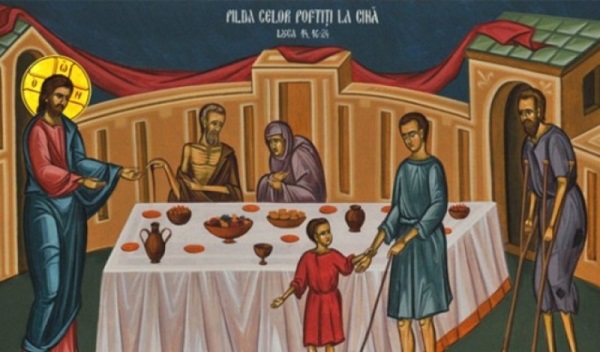
The Great Banquet


Second Sunday after Trinity

“Then the master told his servant, ‘Go out to the roads and country lanes and make them come in, so that my house will be full. I tell you, not one of those men who were invited will get a taste of my banquet’” (Luke 14:23-24).

In ancient times, it was common practice to send an invitation to a banquet such as the one described in the parable Jesus tells, followed by a summons when the time for the gathering arrived (Concordia Publishing House 2009). It would certainly be considered rude to receive the first invitation, and to reject the second call (Kretzmann 1921). The servant in the parable is delivering the second call, or summons.

In the parable of the Great Banquet, God invites His people, the Jews, to the banquet and they refuse the invitation. The people who receive the invitation in the parable are preoccupied with their sin. They persevere in sins without repentance, and they reject the gracious invitation (McCain 2005). The excuses given by the invited guests for why they were rejecting the invitation all involve worldly concerns. They are concerned with their immediate circumstances and happiness. They are fixated on finding happiness, fulfillment, or salvation in their businesses, their property, and their familial relationships. They should instead be looking forward to the joys of the banquet to which they had been invited (Kretzmann 1921). The fact that the excuses of the invited guests are all temporal in nature implies that Israel, as a group, was focused on earthly things. They were looking for a political fulfillment of God’s promise to raise up David’s fallen tent.[1] They expected the Messiah to build an earthly kingdom, and to redeem Israel in a political way by making them a great nation as they were under King David (Kretzmann 1921).

God, the master in this parable, sent the invitation to His great banquet to His chosen guests through Moses and the prophets. John the Baptist came as the herald announcing that the time had come. The kingdom of God, which is the preaching of Christ, was at hand. All the invited guests should come to the banquet (Kretzmann 1921). But Israel, as a whole, rejected the invitation. Jesus turns from the Jews, though He longed to gather them as a hen gathers her chicks, because they refused to be so gathered.[2] He invites the spiritually blind, poor, and lame: tax collectors and sinners, and gentiles. They will fill his house.

No one can come to the banquet without an invitation. God, however, has invited all people through His word. He who remains outside of the banquet only has himself to blame (Prange 1988). God would indeed be a liar and a hypocrite if His invitation were extended to all people through His word, but secretly in His heart He knew there were some people He would damn anyway, no matter what. God condemns this type of wickedness.[3] Man is, however, responsible for his own damnation by resisting and rejecting the Holy Spirit as He works through God’s word (McCain 2005). Since man cannot desire what is spiritually good because of his corrupt nature, man must be compelled by the preaching of the Law to know his helplessness. When this work of showing man his sin, and his need for a Savior is done, he is given the good news of the Gospel: that at just the right time, while we were still sinners and enemies of God, Christ died as the atonement for our sins, and the sins of the whole world; and that Jesus rose from the dead for our justification. God drives and gathers His elect together in this way (Kretzmann 1921). Those people who despise God’s call through the preaching of the Law and Gospel are barred from God’s house, and the wedding feast of the Lamb, by their own fault (Kretzmann 1921).

The parable of the Great Banquet shows that multitudes of people will enter the kingdom of heaven, though Jesus doesn’t give a specific number (Prange 1988). This filling of the house for the great banquet should call to mind the vision of John recorded in Revelation 7: John heard the number of the Elect – 144,000. But when he looked, he saw many more people than that specific number. He saw a great multitude that no one could count, from every nation, tribe, people, and language before the throne and in front of the Lamb.[4] God does not desire the death of the wicked, but that he would turn from his evil ways and live.[5] The guests who refuse the invitation to the banquet are the Jews. Those brought into the banquet in their stead are the gentiles. The point is, God prepares the banquet, makes the invitation, brings in the guests, and even provides the proper clothing to His guests.[6] No one can force his way into the banquet; he can only refuse to come. And Jesus warns Jew and gentile alike that God’s judgment will fall on all those who show contempt for His word. ###


Bibliography

Concordia Publishing House. The Lutheran Study Bible. Edited by Edward A Engelbrecht, et al. Saint Louis, MO: Concordia Publishing House, 2009.

Kretzmann, Paul E. Popular Commentary of the Bible: New Testament. Vol. 1. 2 vols. St. Louis: Concordia Publishing House, 1921.

McCain, Paul T., et. al., ed. Concordia: The Lutheran Confessions. A reader's edition of the Book of Concord. 1st. St. Louis: Concordia Publishing House, 2005.

Pieper, Francis. Christian Dogmatics. Vol. 1. ebook. St. Louis, 1950.

Prange, Victor H. The People's Bible Commentary: Luke. Milwaukee: Northwestern Publishing House, 1988.


[1] Amos 9:11; Acts 15:14-19
[2] Matthew 23:37
[3] Psalm 5:9; 12:2-4
[4] Revelation 7:4, 9
[5] Ezekiel 18:30-32; 33:19; 2 Peter 3:9
[6] Matthew 22:1-14

Sunday, June 14, 2020

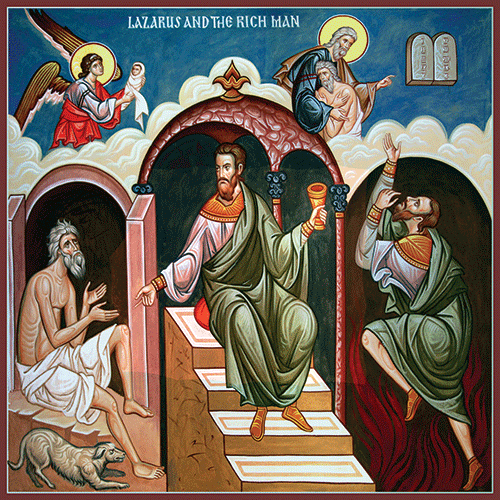
The Rich Man and Lazarus


First Sunday after Trinity

“But Abraham replied, ‘Son, remember that in your lifetime you received your good things, while Lazarus received bad things, but now he is comforted here and you are in agony.’” (Luke 16:25)

“He said to him, ‘If they do not listen to Moses and the Prophets, they will not be convinced even if someone rises from the dead.’” (Luke 16:31)

Scripture tells us that Jesus did not say anything to the people without using parables.[1] But what is a parable, and what is it’s purpose? After Jesus’ resurrection, the Apostles’ preaching would be clear and direct. Now Jesus must teach by using stories to match the level of understanding of His hearers, so as not to disrupt the plan of salvation which was reaching its end.[2] If He were to say bluntly that He was the Son of God in human flesh, the promised son of David, the people would start a revolt and try to make Him king, as they would try to do at other times during His ministry.[3] In this parable, Jesus teaches about wealth and faith in a way that compels those who hear to carefully consider what He says.

A parable is a short, fictitious story intended to teach a spiritual truth.[4] When teaching through parables, Jesus uses pictures with which his hearers are familiar to explain these truths. He doesn’t do this to hold back truth from them, but rather to press them to search for truth in the scriptures, which He says testify about Him.[5] No one, not even the Apostles, can understand divine revelation unless it is given them to understand by God. This is because we are all conceived and born in sin,[6] and by the nature we inherited from Adam, children of God’s wrath.[7] In spiritual things particularly, our sinful minds are hostile to God; they cannot and will not submit to God’s law.[8] We are spiritually blind and dead. Jesus sends the Holy Spirit to us through His word to open our ears and our eyes; He makes we, who were dead in our sins, alive in Him. Jesus connects us to His death, and to His resurrection in our baptism.[9] In our baptism He also clothes us in His righteousness.[10] He gives to us the gifts of the forgiveness of sins, eternal life, and salvation that He won by His death on the cross.[11]

The first truth of this parable is that God intends for us to use our earthly wealth wisely, and not to make money our god. All through His ministry, Jesus seems to paint a hopeless picture for rich people. He isn’t saying that it is impossible for the rich to get into heaven. In fact, Jesus tells the disciples that, without the working of God, it is impossible for anyone, rich or poor, to enter the kingdom of heaven![12] He wants us all to know, rich and poor alike, that the wealth which gives us earthly comfort and security cannot buy us eternal comfort and security. Jesus wants us to use our wealth to help our neighbors, thus storing up for ourselves treasures in heaven, where moth and rust do not destroy.[13] The rich man in the parable has made an idol of his wealth. He trusted in it to save him, and he was sorely disappointed.

The second truth Jesus teaches through this parable is that God’s word creates faith and saves. The rich man wants Abraham to send Lazarus back from the dead to warn his brothers to change their ways, so they don’t end up like him. Abraham says no. He says that they have God’s word: If they do not listen to Moses and the Prophets, they will not be convinced even if someone rises from the dead. Jesus is teaching that miracles are not enough to convince people to believe in Him. It is God’s Holy Spirit, working through God’s word, that creates repentance and faith in men. St. Paul spells this out when he writes: “I am not ashamed of the gospel, because it is the power of God for the salvation of everyone who believes,[14]” and “Faith comes from hearing the message, and the message is heard through the word of Christ.[15]” Jesus would later raise a dead man named Lazarus to life in front of His enemies, but it wouldn’t make them believe in Him. In the face of that miracle they would still refuse to believe that Jesus was the promised Savior, and plot to kill Him.[16]

Jesus wants His hearers to carefully consider what He is saying to them, and not to harden our hearts and resist the working of the Holy Spirit. In this parable He teaches that we are to use our earthly wealth wisely, as a tool to help our neighbor. Our money cannot save us from hell and separation from God. Money will be of no use to us when we die. But, we have something far more precious than money or things. Because Jesus’ work is now complete, we can stop using parables and speak clearly, just as the Apostles did after they received the Spirit from Jesus.[17] In Christ we have forgiveness of sins, eternal life, and salvation. He purchased and won those things for us on the cross. He bought them, not with gold or silver, but with His holy, precious blood, and by His innocent suffering and death. He gives those gifts to us through faith in Him, which comes through His word. ###


Bibliography


Concordia Publishing House. 2009. The Lutheran Study Bible. Edited by Edward A Engelbrecht, Paul E Deterding, Roland Cap Ehlke, Jerald C Joersz, Mark W Love, Steven P Mueller, Scott R Murray, et al. Saint Louis, MO: Concordia Publishing House.

Prange, Victor H. 1988. The People's Bible Commentary: Luke. Milwaukee: Northwestern Publishing House.

Wicke, Harold E. 1992. People's Bible Commentary: Mark. St. Louis: Concordia Publishing House.


[1] Mark 4:34
[2] Wicke, Mark, 68.
[3] John 6:15
[4] Wicke, Mark, 61; Webster, Webster’s Collegiate Dictionary, 697.
[5] Luke 4:21; John 5:29
[6] Psalm 51:5
[7] Ephesians 2:3
[8] Romans 8:7
[9] Romans 6:3-5
[10] Galatians 3:27
[11] Acts 2:38-41; 1 Peter 3:18-21
[12] Matthew 19:16-30
[13] Matthew 6:19-21
[14] Romans 1:16
[15] Romans 10:17
[16] Englebrecht, et. al., Lutheran Study Bible, 1751
[17] Wicke, Mark, 68

Saturday, March 23, 2019

The Parable of the Persistent Widow

Then He spoke a parable to them, that men always ought to pray and not lose heart, saying: “There was in a certain city a judge who did not fear God nor regard man. Now there was a widow in that city; and she came to him, saying, ‘Get justice for me from my adversary.’ And he would not for a while; but afterward he said within himself, ‘Though I do not fear God nor regard man, yet because this widow troubles me I will avenge her, lest by her continual coming she weary me.’ ” Then the Lord said, “Hear what the unjust judge said. And shall God not avenge His own elect who cry out day and night to Him, though He bears long with them? I tell you that He will avenge them speedily. Nevertheless, when the Son of Man comes, will He really find faith on the earth?” (Luke 18:1-8)

Jesus speaks this parable to His disciples after teaching them about the coming of the Kingdom of God, recorded in the previous chapter.[1] In that teaching, Jesus compares the time before the Last Judgment to the time of Noah before the flood. His return will be like lightning that flashes out of one part under heaven and shines to the other part under heaven. It will be no secret; it will happen quickly, and without warning. He warns His disciples to beware of those false teachers who would lead them astray to follow false Christs: The kingdom of God does not come with observation. One gets the impression from the disciples’ response, “Where, Lord,” that they were, perhaps, spooked by what Jesus said to them.

Jesus spoke the parable of the persistent widow to the disciples to show them that men always ought to pray and not lose heart. To make His point, Jesus compares the petitioning of God by His Elect to a woman seeking justice from a corrupt judge. The judge doesn’t do right by the widow because it is the right thing to do under the law, or because he is compassionate and feels sorry for her; he grants her petition because of her persistence. She brings her petition before the judge constantly and, because he doesn’t want to be annoyed by her “continual coming”, he grants it.

At first, we might think the lesson here is that if we are persistent and tenacious enough in our prayer to God, He will eventually relent and give us whatever we ask of Him, lest by our continual coming we weary Him. This is not the lesson. God is not like the corrupt judge of the parable. I should be greatly disturbed if our God was the type of god who would give us whatever we pray for, regardless of what He has previously said in His word, simply because we prayed persistently enough. That might work with beleaguered parents dealing with cleaver and persistent children scheming to get their way, but it isn’t how God operates with mankind. St. Paul was surely persistent in his prayers to God to remove his thorn in the flesh. God, far from relenting because of St. Paul’s persistent and fervent prayer, told him, “My grace is sufficient for you. For My strength is made perfect in weakness.”[2]

No, the lesson here is similar to the lesson Jesus teaches in His Sermon on the Mount:

Or what man is there among you who, if his son asks for bread, will give him a stone? Or if he asks for a fish, will he give a serpent? If you then, being evil, know how to give good gifts to your children, how much more will your Father in heaven give good things to those who ask Him![3]

Or, to His parable of the persistent friend:

And He said to them, “Which of you shall have a friend, and go to him at midnight and say to him, ‘Friend, lend me three loaves; for a friend of mine has come to me on his journey, and I have nothing to set before him’; and he will answer from within and say, ‘Do not trouble me; the door is now shut, and my children are with me in bed; I cannot rise and give to you’? I say to you, though he will not rise and give to him because he is his friend, yet because of his persistence he will rise and give him as many as he needs.[4]

Jesus uses the illustration of the corrupt to magnify the goodness and love of God. Even the sinful Pharisees know how to answer the petition of the people they love, their sons and daughters, in a way that benefits them. Don’t you suppose the God who created the universe by speaking it into existence, who describes Himself as love[5] knows how to do that better than they do?

Justice for the widow in the parable was anything but certain. It depended on her persistence in bringing her petition before the corrupt judge. It depended on how effectively she could annoy him. God’s justice, which will be revealed in the form of Christ’s judgment of the living and the dead on the Last Day, is assured. Still, He encourages us to pray persistently, along with all those who had been slain for the word of God and for the testimony which they held, who cry out with a loud voice, saying,

“How long, O Lord, holy and true, until You judge and avenge our blood on those who dwell on the earth?”[6]

St. Peter tells us that it won’t be long; God isn’t being slow, even if that’s what it looks like to us. Christ hasn’t forgotten about us. He isn’t waiting for all the geopolitical puzzle pieces to fall into their proper places before He sets His return to earth in motion. He could return any time. That’s why He tells us to wait expectantly, like the servant who works diligently while his master is away on a journey, and is found so doing when his master returns.[7] That’s why he compares Christians waiting for His return with bridesmaids waiting for the bridegroom with lamps trimmed and burning.[8] No, His delay means salvation for men:

But the heavens and the earth which are now preserved by the same word, are reserved for fire until the day of judgment and perdition of ungodly men. But, beloved, do not forget this one thing, that with the Lord one day is as a thousand years, and a thousand years as one day. The Lord is not slack concerning His promise, as some count slackness, but is longsuffering toward us, not willing that any should perish but that all should come to repentance.[9]

So we, Jesus’ disciples, always ought to pray and not lose heart. Even though we pray with our sainted brothers and sisters in heaven, “How long, O Lord?”, we know that God is faithful and will keep His promises to us. Christ died for our sins, and rose for our justification; He gave us a pledge to assure us of the forgiveness He won for us on the cross in the Lord’s Supper. And, not only to assure us, but to actually deliver it to us. In that meal Christ gives us His body and blood to eat and to drink with the bread and wine for the forgiveness of our sins. It is His New Testament in His blood. It is a living proclamation and distribution of His saving death and all its blessings.[10] Just as He saved eight souls through water by shutting them in the ark in the days of Noah, so Christ brings us into the ark of His Church, through the waters of Holy Baptism,[11] and saves us from the flood of fire that is to come upon the earth when He returns. All the time He waits to return in judgment is time for men to hear His Word, repent of their sins, receive His gifts, and be saved.

Just because He has waited this long, however, does not mean He will continue to wait forever. We know that,

“…the day of the Lord will come as a thief in the night, in which the heavens will pass away with a great noise, and the elements will melt with fervent heat; both the earth and the works that are in it will be burned up. Therefore, since all these things will be dissolved, what manner of persons ought you to be in holy conduct and godliness, looking for and hastening the coming of the day of God, because of which the heavens will be dissolved, being on fire, and the elements will melt with fervent heat? Nevertheless we, according to His promise, look for new heavens and a new earth in which righteousness dwells.”[12]

Nevertheless, when the Son of Man comes, will He really find faith on the earth? The tone of Jesus’ question is ominous. After all, out of the entirety of mankind, only Noah and his family were saved from the flood. The flood, which serves as a type and shadow of the Last Judgement, suggests things will be similar when Christ returns. Yet we, heeding Christ’s words, remain persistent in our prayers, trusting that the gates of hell will not prevail against His Church,[13] just as He has promised.


[1] Luke 17:20-37
[2] 2 Corinthians 12:7-9
[3] Matthew 7:9-11
[4] Luke 11:5-13
[5] Genesis 1:1-29 - 2:1; 1 John 4:8
[6] Revelation 6:9-10
[7] Mark 13:33-37
[8] Matthew 25:1-13
[9] 2 Peter 3:7-9
[10] Luther, Martin. Luther's Small Catechism, with Explanation. St. Louis, MO: Concordia Publishing House, 2005. p. 236, question 294. See also 1 Cor. 11:26.
[11] 1 Peter 3:18-22
[12] 2 Peter 3:10-13
[13] Matthew 16:15-20

Sunday, November 26, 2017

Watch!

“Then the kingdom of heaven shall be likened to ten virgins who took their lamps and went out to meet the bridegroom. Now five of them were wise, and five were foolish. Those who were foolish took their lamps and took no oil with them, but the wise took oil in their vessels with their lamps. But while the bridegroom was delayed, they all slumbered and slept. And at midnight a cry was heard: ‘Behold, the bridegroom is coming; go out to meet him!’ Then all those virgins arose and trimmed their lamps. And the foolish said to the wise, ‘Give us some of your oil, for our lamps are going out.’ But the wise answered, saying, ‘No, lest there should not be enough for us and you; but go rather to those who sell, and buy for yourselves.’ And while they went to buy, the bridegroom came, and those who were ready went in with him to the wedding; and the door was shut. Afterward the other virgins came also, saying, ‘Lord, Lord, open to us!’ But he answered and said, ‘Assuredly, I say to you, I do not know you.’ Watch therefore, for you know neither the day nor the hour in which the Son of Man is coming” (Matthew 25:1-13).

Watch, therefore, for you know neither the day nor the hour in which the Son of Man is coming. This is the whole point of the parable of the wise and foolish virgins. Christ is warning us to watch for His coming constantly. It could happen at any time, and Our Lord warns us to always be prepared, as the wise virgins were prepared. Much scholarly ink has been spilled debating what each individual element of the parable means. Who are the virgins? Who is the Bridegroom? What is the oil? These things are interesting topics of discussion, but such a debate misses the overall point of the parable. Christ wants us to be prepared for His coming, so that we are not excluded from the wedding feast.

So, how do we prepare? We take oil with us in our vessels as we wait for the Bridegroom to arrive, i.e., we do the works required of us to be adequately prepared. What are those works? Christ answers this question in the sixth Chapter of St. John’s Gospel when He is asked by some what they must do to do the works of God. Christ answers, “This is the work of God, that you believe in Him whom He sent.”[1] That is what it means to be a wise virgin. That is what it means to have taken adequate oil in your vessel: To believe in Christ, the one who was sent by the Father; the one who is coming soon. The work of God is to believe in Christ, the Bridegroom, the one who will bring His wise virgins into the wedding feast, even if He should tarry so long that they all fall asleep. He will wake them; they shall rise and, with lamps trimmed and burning, accompany Him to the Feast.


[1] John 6:29

Thursday, December 24, 2015

From One Know-Nothing to Another

The Know-Nothing Party Flag

Dennis Gorecki of Orland Park, IL wrote a letter which was published in the Christmas Eve edition of the Daily Southtown newspaper (a Chicago Tribune publication). In his letter, which lists the collective sin of American racism like a litany – or an indictment – Mr. Gorecki’s calls for his “Christian brothers and sisters who support the xenophobic views of the Republican party,” to read Matthew 25:35-46. Those verses read as follows:

“For I was hungry and you gave me food, I was thirsty and you gave me drink, I was a stranger and you welcomed me, I was naked and you clothed me, I was sick and you visited me, I was in prison and you came to me.’ Then the righteous will answer him, saying, ‘Lord, when did we see you hungry and feed you, or thirsty and give you drink? And when did we see you a stranger and welcome you, or naked and clothe you? And when did we see you sick or in prison and visit you?’ And the King will answer them, ‘Truly, I say to you, as you did it to one of the least of these my brothers, you did it to me.’ Then he will say to those on his left, ‘Depart from me, you cursed, into the eternal fire prepared for the devil and his angels. For I was hungry and you gave me no food, I was thirsty and you gave me no drink, I was a stranger and you did not welcome me, naked and you did not clothe me, sick and in prison and you did not visit me.’ Then they also will answer, saying, ‘Lord, when did we see you hungry or thirsty or a stranger or naked or sick or in prison, and did not minister to you?’ Then he will answer them, saying, ‘Truly, I say to you, as you did not do it to one of the least of these, you did not do it to me.’ And these will go away into eternal punishment, but the righteous into eternal life” (Matthew 25:35-46).

He calls the Republican Party the new Know-nothings which, in many respects, is an accurate statement. The average American’s concern for the security of their country and its borders, however, does not automatically equate with xenophobia, as many leftists believe and proclaim. By citing St. Matthew’s Gospel, this implication is made all the more insulting, as Christians are painted to look like hypocritical racists. This view of Christians may fit well with the Left’s worldview, but it has little to do with reality for the majority of the faithful. Furthermore, Mr. Gorecki’s invocation of Matthew 25:35-46 as his coup de grâce betrays his ignorance of Biblical interpretation.

Christ, telling this parable of the sheep and the goats to his disciples, says, “Truly, I say to you, as you did it to one of the least of these my brothers, you did it to me” (Matthew 25:40). Who are Jesus’ brothers? His disciples! We learn this in Matthew 12:

“While he was still speaking to the people, behold, his mother and his brothers stood outside, asking to speak to him. But he replied to the man who told him, ‘Who is my mother, and who are my brothers?’ And stretching out his hand toward his disciples, he said, ‘Here are my mother and my brothers! For whoever does the will of my Father in heaven is my brother and sister and mother’ (Matthew 12:46-50).

Again, who are those, according to Jesus, who do the will of His Father in heaven? Those who believe in him, or…His disciples! We learn this in John 6:

“Then they said to him, ‘What must we do, to be doing the works of God?’ Jesus answered them, ‘This is the work of God, that you believe in him whom he has sent’” (John 6:28-29).

So, who is Jesus calling us to feed, give drink, clothe, and visit in prison in this parable? His brothers, those who believe in him…our fellow Christians. To say that this parable mandates that Christians welcome everyone who calls themselves a refugee into their country without a second thought or question, is to profoundly misinterpret Jesus’ words here.

Certainly this is not the only sense in which the phrase “my brothers” should be understood. Since we have been adopted into God’s family, we Christians are children of God the Father, brothers and sisters of Christ, and co-heirs with Him of His Kingdom. 

This is not to say that Christians are allowed to treat those outside the family of faith badly. To the contrary, Christians are called to love their enemies, a feature of the Christian religion not universally shared by the world’s religions. We are called to pray for those who persecute us, and to live in peace with everyone, insofar as it depends on us.

Christians expressing concern about the effects and dangers of unchecked illegal immigration does not equate with the “No Irish Need Apply” attitude of the late 19th and early 20th Centuries. Supporting tighter control of the way visas are issued, or not wanting to allow tens of thousands of Muslim refugees into the country without a proper vetting when Islamic terrorists are threatening kill Americans on American soil does not equate with the exclusion of Chinese immigrants, or with any of the other incidents of racism and xenophobia which Mr. Gorecki cites. And, while there are certainly a large number of people in America who are the type of bigot Mr. Gorecki describes, this in no way negates the founding principles of our country, or the picture of America as the land of opportunity for oppressed immigrants around the world. 

Things like racism exist because human beings are sinful. Our natures are corrupt. In our natural state, we are God’s enemy. Our focus is bent inward toward ourselves. As a result, we don’t love God with our whole hearts, and we don’t love our neighbors as ourselves. For this we need to repent. We need to hear God’s forgiveness this Christmas – and every day of the year – that, despite our sinfulness we do not need to fear; that unto us is born this day in the city of David a Savior, who is Christ the Lord. This Savior is Immanuel, God with us, who came to bear our sin on the cross while we were still his enemies. Repentance and the forgiveness of sins through Christ’s blood, shed on the cross, is the only thing which will cause us to act according to the Spirit rather than according to our sinful flesh.

Tuesday, October 11, 2011

The Wedding Feast

And again Jesus spoke to them in parables, saying, "The kingdom of heaven may be compared to a king who gave a wedding feast for his son, and sent his servants to call those who were invited to the wedding feast, but they would not come. Again he sent other servants, saying, 'Tell those who are invited, See, I have prepared my dinner, my oxen and my fat calves have been slaughtered, and everything is ready. Come to the wedding feast.' But they paid no attention and went off, one to his farm, another to his business, while the rest seized his servants, treated them shamefully, and killed them. The king was angry, and he sent his troops and destroyed those murderers and burned their city. Then he said to his servants, 'The wedding feast is ready, but those invited were not worthy. Go therefore to the main roads and invite to the wedding feast as many as you find.' And those servants went out into the roads and gathered all whom they found, both bad and good. So the wedding hall was filled with guests (Matthew 22:1-10).

Why did Jesus speak to them in parables and who is the “them” Matthew is writing about? Jesus addressed his parables to the Pharisees in particular[1], but also to the crowds of people who were not his disciples in general. The disciples are the ones to whom Jesus referred when he said, “To you it has been given to know the secrets of the kingdom of heaven, but to them it has not been given. For to the one who has, more will be given…but from the one who has not, even what he has will be taken away.” The disciples have the knowledge of the kingdom of heaven and they will “have in abundance” as a result of Jesus’ teaching them. Those who oppose Jesus and reject him will lose even the knowledge they have.

Parables are generally defined as a complete, imaginary story designed to illustrate a spiritual truth (Engelbrecht, 2009). For the unbeliever – the “one who has not” – the parable also functions as an instrument of judgment. Because unbelievers reject the Gospel, their eyes cannot see, nor can their ears hear, the truth that the parable illustrates[2]. We are called to faith by the Holy Spirit working through God’s word. We cannot come to Jesus by our own efforts, reason, or strength. This is why Jesus says we must have faith like a little child[3].We receive God’s gracious forgiveness and salvation through our simple, child-like trust in Jesus words, brought to us by the Holy Spirit. These spiritual issues are not things that we can reason out, weigh as evidence in a courtroom trial, and decided to believe in after we have processed it logically.

Then some of the scribes and Pharisees answered him, saying, "Teacher, we wish to see a sign from you." But he answered them, "An evil and adulterous generation seeks for a sign, but no sign will be given to it except the sign of the prophet Jonah. For just as Jonah was three days and three nights in the belly of the great fish, so will the Son of Man be three days and three nights in the heart of the earth (Matthew 12:38-40).

Indeed, this is what the Pharisees were attempting to do – or at least pretending to do – when they asked Jesus for a sign and why Jesus speaks to them in parables[4]. In this particular instance, Jesus tells them that there will be no magic trick to convince them, and directs them to Holy Scripture for the sign they seek. This sign Jesus points the Pharisees to is the sign of Jonah, the sign of his impending death and resurrection[5].

This idea that faith depends on the working of the Holy Spirit through the means of God’s Word and not on a person’s reason is also illustrated to us in the parable of the Rich Man and Lazarus[6]. The wicked rich man who had died and gone to hell begs Abraham to send Lazarus to his brothers as a warning sign that they should turn from their wickedness and avoid the eternal torment that surely awaits them. What is Abraham’s answer? “They [the five brothers] have Moses and the Prophets [God’s Word]; let them hear them.” Jesus goes on to explain that, if a person will not listen to the voice of God calling him through Holy Scripture, he will not be convinced of God’s message even is someone should rise from the dead. His heart has been hardened.

What does Jesus mean by the phrase “Kingdom of Heaven? The Kingdom of Heaven, at other times called the Kingdom of God, is God’s ruling as king over the whole universe, the church on earth and the church and angles in heaven (Luther, 1986). Jesus makes clear that this concept is not a physical, earthly kingdom, like a country or empire; it is a spiritual kingdom[7]. Jesus makes the spiritual nature of his kingdom the most evident in his dialogue with Pontius Pilate[8]. The Jews and Romans viewed Jesus the same way they viewed the Zealots, as a political threat. Jesus makes it very clear that he was not leading a revolution, at least in the conventional sense. Jesus came to conquer sin, death, and the devil for mankind by dying as a sacrifice on the cross. By his death and resurrection he established his kingdom of grace, and rules over it from his place in heaven at God the Father’s right hand. When he returns, it will be to judge the world[9].

"But when the king came in to look at the guests, he saw there a man who had no wedding garment. And he said to him, 'Friend, how did you get in here without a wedding garment?' And he was speechless. Then the king said to the attendants, 'Bind him hand and foot and cast him into the outer darkness. In that place there will be weeping and gnashing of teeth.' For many are called, but few are chosen." (Matthew 22:11-14)

Why did the king in Jesus’ wedding feast parable treat the man without a wedding garment so harshly? The man was one of the people whom the king's servants went out into the streets to bring to the wedding. He was invited to the feast by the grace of the king, and not by virtue of his relationship with the king, or anything else that could be attributed to him. In the ancient Middle East it was customary for the host of a banquet such as the wedding feast described in the parable, to provide his guests with clothing appropriate for the celebration to which they had been invited. For this man to to be at the banquet but not properly attired would mean that he would have had to refuse to wear the clothing provided him by the king for some reason (Engelbrecht, 2009).

God is the king in the parable. The wedding feast is the Kingdom of Heaven, or the spiritual kingdom of God's grace, secured and won for mankind by the blood of Jesus. The first group of people called to the feast represents the Jews, particularly the Scribes, Pharisees, and the Teachers of the Law - the Jewish political/religious establishment of the time. Their rejection of the invitation to the feast is a rejection of God's call to repentance and the gracious gift of forgiveness he freely gives. The servants mistreated and killed represent the prophets. The people gathered in off the street represent the inclusion of Gentiles in God's kingdom. The man who refused to wear the garment provided for him by God is one of those called who miss out on the blessings of God's Kingdom because they do not respond to the invitation properly - in child-like faith.

Perhaps the man in the parable thought that his clothes were good enough to attend the banquet when in reality, compared to the garments of God's righteousness tailored for is by Christ on Calvary's cross, they are tattered rags. Though the man did nothing to deserve an invitation to the banquet or festival garments, the king provided for him in abundance. In the same way, though we in no way deserve mercy, the Lord invites mankind to join him at his heavenly banquet through the message of the Gospel. How will we respond to his invitation? Will we faithfully accept the garments provided us without question or condition, or will we reject the message and try to come to the party on our own terms, wearing our own filthy rags? If we do, we will end up like the man in the parable – cast into the outer darkness, where there is weeping and gnashing of teeth.

Works Cited


[1] Matthew 13:10
[2] Matthew 13:13; Isaiah 6:9-10
[3] Mark 10:15
[4] Matthew 12:39
[5] Matthew 12:39-40
[6] Luke 16:19-31
[7] Mark 1:15; Romans 14:17
[8] John 18:36
[9] Matthew 25:31-32

Engelbrecht, E. A. (Ed.). (2009). The Lutheran Study Bible. St. Louis, MO: Concordia Publishing House.
Luther, D. M. (1986). Luther's Small Catechism with Explanation. St. Louis, MO: Concordia Publishing House.