Tuesday, August 20, 2019

No Creed but the Catechism

I went to mail a package the other day and wound up getting into a strange little theological conversation. It was brief. To tell the truth, I was a little surprised, and didn’t quite know how to respond to the statement that offended me. The fellow saw that I was mailing some religious books. He asked me what denomination I was. I told him I was a Missouri Synod Lutheran. He seemed to know what that was, but then told me this: “I had dinner with two Lutheran friends from out of town the other night. The one I’m not worried about. The other one… too catholic! He talked too much about the catechism.” I thought to myself that the man he was worried about and I would probably get along better than the other “Lutheran” and I would. I knew I only had a few moments to respond in some way. Rather than being confrontational, or saying something sarcastic (which is my modus operandi), I replied, “God works through His Word when and where He wills.” I got a smile of approval, finished my transaction, and left. 

This attitude among Evangelicals really does kind of bother me. It falls under the umbrella of No Creed but Christ, No Book but the Bible. This is supposed to express that the person who professes this mini man-made creed doesn’t profess man-made creeds, and that they get their doctrines from the Bible, and not man-made theology. It’s not so much because of their smug sense of superiority when expressing it, but rather that they are so certain about something that just is not so. Not only are they professing a creed that is not “Christ”, one that is far inferior to the ecumenical creeds, they often subscribe to many books other than the Bible for their theology; books that take the words of Scripture out of context and teach things foreign to it, like dispensationalism (I’m looking at you, Cyrus Scofield).
Cyrus I. Scofield, creator of the Scofield Reference Bible

Dr. Martin Luther’s Small Catechism (hereinafter referred to as The Catechism) falls into the second half of the mini-creed; it is a book other than the Bible. It must, therefore, contain the doctrines of men. After all, if it were Jesus’ catechism, it would have His name on it. There are, however, several problems: No Creed but Christ, No Book but the Bible ignores the reality of how men are converted, and how doctrine is preserved and transmitted from one generation to the next; also, my fundagelical friends have a misconception about what a catechism is. 

They don’t know what a catechism is, so they don’t know what they are missing by rejecting such a resource out-of-hand because it was “written by men”. The desire to obey God rather than men is good. We Christians should follow the example of our fathers in the faith who came before us and preached, taught, baptized, and worshiped in the face of persecution. But that is just the point: Christianity isn’t just me and my Bible, and you and yours, having personal experiences with God. Christianity is the death of Jesus as ransom for the sin of the world, and His resurrection for our justification.[1] And when a man is made a Christian by the working of the Holy Spirit through the means of the Word, he becomes a part of something bigger than himself – the body of Christ, the Church, the Communion of Saints, spread out through time and space, preserved by Him until the Last Day when Christ will come to judge the living and the dead, and establish the new creation. I don’t mean to wax metaphysical, but Christianity, rather than being a religion of “do these things in this prescribed way according to this rulebook,” is instead a religion of being. You once were dead in trespass and sin, and now you are made alive by Christ.[2] You once were dirty with the filth of your sin, and now you have been washed, you have been sanctified, you have been justified in the name of the Lord Jesus Christ and by the Spirit of our God;[3] You have been saved in the waters of Holy Baptism,[4] where you were connected to Christ, His death and resurrection, clothed with His righteousness,[5] washed clean of your sin.[6] You used to be a fallen, sinful creature; now Christ has made you a new creation, by the grace of God through faith in Him.[7] Now, be forgiven. This is a concept that the unregenerate human mind, hostile to God, cannot understand.[8] We Christians can only begin to grasp it, and struggle with sin while we live here in the flesh because of sin living in us.[9]

What does that have to do with The Catechism? Good question. I doubt that most people even understand what the word catechism means, let alone what the book actually is. Catechism means to instruct by question and answer.[10] Consequently, a book containing a summary of religious doctrine in question and answer format is called a catechism. So, is The Catechism not a summary of Luther’s teachings? If it is, then my friend is right, I follow Luther rather than Christ, and I am a filthy pagan. But is he correct? Not hardly. Dr. Luther’s catechism is an instruction in the teachings of the Christian faith, as it had been believed, taught, and confessed since ancient times, using Holy Scripture as it’s foundation. In the preface to his catechism, Luther wrote: 

The deplorable, miserable conditions which I have recently observed when visiting the parishes have constrained and pressed me to put this catechism of Christian doctrine into this brief, plain, and simple form. How pitiable, so help me God, were the things I saw: the common man, especially in the villages, knows practically nothing of Christian doctrine, and many of the pastors are almost entirely incompetent and unable to teach. Yet all the people are supposed to be Christians, have been baptized, and receive the Holy Sacrament even though they do not know the Lord’s Prayer, the Creed, or the Ten Commandments and live like poor animals of the barnyard and pigpen. What these people have mastered, however, is the fine art of tearing all Christian liberty to shreds.[11] 

The Catechism, according to Luther, is a teaching tool, designed to help instruct people in the doctrines of the Christian faith, all of which are exposed in Holy Scripture. 

If someone claims that they only need the Bible, they probably mean to express that they are faithful Christians who hold Holy Scripture in high regard, and believe what it says. But how did they hear the Gospel? Did a Bible fall from heaven, open, in front of them? Was it a Scofield Reference Bible?[12] If so, are the notes inspired Scripture as well? Did they begin reading it without human interaction, with only the odd quiver of the liver to direct them? No. They were brought to hear preaching and teaching at church, Sunday school, Bible study, and by other Christians as they encountered them in their various vocations, etc. Did these other Christians simply read to them the Gospel of John? Did they answer each question directed to them with a bare quotation of Scripture? No. They summarized and taught, and pointed to the Word as recorded in Holy Scripture, preserved and handed down through the church by the working of the Holy Spirit, to show that what they were teaching was true. 

Some do this faithfully; others do not. But we know that the Holy Spirit preserves the Church in unity, and the gates of Hell will not prevail against it.[13] This Church, made up of all the faithful of all time, we cannot see, and call the “invisible” church. We seek to remain a part of this “invisible” church, and be faithful to that “visible” church (that gathering of people around the means of grace which is made up of believers and hypocrites[14]) which teaches all of the Bible’s doctrines purely, and administers the Sacraments according to their institution.[15] Moreover, we are called to avoid false teachers, churches, cults, and all organizations that teach contrary to God’s Word.[16]

What about all those people, probably the vast majority in human history, who were too poor to own a printed book of any kind? They had no Bible. How about those people who could not read? How did God make them Christians? Faith comes by hearing and hearing by the word of Christ.[17] Anyone who became a Christian was baptized and taught, and their teacher didn’t just read Bible quotes at them. If he was a faithful teacher and preacher, all that he preached and taught had God’s Word, understood in it’s proper context, as a foundation, just as The Catechism does. I wonder how my fundagelical friend talks to people about Jesus. Does he share his testimony? Does he explain how to walk down the Roman Road? Does he follow the method of Dr. D. James Kennedy? These things are attempting to do what The Catechism does: summarize Christian doctrine and deliver the Word of Christ (Though, I would argue, these other methods are far inferior to The Catechism, and distort God’s Word by teaching it out of it’s proper context).

The human heart is, as I once heard a faithful preacher say, an idol factory. We can make anything into an idol – including Luther – as Rome did with the Pope, as cults do with their leaders, and as some do even with the Bible (KJV Only movement, anyone?).

But creeds and confessional statements, like The Catechism and the Book of Concord of which it is a part, are wonderful things. They distill the teachings of Holy Scripture into concentrated bits that the Church can learn and confess together. They serve as a check for the layman on the preaching of the pastor. If he deviates from the doctrine of Scripture as they have learned it, it is the duty of the people to call their pastor to account. Confessional statements and creeds serve as clear examples of what men are teaching as the Word of God from Holy Scripture. Those documents are the best starting point for Christians to begin talking to each other in a serious and meaningful way about what they believe, teach, and confess, and working toward true Christian unity, so that we teach all things that Christ has commanded.[18]

God works through preachers, and teachers, and the liturgy, and the catechism, and books written by Christians intended to teach, and people talking to one another, and all kinds of ways, provided that God’s Word, the Word of Christ, is being delivered. God does not want to deal with us in any other way than through the spoken Word and the Sacraments. Whatever is praised as from the Spirit – without the Word and Sacraments – is the devil himself.[19]


Bibliography


Concordia Publishing House. Luther's Small Catechism. Translated by Concordia Publishing House. Saint Louis, Missouri: Concordia Publishing House, 1991.

Got Questions. "What is the Scofield Reference Bible?" Got Questions: Your Questions, Biblical Answers. July 26, 2019. https://www.gotquestions.org/Scofield-Reference-Bible.html (accessed August 20, 2019).

McCain, Paul T, Robert C Baker, Gene E Veith, and Edward A Engelbrecht. Concordia, The Lutheran Confessions: A Reader's Edition of the Book of Concord. 1st. Saint Louis: Concordia Publishing House, 2005.

Webster's Collegiate Dictionary. Springfield: G. & C. Merriam Co., 1924.

Wikipedia. Dispensationalism. "Wikipedia https://en.wikipedia.org/wiki/Dispensationalism (accessed August 20, 2019).


[1] Mark 10:45; John 3:3-5, 10-17; Romans 3:21-26; Hebrews 2:17; 1 John 2:2; Romans 4:23-25
[2] Ephesians 2:1-10; Romans 6:11
[3] 1 Corinthians 6:9-11
[4] 1 Peter 3:18-22
[5] Romans 6:1-14; Galatians 3:27
[6] Acts 22:16
[7] 2 Corinthians 5:16-19
[8] Romans 8:7; 1 Corinthians 2:14
[9] Romans 7:13-25
[10] Webster's Collegiate Dictionary, 1924
[11] Concordia Publishing House, 1991
[12]  The Scofield Reference Bible promoted Dispensationalism, the belief that between creation and the final judgment there would be seven distinct eras of God's dealing with man and that these eras are a framework for synthesizing the message of the Bible (Got Questions 2019). It was largely through the influence of Scofield's notes that Dispensationalism grew in influence among fundamentalist Christians in the United States. (Wikipedia n.d.)
[13] Matthew 16:18
[14] Matthew 13:47-48; 22:11-12; Acts 5:1-11
[15] John 8:31-32; Acts 2:42; 1 Corinthians 1:10
[16] Matthew 7:15-16; Romans 16:17-18; Galatians 1:8; 2 Timothy 4:3; 1 John 4:1
[17] Romans 10:17
[18] Matthew 28:16-20
[19] Concordia Publishing House, 1991. SA III VII 10

Saturday, July 20, 2019

Crowded or Empty? Thoughts on a YouTube Video About Hell


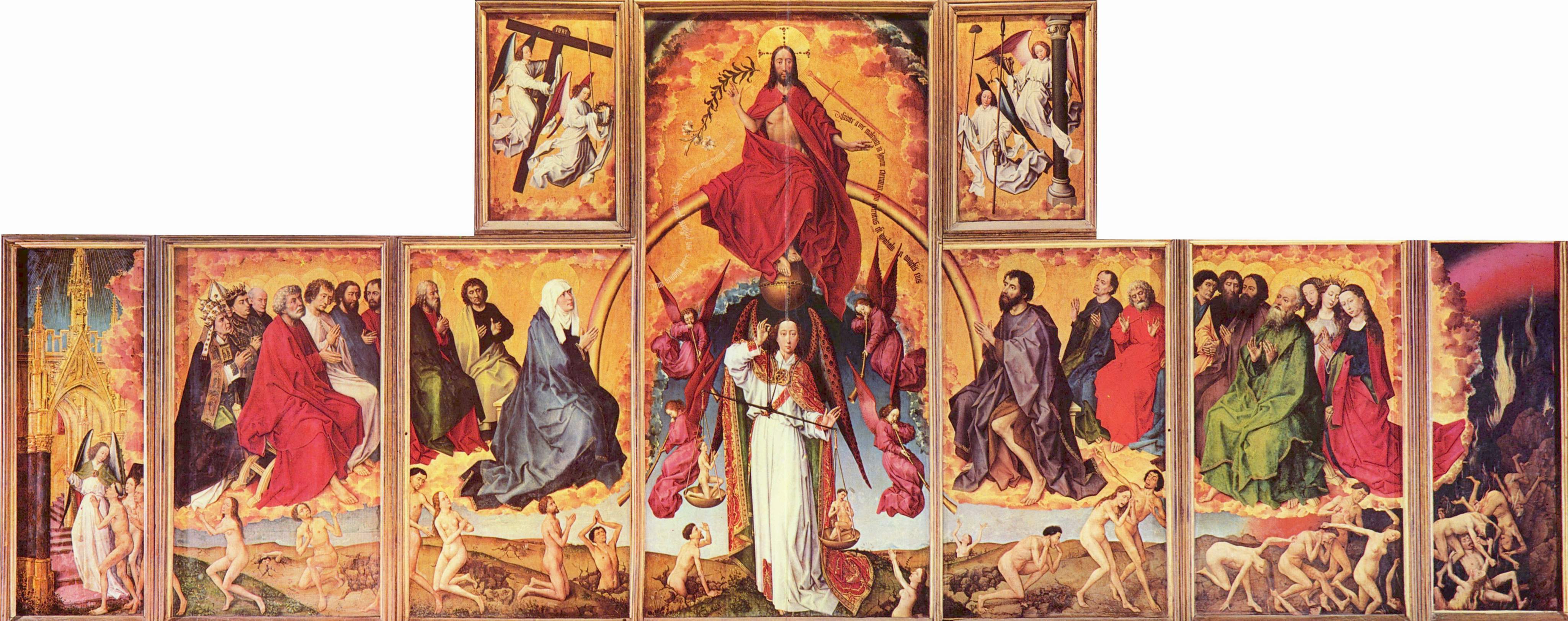
This video from Word of Fire is interesting. Bishop Barron talks a lot about hell, but he never gets around to answering the question that is the title of his video: Is hell crowded or empty? To cut to the chase, he equivocates; he says that he doesn’t know. He doesn’t believe hell is a literal place (I suppose that would make it empty?), but rather a spiritual place where we, creatures having free will in spiritual matters, isolate ourselves from God by rejecting Him through our own free choice. He refers to hell as a metaphor for the deep loneliness and isolation one experiences after rejecting God. He does conclude that, “We may reasonably hope that all people are saved.”

There are some good things in the video, but how much arsenic do you want in your bottle of drinking water? The government sets limits for contaminants in drinking water based on the toxicity levels of various substances. The Environmental Protection Agency has set an arsenic maximum contaminant level for public water supplies at 0.010 mg/L (milligrams/Liter).[1] Sadly, we are unable to do the same with false teaching. Jesus wants us to teach all that He has commanded;[2] and just as a little leaven will work it’s way through the whole lump of dough,[3] a little heresy will work it’s way through the whole church, if we aren’t careful. I think Bishop Barron’s video about hell is a milligram too much arsenic in my doctrinal water bottle to swallow.

Bishop Barron summarizes several theologians, Roman and Evangelical, and their views on salvation. He summarizes Karl Barth as a Universalist using Barth’s quote, “All are saved in the cross of Christ.” I don’t know all there is to know about Karl Barth, or even agree with a lot of what I do know, but the statement, “All are saved in the cross of Christ," is true, even if it isn’t in the way Barth meant it. Jesus died for, and indeed saved, the whole world.[4] Some men resist and reject receiving that gift. It’s the old story of the million dollar check: Bill Gates can write you a $1 million check. The money is yours. You have $1 million. If, however, you refuse to cash the check when he offers it to you - or probably more accurately, you throw the envelope away when it comes in the mail - you don’t benefit from the gift that was freely given to you. Those who are saved are saved by God’s working alone; those who are not receive all the credit for their damnation themselves.

The Bishop agrees with Hans Urs von Balthasar, the final theologian he presents. Balthasar says that we can believe all people are saved, but we can’t know it for sure; the reason we can’t be certain, he explains, is because men have free will and can reject God. I wouldn’t say, as the Bishop explains, that human freedom can resist God’s act of love; rather, the Bible tells us that we have no freedom, as we are dead in trespasses and sins; we are, by nature, objects of wrath.[5] That’s why we resist, and we are able to reject. It is our natural inclination to pursue the desires of our flesh, sin, and to reject God. It is clear, however, that there is no free will in spiritual matters, in the common understanding of the term. We are either slaves to sin and enemies of God, or we are slaves to Christ and set free from sin.[6]

His position on hell seems to be that he believes it to be real, but not exactly a physical place, like Pocatello, Idaho, and God, being Love, doesn’t send people there. Billy Graham said things that sound similar. This shouldn’t be surprising, since Rome and American Evangelicalism often have a similar view of free will. Rev. Graham sometimes talked about hell being complete separation from God, rather than an actual physical place where fire burns you forever.

More important, the mature Graham steered away from hell in general, and when he did talk about it, all that he would affirm with certainty was that it meant separation from God... “The only thing I could say for sure is that hell means separation from God. We are separated from his light, from his fellowship. That is going to be hell. When it comes to a literal fire, I don’t preach it because I’m not sure about it.”[7]

Other evangelical teachers have said similar things. These evangelical teachers, however, were not necessarily denying the existence of a literal place called hell, wherein the actual physical people who were damned would be. It may be partly a case of trying to use words to describe the indescribable. I don’t know why Billy Graham would equivocate on hell, or why anyone who believes Scripture would say that it isn’t a literal place. Christ says,

“If your hand causes you to sin, cut it off. It is better for you to enter into life maimed, rather than having two hands, to go to hell, into the fire that shall never be quenched—where ‘Their worm does not die and the fire is not quenched.’”[8]

Jesus goes on to teach that it isn’t our hand that causes us to sin, but our corrupt heart, so don’t go chopping off your hand. But we will indeed enter into a literal eternal life with a resurrected body; what in the text would cause us to read the second part of Jesus’ quote as figurative? Of course, American Evangelicalism also denies Jesus’ words their literal meaning when He says, “Take, eat; this is My body, given for you,”[9] but I digress...

The Bible teaches that hell, like heaven, is a place. On the Last Day the dead will be raised. We will all be gathered before Him. [10] The righteous will inherit the kingdom prepared for them from the foundation of the world; to the wicked He will say,

“Depart from Me, you cursed, into the everlasting fire prepared for the devil and his angels.”[11]

And these will go away into everlasting punishment, but the righteous into eternal life.[12] This is not a parable. This is not figurative language. Jesus tells us how the Judgment will be, and it includes a hell with fire, and Him sending people to it. Jesus, with His new, perfect resurrected body, is in heaven (also a place) right now, ruling over the universe; He is seated at the right hand of God the Father.[13]

When He is speaking to His Apostles, Jesus teaches them about the true fear of God. He says:

“Whatever I tell you in the dark, speak in the light; and what you hear in the ear, preach on the housetops. And do not fear those who kill the body but cannot kill the soul. But rather fear Him who is able to destroy both soul and body in hell.”[14]

Who is it who is able to destroy both soul and body in hell? God. When Christ returns to judge the world on the Last Day we will see from which side the door of hell is locked.

Just because something is “dark” doesn’t mean it is false. I get the impression that Bishop Barron doesn’t like the idea of hell as a physical place where people actually go as a result of God’s judgment because it seems dark, scary, and mean. There are, however, a lot of dark things which are true.

Bishop Barron condemns Origen for being a Universalist at the beginning of the video, but the big reveal of his own position is... universalism! It’s an equivocating kind, but it is universalism nonetheless. He says we can have reasonable hope that all will be saved, but we can’t know it. That’s just plain rubbish. Scripture tells us that not everyone will be saved. The number of the saved will be a great multitude which no one can count,[15] but that doesn’t mean it will be everyone. Jesus uses the illustration of men in a field and women grinding at a mill to depict the Judgment. He says two men will be in the field, one will be taken, the other will be left, etc. He then connects this illustration to the clearest type of the Day of the Lord, Judgment Day, in the Bible - the Flood, wherein eight people are saved in the ark from the flood waters, out of all of mankind.[16] Ultimately, I want everyone to be saved, but that is God’s work, which He does through the means of His Word. And we simply don’t know, this side of heaven, what the individual results are. We only know what God reveals to us in His Word, and He has revealed to us that

narrow is the gate and difficult is the way which leads to life, and there are few who find it.[17]

The bottom line is this: You may hope whatever you like, but that doesn’t change the fact that not all people will be saved. Bishop Barron isn’t simply saying here, “Gee, I hope everybody gets saved.” He’s trying to validate the heresy of universalism through the use of philosophy and reason. It’s the same old human story, different day. When he says we can hope all people are saved he is giving permission to believe this. What he doesn’t give is any proof from Holy Scripture. The Roman Catholic Church, on the other hand, teaches that the eternal death of hell is the consequence for mortal sin.[18] They also teach, rightly, that hell is the location of the damned.[19] The Roman Catholic Church and the Lutherans, regarding hell, agree as we confess in the Athanasian Creed together, “And those who have done good will enter into eternal life, and those who have done evil into eternal fire.”

God certainly is love; God certainly has the power to save everyone. He has indeed saved the whole world in the cross of Christ. Jesus, true God, begotten of the Father from eternity, and also true man, born of the Virgin Mary, my Lord, has redeemed me, a lost and condemned creature. He has purchased and won me from all sins, from death, and from the power of the devil. He has purchased me, not with gold or silver, but with His holy, precious blood and with His innocent suffering and death. He has done this for all men. Many stiff-necked people, however, always resist the working of God’s Holy Spirit in the words of the gospel.[20] We can hope that all men are saved by God, in the sense that we would like for it to happen; we have no indication from Holy Scripture, however, that this is the case. Quite to the contrary: God demonstrates that He wishes to deal with us through the means of His Word, and not other special ways we don’t know about, even though He is quite capable of doing so.[21] God’s Word tells us that many will reject Jesus as the multitudes did in John chapter 6.[22] Families will be divided over faith in Christ.[23] The love of many will grow cold all through the time of the end, but he who endures to the end will be saved.[24] This implies that some men will not endure, and therefore not be saved. Those men will find themselves in a very real, physical place called hell. Since not all men will be saved, that means that hell is not/will not be empty.

This discussion reminds me of a conversation Jesus had with His disciples about tragedy, and people who suffer it.[25]

There were present at that season some who told Him about the Galileans whose blood Pilate had mingled with their sacrifices. And Jesus answered and said to them, “Do you suppose that these Galileans were worse sinners than all other Galileans, because they suffered such things? I tell you, no; but unless you repent you will all likewise perish. Or those eighteen on whom the tower in Siloam fell and killed them, do you think that they were worse sinners than all other men who dwelt in Jerusalem? I tell you, no; but unless you repent you will all likewise perish.”[26]

We spill all this ink, and spend all this time, talking about hell. Why? We are afraid of it. We’re looking for an out. We can rest a little easier if we can see that either those who end up in hell deserved it more than we do, or no one will ultimately go there at all. This is what the disciples thought about the Galileans in the passage above. They must’ve been worse sinners, for something so terrible to happen to them. Jesus says no. We all deserve punishment for our sin. Jesus says we shouldn’t focus on trying to figure out how some tragedy is the punishment for the sin of those who experienced it. We should repent. Tragic events we see and experience should cause us to reflect on our sinful state, repent, and be forgiven by Jesus. It is the same with hell. Rather than using philosophy and reason to think all the damned out of hell, or reason why we ourselves don’t deserve it in the first place, the descriptions Jesus gives us of hell should terrify us. It should cause us to think about our sinfulness and repent of our sin. Hearing this Word, we should reflect on the wondrous love of Christ, who would suffer physical pain and death, and the pains of hell itself, to pay the ransom for those who are His enemies.  We should hear God’s Word and believe what it says. We should trust in Our Lord Jesus, who promised that He went away to prepare a place for us with Him.[27] If we are worried about the eternal state of those around us, we should do as we are called to do, and scatter the seed of God’s Word as the sower in Jesus’ parable.[28]


Bibliography

Interdicasterial Commission for the Catechism of the Catholic Church. Cathechism of the Catholic Church. New Hope, KY: Urbi et Orbi Communications, 1994.

Luther, Martin. "The Smalcald Articles." The Book of Concord: The Confessions of the Lutheran Church. Edited by F. Bente. bookofconcord.org.

Michigan Department of Environment, Great Lakes, and Energy. "Arsenic in Well Water." Michigan.gov. https://www.michigan.gov/documents/deq/deq-wd-gws-wcu-arsenicwellwater_270592_7.pdf (accessed July 16, 2019).

Wacker, Grant. America's Pastor: Billy Graham and the Shaping of a Nation. Cambridge: The Belknap Press of Harvard University, 2014.


[1] “Arsenic in Well Water,” Michigan Department of Environment, Great Lakes, and Energy, Google, accessed July 16, 2019, https://www.michigan.gov/documents/deq/deq-wd-gws-wcu-arsenicwellwater_270592_7.pdf.
[2] Matthew 28:17-20
[3] Galatians 5:7-15
[4] John 1:29-34; 3:16
[5] Ephesians 2:1-10
[6] Romans 8:1-2
[8] Mark 9:43-44
[9] Matthew 26:26
[10] Matthew 25:31-46
[11] Matthew 25:41
[12] Matthew 25:46
[13] Luke 24:51; Acts 1:9-11; Psalm 110:1; Romans 8:34; Ephesians 1:20-23
[14] Matthew 10:27-28
[15] Revelation 7:9
[16] Matthew 24:36-44
[17] Matthew 7:13, emphasis added
[18] Libreria Editrice Vaticana, Catechism of the Catholic Church, (New Hope: Urbi Et Orbi Communications, 1994), 456.
[19] Libreria Editrice Vaticana, Catechism of the Catholic Church, (New Hope: Urbi Et Orbi Communications, 1994), 164-165.
[20] Acts 7:51
[21] Martin Luther, “Smalcald Articles,” accessed July 16, 2019, http://bookofconcord.org/smalcald.php#confession. “In a word, enthusiasm inheres in Adam and his children from the beginning [from the first fall] to the end of the world, [its poison] having been implanted and infused into them by the old dragon, and is the origin, power [life], and strength of all heresy, especially of that of the Papacy and Mahomet. Therefore we ought and must constantly maintain this point, that God does not wish to deal with us otherwise than through the spoken Word and the Sacraments. It is the devil himself whatsoever is extolled as Spirit without the Word and Sacraments. For God wished to appear even to Moses through the burning bush and spoken Word; and no prophet neither Elijah nor Elisha, received the Spirit without the Ten Commandments [or spoken Word]. Neither was John the Baptist conceived without the preceding word of Gabriel, nor did he leap in his mother's womb without the voice of Mary. And Peter says, 2 Pet. 1:21: The prophecy came not by the will of man; but holy men of God spake as they were moved by the Holy Ghost. Without the outward Word, however, they were not holy, much less would the Holy Ghost have moved them to speak when they still were unholy [or profane]; for they were holy, says he, since the Holy Ghost spake through them (SA III, 9-13).
[22] John 6:60-71
[23] Matthew 10:34-36
[24] Matthew 24:12-14
[25] Luke 13:1-5
[26] ibid.
[27] John 14:3
[28] Matthew 13:1-9

Wednesday, June 26, 2019

Herod's Violence to the Church

Wednesday after the First Sunday after Trinity
Now about that time Herod the king stretched out his hand to harass some from the church. Then he killed James the brother of John with the sword. And because he saw that it pleased the Jews, he proceeded further to seize Peter also. Now it was during the Days of Unleavened Bread. So when he had arrested him, he put him in prison, and delivered him to four squads of soldiers to keep him, intending to bring him before the people after Passover. Peter was therefore kept in prison, but constant prayer was offered to God for him by the church (Acts 12:1-5).
There are many reports of increased violence against Christians all over the world. Persecution of Christians is not something limited to the pages of Holy Scripture, or the history books. So far in 2019, according to Open Doors USA, a non-profit group focused on serving persecuted Christians in more than 60 countries, 4,136 Christians were killed for their faith (an average of 11 per day); 2,625 Christians were detained without trial, arrested, sentenced, and imprisoned; 1,266 churches or other Christian buildings were attacked.[1] Open Doors USA says that persecution of Christians is intensifying in Africa, Asia, and the Middle East. Not surprisingly perhaps, it is Christian women who have the most difficult time, often facing persecution because of both their religion and their sex.
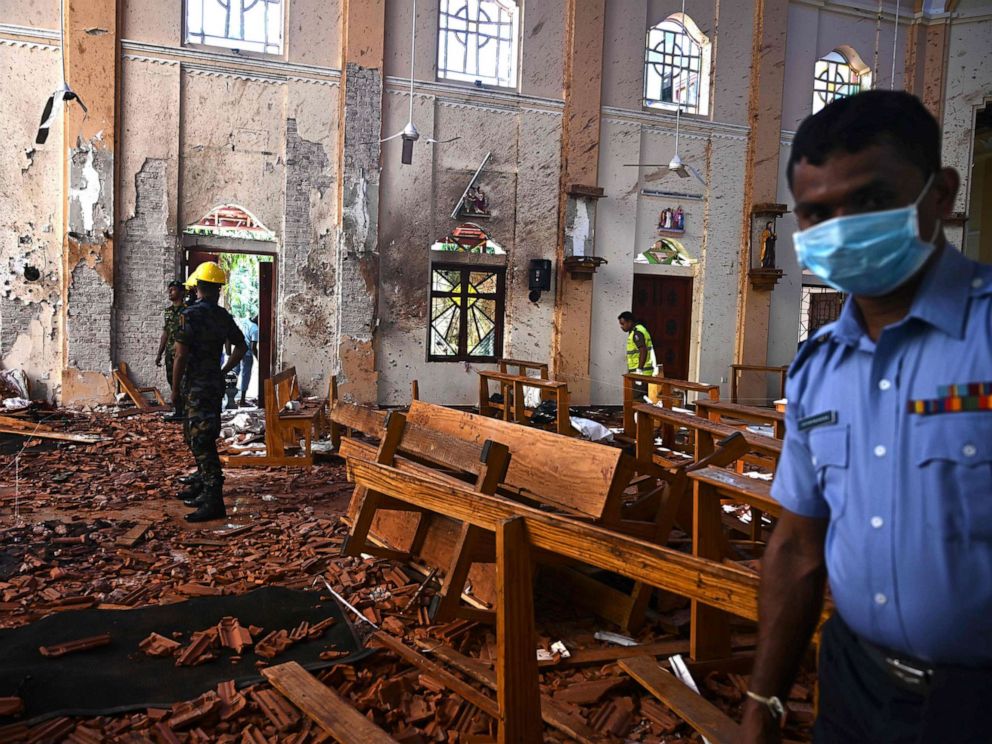
Security personnel inspect the interior of St Sebastian's Church in Negombo.
On Easter Sunday, as Christians in Sri Lanka gathered to celebrate the resurrection of Our Lord, Muslim terrorists blew up three churches, killing more than 200 Christians.[2] In March, 120 Christians were killed by Muslim militants in Nigeria.[3] In both of these cases, major news agencies, such as the BBC, and fact-checking websites like Snopes.com said that these incidents were not necessarily due to the religious persecution of Christians. Rather, the church bombings in Sri Lanka were more about terrorism to achieve political goals, and the deaths in Nigeria were because of ongoing regional conflicts. Nevertheless, the Christians in those places are dead at the hands of people who wanted them dead because of their faith in Christ. Moreover, Christians around the world are increasingly marginalized, prohibited by law in many Islamic countries from practicing their faith, and under the threat of imprisonment or death if they are discovered.[4] Hate speech laws in Great Britain and Canada threaten the free exercise of religion, jailing preachers who call homosexuality a sin.[5] Praise be to God that, for the time being, the First Amendment prohibits Congress from making any law respecting an establishment of religion, or prohibiting the free exercise thereof, or abridging the freedom of speech, hurt feelings or offended sensibilities notwithstanding. But the United States is the exception, not the rule. Christians today are in the same situation as Christians during the 1st Century.
Persecution of Christians, and the rest of the world’s disinterest/participation in it, should not surprise us. Jesus said that these things would happen at the end of the age:
“Then they will deliver you up to tribulation and kill you, and you will be hated by all nations for my name’s sake. And then many will be offended, will betray one another, and will hate one another. Then many false prophets will rise up and deceive many. And because lawlessness will abound, the love of many will grow cold. But he who endures to the end shall be saved.”[6]
But, even though the love of many grows cold in these last days, we Christians are called to love even more. We are called to love our neighbors as ourselves; we are called to love one another; we are called to love God:
Beloved, let us love one another, for love is of God; and everyone who loves is born of God and knows God. He who does not love does not know God, for God is love. In this the love of God was manifested toward us, that God has sent His only begotten Son into the world, that we might live through Him. In this is love, not that we loved God, but that He loved us and sent His Son to be the propitiation for our sins. Beloved, if God so loved us, we also ought to love one another.[7]
Not only ought we to love one another, we want to; we now have the ability to do so. Because we have put on Christ in our baptism, we have died with Him, and will be raised with Him. We are a new creation, with the Holy Spirit living in us. Our New Man desires the things that God desires, including a desire to love our neighbor as ourself.
How do we do this? We care for our neighbor and help him meet his bodily needs; we bless those who curse us; we do good to those who hate us; we pray for those who spitefully use and persecute us.[8] We proclaim to our neighbor the Gospel, the good news of how, while we were still sinners and God’s enemies, Christ died for the ungodly:[9] That Christ was born, God in human flesh; that He died, the Lamb of God who takes away the sin of the world; and that He rose again from the dead for our justification. We call sinners to repentance. We boldly and lovingly proclaim this Gospel to those in whose midsts God has put us according to our vocations. When we fall short, we repent; we confess our sins and rejoice in God’s forgiveness in Christ, and continue to struggle to put to death our flesh and it’s sinful desires.
And, when persecution comes, we do not despair. We endure it with patience; we continue to confess our faith. We follow the example of Peter and John who, when commanded by the government not to proclaim the Gospel said,
“We ought to obey God rather than men. The God of our fathers raised up Jesus whom you murdered by hanging on a tree. Him God has exalted to His right hand to be Prince and Savior, to give repentance to Israel and forgiveness of sins. And we are His witnesses to these things, and so also is the Holy Spirit whom God has given to those who obey Him.”[10]
And we do this joyfully, knowing that in the world we have trouble, but Christ has overcome the world.[11] No matter what things may look like to us now, we know that the Church, Christ’s Body, is under His protection and control.
And take they our life,
Goods, fame, child, and wife,
Though these all be gone,
Our victory has been won;
The Kingdom ours remaineth.[12]
Even if we lose everything we have on this earth, including our lives, the gates of Hell shall not prevail against Christ’s Church. On the Last Day Christ will raise me and all the dead, and give eternal life to me and all believers in Christ. This is most certainly true.


Bibliography

Blake, Heidi. "Christian Preacher Arrested for Saying Homosexuality Is a Sin." The Telegraph, May 2, 2010. Accessed June 27, 2019.
https://www.telegraph.co.uk/news/religion/7668448/Christian-preacher-arrested-for-saying-homosexuality-is-a-sin.html. Dale McAlpine was charged with causing “harassment, alarm or distress” after a homosexual police community support officer (PCSO) overheard him reciting a number of “sins” referred to in the Bible, including blasphemy, drunkenness and same sex relationships...Police officers are alleging that he made the remark in a voice loud enough to be overheard by others and have charged him with using abusive or insulting language, contrary to the Public Order Act.
"Christian Persecution Today." Open Doors USA. Accessed June 27, 2019. https://www.opendoorsusa.org/christian-persecution/.
Durrani, Temur. "Pastor Charged with Causing a Disturbance in Toronto's Gay Village." The Star, June 5, 2019. Accessed June 27, 2019. 
https://www.thestar.com/news/gta/2019/06/05/pastor-charged-with-causing-a-disturbance-in-torontos-gay-village.html. A 39-year-old pastor was charged with causing a disturbance in the city’s Gay Village, Toronto police said Wednesday, after he took to the streets to preach pro-Christian messages to passersby a day before.
Luther, Martin. “A Mighty Fortress Is Our God.” stz. 4. Lutheran Worship. St. Louis: Concordia, 1986. Hymn #298.
Smith, Samuel. "120 People Killed, 140 Homes Destroyed by Nigeria Fulani since February." The Christian Post, March 15, 2019. Accessed June 27, 2019.
"Sri Lanka Attacks: More than 200 Killed as Churches and Hotels Targeted." BBC News. April 21, 2019. Accessed June 27, 2019. https://www.bbc.com/news/world-asia-48001720.
Winsor, Morgan, and Dragana Jovanovic. "ISIS Claims Responsibility for Sri Lanka Easter Bombings That Killed over 350." ABC News. April 23, 2019. Accessed June 27, 2019. https://abcnews.go.com/International/isis-claims-responsibility-sri-lanka-easter-bombings-killed/story?id=62570339.
Wintour, Patrick. "Persecution of Christians 'coming Close to Genocide' in Middle East - Report." The Guardian, May 2, 2019. Accessed June 27, 2019. 


[1] Open Doors USA, “Christian Persecution Today,” Open Doors USA, 2019, https://www.opendoorsusa.org/christian-persecution/.
[2] BBC, “Sri Lanka Attacks: More than 200 Killed as Churches and Hotels Targeted,” BBC News, April 21, 2019. https://www.bbc.com/news/world-asia-48001720.
Morgan Winsor, and Dragana Jovanovic. "ISIS Claims Responsibility for Sri Lanka Easter Bombings That Killed over 350." ABC News. April 23, 2019. https://abcnews.go.com/International/isis-claims-responsibility-sri-lanka-easter-bombings-killed/story?id=62570339.
[3] Samuel Smith. "120 People Killed, 140 Homes Destroyed by Nigeria Fulani since February." The Christian Post, March 15, 2019. https://www.christianpost.com/news/120-people-killed-140-homes-destroyed-by-nigeria-fulani-since-february.html.
[4] Patrick Wintour, "Persecution of Christians 'coming Close to Genocide' in Middle East - Report," The Guardian, May 2, 2019. https://www.theguardian.com/world/2019/may/02/persecution-driving-christians-out-of-middle-east-report.
[5] Heidi Blake, "Christian Preacher Arrested for Saying Homosexuality Is a Sin." The Telegraph, May 2, 2010. https://www.telegraph.co.uk/news/religion/7668448/Christian-preacher-arrested-for-saying-homosexuality-is-a-sin.html.
Durrani, Temur Durrani, "Pastor Charged with Causing a Disturbance in Toronto's Gay Village." The Star, June 5, 2019. https://www.thestar.com/news/gta/2019/06/05/pastor-charged-with-causing-a-disturbance-in-torontos-gay-village.html.
[6] Matthew 24:9-13
[7] 1 John 4:7-11
[8] Matthew 5:43-48; 6:1-4
[9] Romans 5:6-11
[10] Acts 5:29-32
[11] John 16:33
[12] Martin Luther, “A Mighty Fortress,” stz. 4.